

Artificial Intelligence (AI) and AI Agents: The Complete Guide to the Future of Intelligent Technology Artificial Intelligence (AI) has become one of the most transformative technologies of the 21st century. From virtual assistants and recommendation systems to self-driving vehicles and advanced healthcare solutions, AI is changing how people live, work, and interact with technology. As
Artificial Intelligence (AI) and AI Agents: The Complete Guide to the Future of Intelligent Technology
Artificial Intelligence (AI) has become one of the most transformative technologies of the 21st century. From virtual assistants and recommendation systems to self-driving vehicles and advanced healthcare solutions, AI is changing how people live, work, and interact with technology.
As AI continues to evolve, a new concept known as AI Agents or Agentic AI is gaining significant attention. Unlike traditional AI systems that simply respond to instructions, AI agents can plan, reason, make decisions, and perform tasks autonomously to achieve specific goals.
In this comprehensive guide, you will learn what Artificial Intelligence and AI Agents are, how they work, their real-world applications, benefits, challenges, future trends, and answers to the most frequently searched questions on the topic.
What is Artificial Intelligence (AI)?
Artificial Intelligence (AI) refers to the simulation of human intelligence in machines. These systems are designed to perform tasks that normally require human cognitive abilities, such as learning, reasoning, problem-solving, understanding language, and decision-making.
In simple terms:
Artificial Intelligence enables machines to think, learn, and make decisions in ways that mimic human intelligence.
 Today, AI powers many technologies that people use daily, including:
- Search engines
- Virtual assistants
- Chatbots
- Online shopping recommendations
- Navigation systems
- Language translation tools
- Fraud detection systems
Fascinating Facts About Artificial Intelligence
AI is One of the Fastest-Growing Industries
The global AI market is expected to reach trillions of dollars within the next decade as businesses increasingly adopt intelligent automation solutions.
Most People Use AI Every Day
Many individuals interact with AI without realizing it. Whether using Google Search, YouTube recommendations, online banking, or social media feeds, AI is working behind the scenes.
AI Can Assist Medical Professionals
AI-powered diagnostic systems can analyze medical images, detect patterns, and support doctors in identifying diseases more efficiently.
AI Creates Content
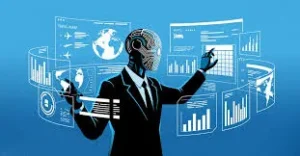 Modern generative AI systems can produce:
- Articles
- Images
- Videos
- Music
- Computer code
- Marketing content
AI Never Sleeps
Unlike humans, AI systems can operate continuously 24 hours a day, seven days a week.
The Different Types of Artificial Intelligence
Narrow AI
Narrow AI is designed to perform specific tasks.
Examples include:
- ChatGPT
- Voice assistants
- Recommendation engines
- Facial recognition software
Nearly all AI systems used today fall into this category.
Artificial General Intelligence (AGI)
AGI refers to a future form of AI capable of performing any intellectual task a human can do.
Currently, AGI remains a research goal and has not yet been achieved.
Artificial Super Intelligence (ASI)
ASI is a theoretical concept describing AI that surpasses human intelligence in every domain.
This remains speculative and may or may not become reality in the future.
What Are AI Agents?
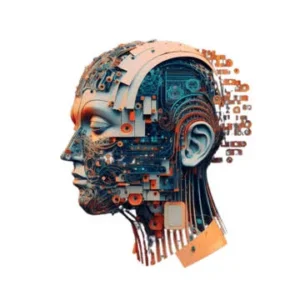 An AI Agent is an intelligent software system that can:
- Observe its environment
- Understand information
- Make decisions
- Take actions
- Achieve specific goals
Traditional AI often responds to commands.
AI Agents go further by planning and executing multiple steps independently.
Think of an AI agent as:
A digital worker that can think, plan, and act to accomplish tasks.
How AI Agents Work
AI Agents typically follow a structured workflow.
Step 1: Receive a Goal
For example:
“Find the most affordable flight from New York to London.”
Step 2: Create a Plan
The agent breaks the goal into smaller tasks.
Step 3: Gather Information
It searches databases, websites, or connected systems for relevant information.
Step 4: Analyze and Decide
The agent evaluates available options and determines the best solution.
Step 5: Take Action
Finally, it completes the task and delivers results.
Core Components of an AI Agent
Perception
The ability to gather information from the environment.
Memory
Stores previous experiences, interactions, and knowledge.
Reasoning
Uses logic and analysis to make decisions.
Planning
Develops strategies to achieve goals efficiently.
Action
Executes tasks based on decisions.
Types of AI Agents
Simple Reflex Agents
React directly to current situations without considering past experiences.
Example:
Automatic doors.
Model-Based Agents
Maintain an internal representation of their environment to make better decisions.
Goal-Based Agents
Focus on achieving specific objectives.
Example:
GPS navigation systems.
Utility-Based Agents
Evaluate multiple outcomes and choose the most beneficial option.
Example:
Investment recommendation systems.
Learning Agents
Improve performance over time by learning from experiences and feedback.
Example:
Modern AI assistants.
Real-World Applications of AI Agents
Customer Support
AI agents can handle customer inquiries, provide solutions, and reduce response times.
Personal Assistants
Digital assistants help users manage schedules, reminders, and tasks.
Autonomous Vehicles
Self-driving systems analyze surroundings and make real-time driving decisions.
Financial Services
AI agents assist with fraud detection, risk analysis, and automated trading.
Healthcare
They support diagnostics, patient monitoring, and treatment recommendations.
Education
AI tutors can personalize learning experiences based on individual student needs.
AI Agents vs Traditional AI
| Traditional AI | AI Agents |
|---|---|
| Responds to prompts | Works toward goals |
| Limited autonomy | High autonomy |
| Single-step tasks | Multi-step tasks |
| Requires constant guidance | Can operate independently |
| Primarily reactive | Proactive and strategic |
Benefits of AI Agents
Increased Productivity
Tasks that take humans hours can often be completed in minutes.
Cost Savings
Businesses can reduce operational expenses through automation.
Better Decision-Making
AI agents analyze large amounts of data quickly and accurately.
Continuous Availability
They operate around the clock without fatigue.
Faster Problem Solving
Complex challenges can be addressed more efficiently through automated reasoning.
Challenges and Risks of AI Agents
Privacy Concerns
AI systems often require access to large amounts of data.
Security Threats
Poorly secured AI systems may become targets for cyberattacks.
Bias and Fairness Issues
AI models can inherit biases from training data.
Job Displacement
Automation may replace certain repetitive tasks and roles.
Ethical Concerns
Questions about accountability, transparency, and responsible AI use continue to grow.
The Future of AI Agents
The next generation of AI will likely be driven by Agentic AI systems capable of managing complex workflows with minimal human intervention.
Future AI agents may:
- Run entire business processes
- Manage personal schedules and finances
- Conduct research independently
- Assist in medical diagnosis
- Support scientific discoveries
- Personalize education at scale
Experts predict that AI agents will become as common as smartphones are today.
Frequently Asked Questions (FAQs)
What is the difference between AI and AI Agents?
AI refers to intelligent systems that can process information and generate outputs. AI Agents use that intelligence to autonomously plan and execute actions to achieve goals.
Can AI Agents work without human supervision?
To some extent, yes. However, human oversight is still important for safety, ethics, and decision-making in critical situations.
Are AI Agents safe?
They can be safe when designed with proper security, transparency, and governance measures.
Will AI replace human jobs?
AI will automate some tasks, but it will also create new opportunities and careers related to AI development, management, and oversight.
Which industries use AI Agents?
Common industries include:
- Healthcare
- Banking
- Retail
- Education
- Manufacturing
- Logistics
- Marketing
Is ChatGPT an AI Agent?
In its basic form, ChatGPT is a generative AI system. When connected to tools, memory, planning, and task execution capabilities, it can function as part of an AI agent system.
What skills are needed for AI careers?
Popular skills include:
- Python Programming
- Machine Learning
- Data Science
- Prompt Engineering
- Cloud Computing
- AI Ethics
- Data Analytics
What is Agentic AI?
Agentic AI refers to AI systems that can independently reason, plan, make decisions, and perform actions to achieve objectives with minimal human intervention.
AI Agents in 2026: The Future of Autonomous Software – Symphony Solutions, https://symphony-solutions.com/science-tech/ai-agents-in-2026
Conclusion
Artificial Intelligence is rapidly reshaping industries, economies, and everyday life. As technology advances, AI Agents represent the next major evolution in intelligent systems. Unlike traditional AI that simply provides answers, AI agents can independently plan, reason, and execute tasks to accomplish goals.
Organizations and individuals who understand and embrace AI and Agentic AI today will be better positioned to thrive in the future digital economy. As adoption continues to grow, AI Agents are expected to become essential tools for productivity, innovation, and problem-solving across virtually every sector.
Read more about: smart gadgets, everyday technology solutions, buying tips, troubleshooting guides, and answers to the most searched daily tech questions in 2026.






















Leave a Comment
Your email address will not be published. Required fields are marked with *