

Discover 25 simple self-care ideas at home that are 100% free. Reset your nervous system and nurture your well-being without spending money.
25 Simple Self-Care Ideas You Can Do at Home for Free
The phrase “self-care” often conjures up images of luxury spa days, expensive essential oil diffusers, curated matcha lattes, and elaborate weekend getaways. While there is nothing wrong with treating yourself if budget permits, this commercialized version of self-care can make the entire concept feel out of reach. When you are tired, busy, or watching your spending, a 10-step skincare regimen or a pricey boutique fitness class feels less like a comfort and more like another chore on an already overwhelming to-do list.
True self-care is fundamentally about resting your nervous system, listening to your physical and mental limits, and nurturing your basic well-being. You do not need a single dollar or hours of uninterrupted free time to take care of yourself. Your home is already filled with everyday items that can facilitate deep rest, emotional release, and physical renewal.
Whether you are a student navigating heavy coursework, a busy professional balancing demanding responsibilities, or simply someone trying to navigate a stressful week, accessible simple self-care ideas at home can help you ground yourself. Here are 25 practical, entirely free ways to care for your well-being right where you are.
Gentle Morning Rituals for a Calm Start
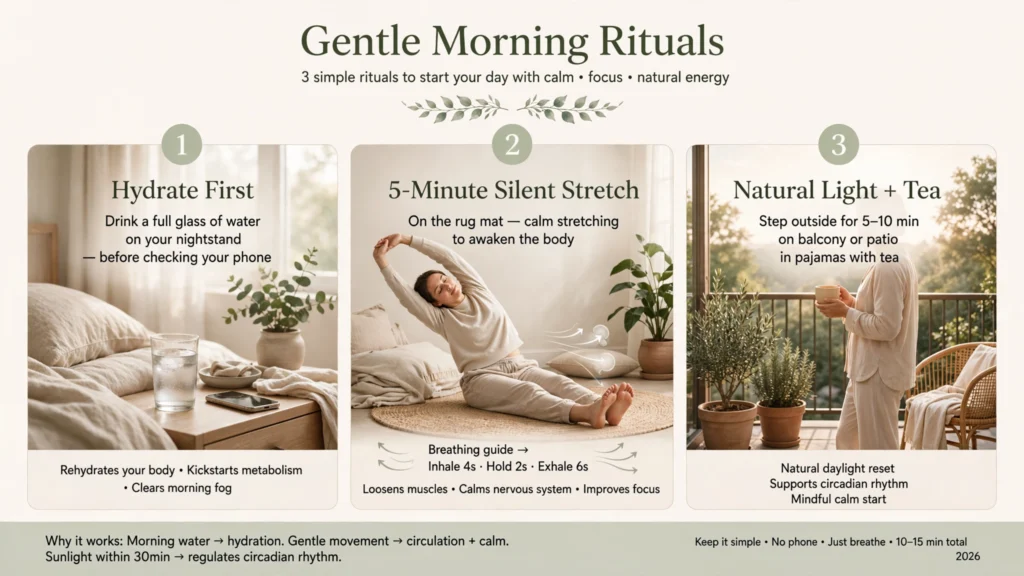 How you begin your morning often sets the emotional tone for the hours that follow. Instead of lunging for your phone the moment you wake up, a few intentional moments of quiet can help you transition into the day with a clearer mind.
1. Drink a Full Glass of Water Before Anything Else
What it involves: Rehydrating your body immediately upon waking up after hours of sleep.
How to try it: Keep a glass of tap water on your nightstand or walk straight to the kitchen sink for a cool glass before touching your phone or starting coffee.
Why it helps: Sleep causes mild dehydration, which can manifest as morning brain fog and sluggishness. Restoring fluids helps wake up your digestive system and clears your head naturally.
Practical tip: Squeeze a slice of lemon if you have one, or just enjoy it plain and cold.
2. Practice Five Minutes of Silent Stretching
What it involves: Moving your joints and loosening overnight stiffness through basic, unguided stretches.
How to try it: Stay on your rug or mattress and gently reach your arms overhead, roll your shoulders, twist your torso, and touch your toes.
Why it helps: Gentle movement boosts morning circulation, helping your muscles shake off nighttime tension without requiring a high-intensity workout.
Practical tip: Let your breathing guide the movement—inhale as you expand, exhale as you release.
3. Step Outside for Fresh Morning Daylight
What it involves: Stepping onto your balcony, patio, or front porch for several minutes of natural outdoor daylight.
How to try it: Step outside in your pajamas or house shoes with your morning water or tea, and spend 5 to 10 minutes letting natural daylight reach your eyes (without staring directly at the sun).
Why it helps: Natural outdoor light exposure helps regulate your circadian rhythm by signaling to your brain’s master clock that the day has begun, promoting daytime alertness and better sleep at night.
Practical tip: If you cannot go outside, simply open your window wide to let fresh air and morning light circulate your room.
Simple Movement and Physical Ease Self-Care Ideas at Home
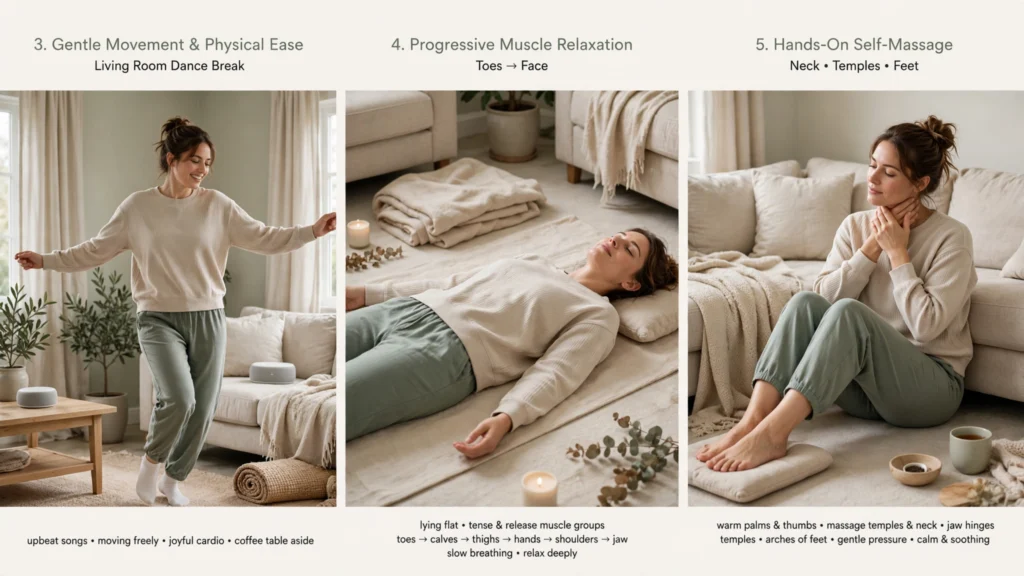 Physical self-care does not require a gym membership or specialized equipment. Reconnecting with your physical body through gentle actions can alleviate the stiffness caused by sitting or standing for long periods.
4. Take a Living Room Dance Break
What it involves: Putting on two or three of your favorite upbeat songs and moving freely.
How to try it: Close your bedroom door or push your coffee table aside, queue up a playlist, and dance however you want with zero judgment.
Why it helps: Dancing releases pent-up physical energy, boosts endorphins, and provides a quick burst of joyful cardio without feeling like exercise.
Practical tip: Pick songs that instantly lift your mood, regardless of genre.
5. Do a Progressive Muscle Relaxation Exercise
What it involves: Systematically tensing and then releasing different muscle groups from your toes to your face.
How to try it: Lie flat on your back on the floor or your bed. Squeeze your feet tightly for five seconds, then completely let go. Move up to your calves, thighs, hands, shoulders, and jaw.
Why it helps: Many people hold chronic, unconscious tension in their bodies. Consciously contracting and releasing muscles highlights the difference between tension and relaxation.
Practical tip: Take a deep breath in as you tense, and sigh audibly as you release.
6. Give Yourself a Hands-On Self-Massage
What it involves: Using your own fingers and palms to relieve tightness in high-stress areas like your neck, temples, hands, and feet.
How to try it: Rub the palms of your hands together until they feel warm, then use your thumbs to press gently into the base of your skull, your jaw hinges, or the arches of your feet.
Why it helps: Gentle manual pressure releases localized muscle tightness, improves blood flow to sore tissues, and provides sensory comfort that helps ease physical restlessness.
Practical tip: Use a tiny drop of ordinary kitchen oil or lotion if your skin is dry, but plain friction works just fine.
Cultivating a Restful Home Atmosphere
Your environment has a direct impact on your mental state. Clutter, harsh lighting, and chaotic surroundings can heighten feelings of stress, whereas a soothing atmosphere offers immediate comfort.
7. Declutter One Small Surface
What it involves: Clearing out a single focal point, such as a nightstand, a kitchen counter corner, or your work desk.
How to try it: Grab a basket or trash bag, pick one surface, put stray items away where they belong, wipe it down with a damp cloth, and leave it completely clear.
Why it helps: Visual clutter can subtly drain your mental energy. Restoring order to a micro-environment creates an immediate sense of control and calm.
Practical tip: Set a timer for 10 minutes so it doesn’t turn into an overwhelming deep-cleaning project.
8. Lower the Lights and Create a Low-Stimulation Zone
What it involves: Turning off harsh overhead lighting in favor of lamps, fairy lights, or natural candlelight as evening approaches.
How to try it: Switch off your main ceiling lights an hour before bed and rely solely on soft side lamps or light a single candle placed safely on a stable surface.
Why it helps: Softer lighting signals your eyes and brain to slow down, mimicking the natural fading of daylight.
Practical tip: Keep spare tea lights or a working flashlight nearby so you are prepared for low-light evenings safely.
9. Wash Your Face with Intentional Warmth
What it involves: Turning an ordinary hygiene habit into a sensory ritual by slowing down and paying attention to water temperature and texture.
How to try it: Splash warm water on your face, massage a gentle cleanser or just water into your skin for a full 60 seconds, and pat dry with a clean towel.
Why it helps: It acts as a physical boundary between the stresses of the day and your relaxation time, washing away the accumulated grime and emotional residue.
Practical tip: Follow the wash with a refreshing splash of cool water to awaken your senses and temporarily reduce any morning facial puffiness.
Mindfulness, Journaling, and Mental Clarity
Mental self-care is about giving your racing thoughts a safe place to land and processing your internal world without judgment.
10. Do a Brain Dump in a Notebook
What it involves: Writing down every thought, task, worry, and random idea swirling in your head without censoring or organizing them.
How to try it: Open a blank page in any spare notebook, set a timer for seven minutes, and write continuously until time runs out. If you run out of things to say, write phrases or thoughts until the next one appears.
Why it helps: Transferring chaotic thoughts from your head onto paper lightens your cognitive load and stops mental loops.
Practical tip: You do not need to keep or re-read what you wrote; feel free to rip the page out and recycle it if privacy is a concern.
11. Practice the 5-4-3-2-1 Grounding Technique
What it involves: Using your five physical senses to anchor your wandering mind back into the present moment.
How to try it: Look around your room and silently name: 5 things you can see, 4 things you can physically feel, 3 things you can hear, 2 things you can smell, and 1 thing you can taste.
Why it helps: When anxiety or rumination pulls you into past regrets or future worries, sensory grounding forces your brain to register that your immediate surroundings are safe.
Practical tip: Take slow, deliberate breaths between each sensory category.
12. Write Down Three Specific Things You Appreciate
What it involves: Shifting your focus away from what is lacking or stressful by acknowledging small, ordinary comforts.
How to try it: Grab a scrap piece of paper and write down three mundane things you are glad are present in your life right now (e.g., warm socks, a quiet apartment, a good cup of tea).
Why it helps: Practicing gratitude helps train your neural pathways to notice neutral or positive stimuli instead of focusing exclusively on threats or annoyances.
Practical tip: Be specific—instead of writing “my home,” write “the way the afternoon sunlight hits my living room rug.”
Creative Outlets and Playful Hobbies
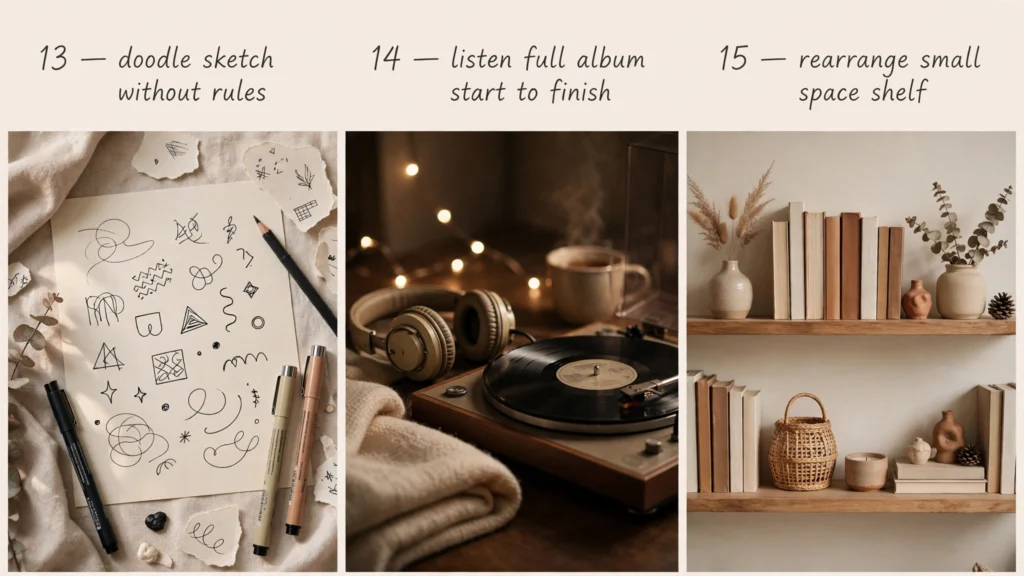 Adults often forget how to play. Engaging in creative tasks that have no grade, deadline, or financial objective is a powerful form of psychological restoration.
13. Doodle or Sketch Without Rules
What it involves: Drawing random shapes, patterns, or scenes using a basic pen and scrap paper with zero artistic expectations.
How to try it: Sit with a pen and let your hand move freely across the page, creating loops, geometric patterns, or whimsical caricatures.
Why it helps: Freeform doodling provides a low-stakes tactile focus that calms mental chatter, helping keep your brain lightly engaged without causing cognitive fatigue.
Practical tip: Throw away the pressure to create something frame-worthy; this is strictly an exercise in expression, not art.
14. Listen to a Full Album from Start to Finish
What it involves: Putting on an entire music album without skipping tracks, checking your phone, or multitasking.
How to try it: Lie down or sit comfortably, put on headphones, and listen to a classic record or an album you loved years ago from the first track to the last.
Why it helps: In an era of algorithm-driven single-song shuffling, listening to a cohesive body of work restores deep listening and emotional immersion.
Practical tip: Dim the lights while listening to heighten your auditory focus.
15. Rearrange a Small Space or Shelf
What it involves: Changing the visual arrangement of books, decorative items, or desk accessories using things you already own.
How to try it: Take everything off a single bookshelf or desk organizer, wipe it down, and put the items back in a completely new visual order.
Why it helps: It satisfies the human desire for novelty and creativity without spending any money on home decor.
Practical tip: Group items by color or height to give the space a completely fresh aesthetic.
Unplugging and Digital Boundaries
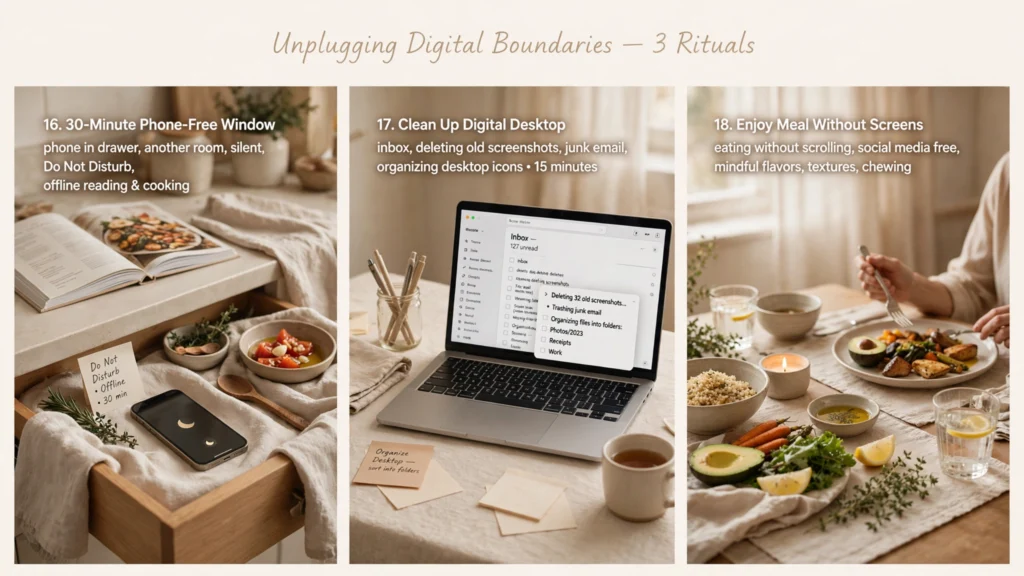 Constant connectivity keeps the brain in a state of continuous low-grade alertness. Creating intentional pockets of offline time gives your mind a much-needed break from the noise of the digital world.
16. Establish a 30-Minute Phone-Free Window
What it involves: Placing your smartphone in another room or inside a drawer for 30 uninterrupted minutes.
How to try it: Set your phone to silent or Do Not Disturb, place it inside a drawer or in another room, and engage in an offline activity like reading, cooking, or stretching.
Why it helps: Removing the physical temptation of scrolling reduces dopamine-driven distraction and lets your attention span recover.
Practical tip: Let close family members know you are going offline briefly so you do not feel anxious about missing urgent messages.
17. Clean Up Your Digital Desktop or Inbox
What it involves: Deleting old screenshots, clearing out junk email subscriptions, or organizing chaotic computer desktop icons.
How to try it: Spend 15 minutes deleting unnecessary files from your phone’s photo roll or unsubscribing from newsletters you never read.
Why it helps: Digital clutter creates visual and mental friction just like physical clutter does. A clean screen feels clean to the mind.
Practical tip: Sort files into broad folders so future cleaning takes even less effort.
18. Enjoy a Meal Without Screens
What it involves: Eating a snack or meal in total silence or quiet reflection, without scrolling social media, watching videos, or working.
How to try it: Sit at your kitchen table or counter, plate your food nicely, and focus entirely on the flavors, textures, and act of chewing.
Why it helps: Mindful eating improves digestion by allowing your body to focus on processing food rather than processing incoming digital information.
Practical tip: Notice three distinct flavors in your food before taking your next bite.
Evening Wind-Down and Restful Sleep Habits
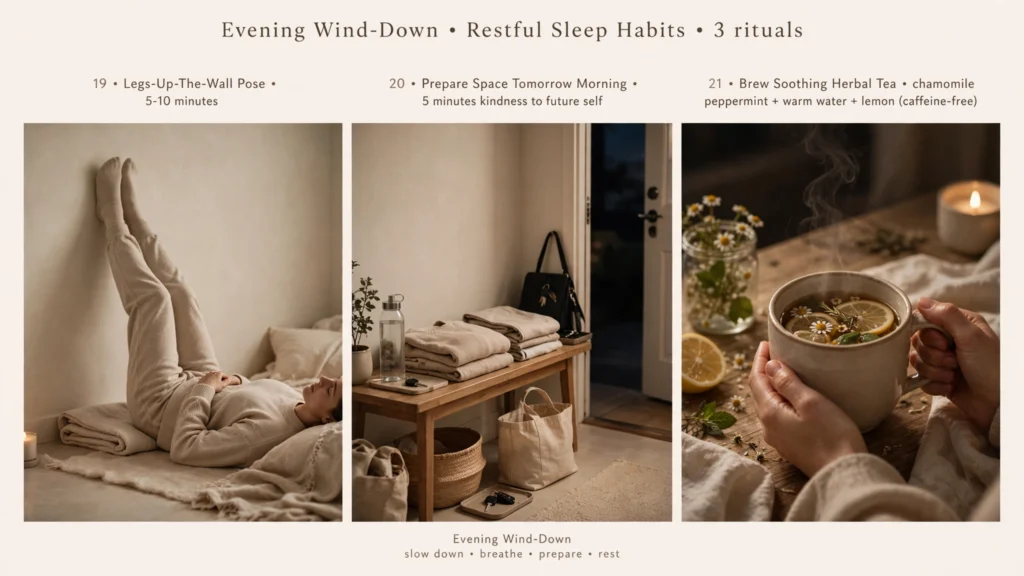
How you prepare for sleep dictates its quality. Creating a predictable, screen-free transition period helps your body signal that it is safe to let go of the day’s responsibilities.
19. Do a Legs-Up-The-Wall Pose
What it involves: Lying on the floor with your legs extended straight up against a blank wall for five to ten minutes.
How to try it: Sit sideways next to a bare wall, swing your legs up so they rest vertically against the vertical surface, and let your arms rest comfortably by your sides.
Why it helps: Elevating your legs rests tired lower limbs, aids venous return, and serves as a gentle posture that encourages physical relaxation before bed.
Practical tip: Place a folded towel under your lower back for comfort. (Note: Avoid inverted poses if you have uncontrolled high blood pressure, eye pressure conditions like glaucoma, or severe spinal issues).
20. Prepare Your Space for Tomorrow Morning
What it involves: Lay out tomorrow’s clothes, pack a water bottle, or clear your entryway so tomorrow-you has a smoother start.
How to try it: Spend five minutes before bed putting out tomorrow’s outfit and setting your keys and bag by the door.
Why it helps: Decision fatigue is real; making minor choices the night before preserves your mental energy for the upcoming day.
Practical tip: Think of this as a kindness you are doing for your future self.
21. Brew a Soothing Herbal Tea (or Warm Water Infusion)
What it involves: Boiling water and slowly sipping a caffeine-free herbal drink like chamomile, peppermint, or plain warm water with a twist of lemon.
How to try it: Heat water on the stove or in a kettle, steep your favorite herbal bag, and hold the warm mug with both hands while it cools.
Why it helps: The warmth of the mug warms your hands, and the act of sipping forces you to slow your pace physically.
Practical tip: Avoid caffeinated black or green teas in the evening to protect your sleep cycle.
Social Connection and Meaningful Boundaries
Self-care is not always solitary. Sometimes it looks like connecting with someone you love, or conversely, protecting your energy by saying no to things that drain you.
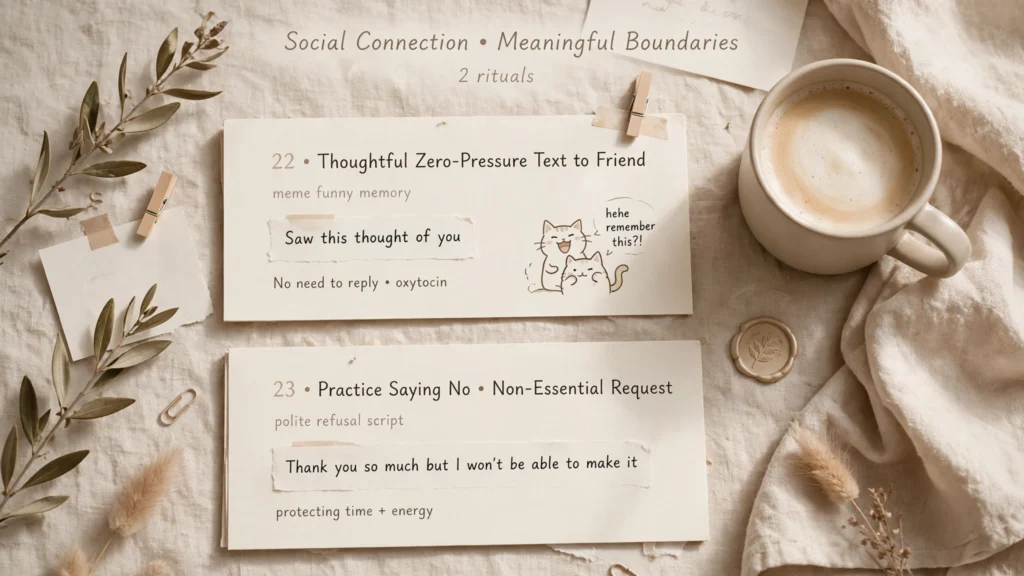
22. Send a Thoughtful, Zero-Pressure Text to a Friend
What it involves: Reaching out to someone in your network just to say something kind, funny, or appreciative without expecting a long conversation.
How to try it: Text a friend a meme, a funny memory, or a short message saying, “Saw this and thought of you, hope you’re having a good week.”
Why it helps: Brief, positive social connections boost oxytocin and remind you that you are part of a supportive community.
Practical tip: Add “No need to reply!” at the end of the text if you know they have a busy schedule.
23. Practice Saying “No” to a Non-Essential Request
What it involves: Politely declining a minor obligation, social invite, or favor that you do not have the physical or emotional capacity to handle.
How to try it: Practice a polite refusal script in the mirror: “Thank you so much for thinking of me, but I won’t be able to make it work this week.”
Why it helps: Protecting your time and energy is a cornerstone of emotional health. Every time you say no to something draining, you say yes to your own well-being.
Practical tip: You do not owe anyone an elaborate excuse or fabricated backstory; a kind, direct refusal is entirely sufficient.
Affordable or Free Ways to Care for Yourself on Busy Days
When life gets overwhelmingly busy, long self-care routines are impossible. Here are a couple of micro-practices that fit into the tightest schedules.
24. Take Three Conscious, Deep Belly Breaths
What it involves: Pausing whatever you are doing to inhale deeply through your nose and exhale slowly through your mouth.
How to try it: Place one hand on your chest and one on your belly. Inhale for four seconds so your belly rises, hold for two, and exhale slowly for six seconds.
Why it helps: Extended exhales stimulate the vagus nerve, which immediately down-regulates your body’s stress response.
Practical tip: Use a mundane trigger—like washing your hands or unlocking your front door—as a reminder to take three deep breaths.
25. Stand in the Sunlight for Two Minutes
What it involves: Stepping away from your workspace to soak up natural sunlight and give your eyes a long-distance focal point.
How to try it: Walk to a sunny window or doorstep, look toward the horizon (without staring directly at the sun), and roll your shoulders back.
Why it helps: Staring at indoor screens for hours causes eye strain and mental fatigue. Natural light and distant views relax your ciliary eye muscles.
Practical tip: Combine this with your glass of water for a powerful two-minute midday reset.
How to Create a Realistic Self-Care Routine
 The biggest mistake people make with self-care is treating it like an all-or-nothing project. If you try to wake up at 5:00 AM, meditate for 30 minutes, journal for an hour, drink green juice, and stretch every single day when you are already exhausted, you will burn out and abandon the effort entirely.
A realistic self-care routine should be flexible, forgiving, and tailored to your actual life season.
Audit your capacity: Look at your week honestly. Do you have 10 minutes free, or just two? Choose activities that fit your actual margin.
Layer habits: Attach a micro-habit to an existing routine (e.g., taking three deep breaths while your coffee brews).
Focus on quality, not quantity: Doing one self-care activity with genuine presence is vastly better than checking off five items on a checklist while feeling rushed.
Self-Care Ideas for People with Very Little Free Time
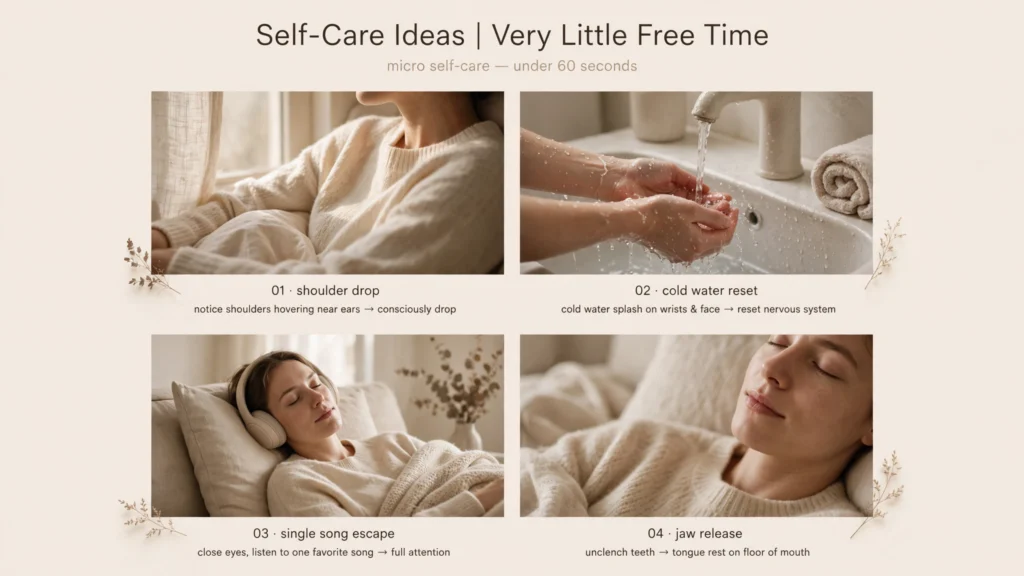 If your schedule is so packed that finding even 15 minutes feels impossible, you can practice micro-self-care. These are actions that take under 60 seconds but still send a calming signal to your nervous system:
The shoulder drop: Notice if your shoulders are hovering near your ears right now, and consciously drop them down.
The cold water splash: Splash ice-cold water on your wrists or face to reset your nervous system instantly.
The single song escape: Close your eyes and listen to one favorite song with full attention between tasks.
The jaw release: Unclench your teeth and let your tongue rest loosely on the floor of your mouth.
Common Self-Care Mistakes and How to Avoid Them
- Treating self-care as another task: If your self-care list feels like homework that induces guilt when you skip it, you are defeating the purpose. Drop the rigidity.
Waiting until you crash: Self-care is preventative maintenance, not just emergency first aid. Try to weave small pauses into your day before you reach total burnout.
Copying what works for others: If journaling feels like a chore, don’t do it. If stretching bores you, listen to music instead. Tailor your habits to your personal preferences.
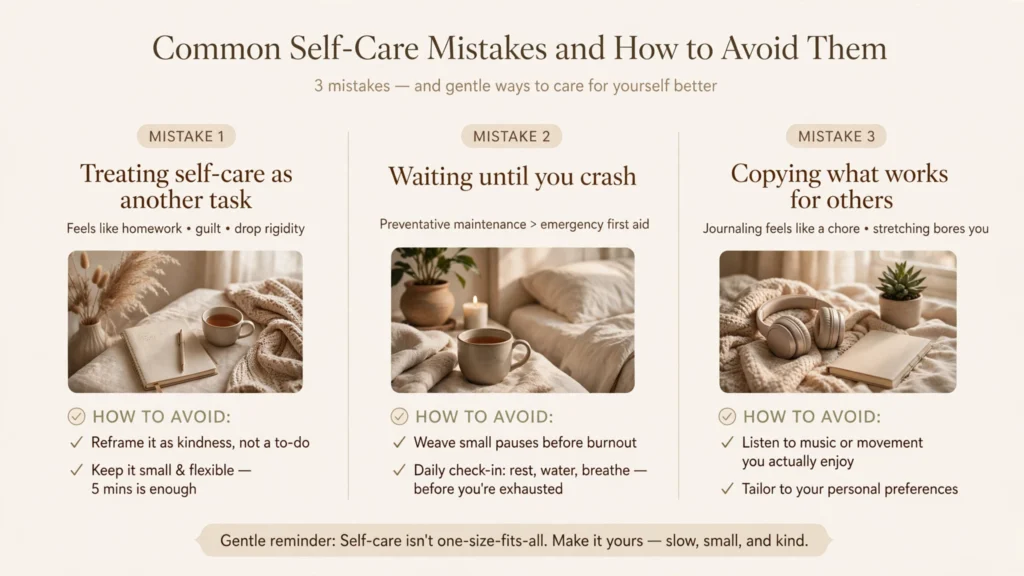 Treating self-care as another task: If your self-care list feels like homework that induces guilt when you skip it, you are defeating the purpose. Drop the rigidity.
Frequently Asked Questions
What is the difference between self-care and self-indulgence?
Self-care involves activities that genuinely nourish your physical, mental, and emotional health in the long run (like drinking water, resting, or setting boundaries). Self-indulgence often refers to temporary treats or coping mechanisms that might feel good in the moment but leave you feeling worse later if overdone. Both have their place, but self-care is foundational.
How often should I practice self-care?
Ideally, you should weave micro-moments of self-care into every single day. You do not need a dedicated hour; taking three deep breaths, drinking water, and stepping away from your screen are small daily acts of care that compound over time.
Can self-care really be 100% free?
Yes. True self-care relies on attention, rest, movement, boundaries, and breathing—none of which require financial investment. While products like bath bombs or yoga mats can be nice accessories, they are never required for physical and mental renewal.
Conclusion
Taking care of your well-being does not require a luxury budget, specialized equipment, or hours of free time that you simply do not have. By embracing simple self-care ideas at home, you can reset your nervous system and nurture your mind using nothing more than what is already around you.
Do not try to implement all 25 ideas at once. Instead, pick one manageable activity from this list—whether it is drinking a glass of water mindfully tomorrow morning, taking three deep breaths, or stretching for five minutes—and start there. Small, consistent acts of gentleness toward yourself are where real well-being begins.





















Leave a Comment
Your email address will not be published. Required fields are marked with *