
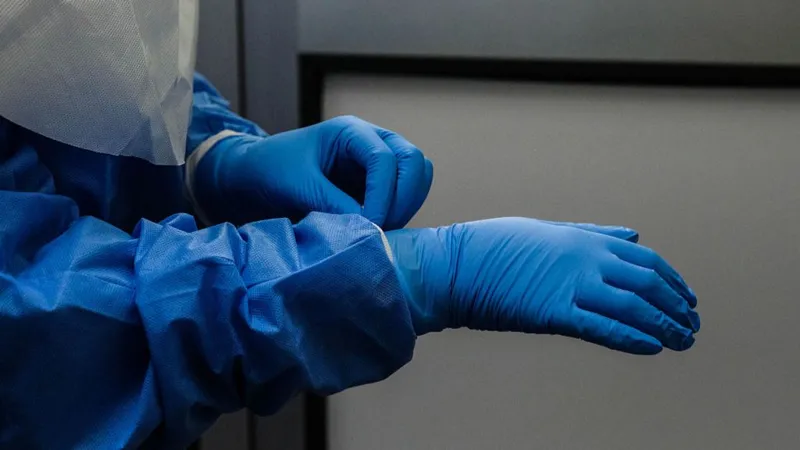
France Confirms First Ebola Case | What Is Ebola and Why Is the 2026 Outbreak So Hard to Stop? On June 24, 2026, France confirmed what no European government wants to announce: a case of Ebola on home soil. A doctor who had been working on a humanitarian mission in the Democratic Republic of the
France Confirms First Ebola Case | What Is Ebola and Why Is the 2026 Outbreak So Hard to Stop?
On June 24, 2026, France confirmed what no European government wants to announce: a case of Ebola on home soil. A doctor who had been working on a humanitarian mission in the Democratic Republic of the Congo (DRC) tested positive for the deadly haemorrhagic fever upon returning to France, making this the first confirmed Ebola case ever identified on French territory.
The world took notice. And rightly so. Because this case is not an isolated scare. It is the latest signal from a rapidly evolving outbreak that the World Health Organization has already classified as a Public Health Emergency of International Concern (PHEIC) its highest level of alert.
But before panic sets in, let’s understand what is actually happening, what it means, and what the real global risk is.
What Happened in France? The Full Story
France confirmed its first Ebola case during the current outbreak a doctor returning from a humanitarian mission in the Democratic Republic of the Congo tested positive, French health authorities said.
The French Health Ministry said the healthcare worker had been operating in one of the areas where the virus was actively circulating. According to the ministry, the doctor boarded a commercial flight from Kinshasa while nearly asymptomatic, experiencing only headaches, and his condition worsened slightly during the flight. The doctor was isolated on arrival in France, even before the disease was officially confirmed, and was then transferred under secure conditions to a specialised treatment facility.
The health ministry confirmed the patient has a “very low” viral load and that contacts are currently being identified. It is also the first time Ebola has been detected in France. In 2014, during a major outbreak in West Africa, two patients were transported to France, but they had been diagnosed abroad.
An epidemiological investigation is under way to identify individuals who may have been in contact with the patient. They will be contacted by health authorities to self-isolate for 21 days.
Is this the first Ebola case in Europe from this outbreak?
No. The French case is the second confirmed Ebola infection in Europe stemming from the current outbreak. The first was American surgeon Dr. Peter Stafford, who contracted the Bundibugyo strain of the virus while doing medical missionary work in the Congo. Mr. Stafford was evacuated to Charité University Hospital in Berlin on May 20 and received antiviral therapy and additional supportive medical measures during the first week of his treatment, with his condition consistently improving. Mr. Stafford had been Ebola-free since May 30.
Should the World Panic?
In short no. But it should pay attention.
WHO Director General Tedros Adhanom Ghebreyesus said there is no need to panic about France’s Ebola case. He told a news conference that in the past 50 years, fewer than 30 Ebola cases had been detected outside Africa. “That means the risk to the rest of the world is low; whether it’s France or other countries in Europe, they shouldn’t overreact,” Tedros told reporters.
The reason the French case was contained so quickly is because of exactly the systems that wealthy countries have in place: rapid airport screening, pre-arrival protocols, isolation procedures, and biosafety-equipped hospitals. France has decades of expertise in managing imported tropical diseases.
What is more alarming and more worthy of global attention is what is happening in DRC itself.
What Is Ebola? The Essential Explainer
Ebola is a severe, often fatal illness caused by a group of viruses known as orthoebolaviruses. It was first identified in 1976 near the Ebola River in what is now the DRC, and has since caused periodic outbreaks most notably the devastating 2014-2016 West African epidemic that killed more than 11,000 people.
How Does Ebola Spread?
People can get Ebola disease through contact with the body fluids of an infected sick or dead person. A person is only contagious once they begin showing symptoms of the disease. You cannot get Ebola from simply being near someone or passing them in public spaces because it doesn’t spread through the air.
This is perhaps the most important fact for public understanding. Ebola is not airborne. It does not spread like influenza or COVID-19. It requires direct physical contact with bodily fluids blood, sweat, vomit, saliva, urine, or faeces from someone who is already symptomatic.
This is why healthcare workers and family caregivers are at the highest risk. Funeral rituals that involve touching or washing the deceased body have historically been one of the most significant transmission routes in DRC.
What Are the Symptoms of Ebola?
Patients have experienced Ebola disease symptoms like fever, headache, vomiting, severe weakness, abdominal pain, nosebleeds, and vomiting blood.
Initial symptoms, including fever, fatigue, muscle pain, headache and sore throat, are non-specific and can be hard to distinguish from malaria or diseases that cause fever. This is a critical diagnostic challenge especially in DRC, where malaria is endemic.
The incubation period is 2 to 21 days. A person is not contagious during incubation only once symptoms appear.
What Makes the 2026 Outbreak Different: The Bundibugyo Strain
This is where this outbreak becomes genuinely alarming to scientists and public health experts not because of global spread risk, but because of the specific virus responsible.
What makes this outbreak different and significantly harder to fight is the type of virus that causes Ebola disease. This is the Bundibugyo virus not the same virus the world knows from the major West Africa epidemic that occurred between 2014 and 2016.
No Approved Vaccine. No Approved Treatment.
There is no licensed vaccine or specific treatment for Bundibugyo virus. Existing Ebola vaccines target a different species, and scientists are now urgently assessing whether they could play any role.
This is the critical difference from recent memory. After the 2014-2016 West African epidemic, the world invested heavily in Ebola vaccines and two were developed and approved. But they target the Zaire strain of Ebola. The 2026 outbreak is caused by a different species entirely.
There are currently two approved vaccines against Ebola disease, but neither is approved for use in cases of infection with the Bundibugyo virus. The Ervebo vaccine (rVSV-ZEBOV) can be used to limit the spread of the disease through a ring vaccination strategy, meaning it is administered to people at risk of exposure. However, these two vaccines are currently approved only against the most common virus responsible for Ebola disease (known as the Ebola virus, formerly called the Zaire virus).
Bundibugyo virus is a close relative, but the two have different genetic material and different surface proteins, which means an immune response against one does not automatically protect against the other. Currently, the vaccine pipeline for Bundibugyo virus disease includes two candidates highlighted by WHO. A candidate vaccine leveraging the rVSV platform (the same platform as Merck’s vaccine) but targeted towards Bundibugyo ebolavirus. There are no doses of this candidate available for clinical trials and it is estimated that producing doses for clinical trials could take six to nine months.
A Deadlier-Than-Average Fatality Rate
There have been two previous outbreaks of Bundibugyo virus, one in Uganda in 2007 and one in DRC in 2012, with death rates of 32% and 55%, respectively.
To put that in context: seasonal influenza has a fatality rate of under 0.1%. COVID-19 ranged from 0.5%-2%. Bundibugyo kills between 30-55% of those it infects when supportive care is limited.
The Scale of the DRC Outbreak: Record-Breaking Numbers
As of Monday, there were 1,048 confirmed cases and 267 deaths, making it the largest number of confirmed Ebola cases recorded during the first month of an outbreak in Africa, according to Dr. Abdirahman Mahamud, Director of Health and Emergency Alert and Response Operations at the World Health Organization.
It took just 37 days for the current outbreak to reach 250 deaths, compared to 78 days during the 2014 and 2016 West Africa outbreaks and 130 days during the 2018-2019 DRC outbreak.
This is the speed that is alarming epidemiologists. The 2026 DRC Ebola outbreak is not just the worst Bundibugyo outbreak in history it is one of the fastest-accelerating Ebola outbreaks ever recorded.
The outbreak is occurring in a challenging context: a humanitarian crisis and a remote and densely populated area, combined with insecurity and high population and trade movements.
Timeline: How the Outbreak Unfolded
| Date | Event |
|---|---|
| April 24, 2026 | First suspected case, a health worker in Bunia, DRC. Symptoms: fever, haemorrhaging, vomiting |
| May 5, 2026 | WHO receives alert about unknown illness with high mortality in Mongbwalu, Ituri Province |
| May 15, 2026 | DRC Ministry officially declares 17th Ebola outbreak. Uganda confirms first imported case |
| May 17, 2026 | WHO declares Public Health Emergency of International Concern (PHEIC) |
| May 20, 2026 | American surgeon Dr. Peter Stafford evacuated to Berlin, first European Ebola case of outbreak |
| June 8, 2026 | 808 confirmed cases reported across Ituri, North Kivu, and South Kivu |
| June 22, 2026 | Cases surpass 1,000 in DRC |
| June 24, 2026 | France confirms first Ebola case on French soil, imported doctor from DRC |
Why Is Stopping This Outbreak So Difficult? 6 Interconnected Reasons
This is the question that experts at the BBC, the WHO, and Médecins Sans Frontières have all been asking. The answer is not simple it is a convergence of at least six compounding crises happening simultaneously.
1. No Vaccine, No Treatment Starting From Zero:
As detailed above, the Bundibugyo strain has no approved vaccine and no approved treatment. Every containment strategy must rely entirely on non-pharmaceutical interventions: isolation, contact tracing, PPE, and safe burials.
In the absence of approved treatments and vaccines, the response rests on a combination of epidemiological and public health measures: early isolation of suspected and confirmed cases; daily monitoring of contacts over 21 days with immediate quarantine at the onset of symptoms; strict infection prevention and control protocols including hand hygiene, waste management, chlorinated water points, and personal protective equipment for healthcare workers; safe and dignified burials to prevent transmission during funeral rituals; and on the ground epidemiological work to reconstruct transmission chains and identify high-risk practices.
These measures work but only if the environment allows them to be implemented. In DRC, it often does not.
2. Active Armed Conflict in the Epicentre
The ongoing outbreak is characterised by three main factors: weakened community based disease surveillance, the effects of conflict and displacement on health system functioning, and the lack of an approved vaccine or specific therapeutic agent.
Armed actors, including the Congolese army and M23, continue to hamper humanitarian response efforts, restricting access to affected communities.
Health responders in these areas must negotiate militia checkpoints, navigate looted warehouses and border closures, and contend with attacks rooted in community distrust built up over years of conflict and broken promises.
The DRC has been living through one of the world’s most prolonged armed conflicts. Dozens of militia groups operate in the affected provinces. Health workers cannot simply drive into affected communities they face roadblocks, armed confrontations, and outright violence.
3. Deep Community Distrust| The “Ebola Business” Effect
Scepticism, doubt and fear have hindered the response in conflict-scarred eastern DRC, by the local community’s distrust of outside authorities, which is significantly increasing the risk of disease transmission.
Hospital director Dr. Richard Lokudi said that he and his staff have faced serious resistance from the local community, often from people who don’t believe that Ebola is real.
During the 2018-2020 outbreak, politicisation of the outbreak response, large sums of response resources, and reliance on abusive security forces fed perceptions of “Ebola Business” a war economy that was seen by many Congolese as prolonging the crisis. That, in turn, fuelled resistance and attacks on health workers and mistrust of disease control measures.
When communities do not trust the response teams, they hide sick relatives. They resist safe burials. They remove patients from treatment centres. All of these actions — understandable from a human fear perspective accelerate transmission.
“Without trust, we cannot detect cases early,” said one WHO official. “We cannot ensure safe and dignified burials. We cannot even protect families and we cannot stop the transmission. Trust is not a secondary activity in the Ebola response. Trust is central.”
4. Diagnostic Delays The Wrong Test Kits
GeneXpert diagnostic kits failed to detect Bundibugyo virus as they were designed to detect Ebolavirus (Zaire strain), potentially allowing undetected transmission. Later, pan-filovirus PCR assays alongside sequencing approaches were used to detect Bundibugyo cases. Obtaining diagnostic kits and reagents for sequencing faced logistical delays because they required specialised equipment and trained personnel.
PCR tests require virus-specific diagnostic kits. However, these are currently available in insufficient quantities for the Bundibugyo virus, which considerably slows down case confirmation and, as a result, the implementation of contact tracing and patient isolation.
This created a devastating early outbreak blind spot. The virus circulated for weeks possibly since February 2026 before it was even identified.
5. High Population Mobility From Mining Activity
Reports of a mysterious illness in the remote gold-mining town of Mongbwalu in Ituri Province, which had already claimed lives, emerged in April 2026.
Mongbwalu is a high traffic gold mining town of approximately 130,000 people. Mining towns are by definition mobile environments workers move between provinces, cross borders, share cramped housing, and travel to sell gold. The virus seeded itself in exactly the kind of population that moves rapidly and widely.
The outbreak currently underway is serious because of the scale of transmission, because of the conditions in the affected regions including active conflict and significant challenges to community access and because of the demonstrated potential for this virus to spread when those conditions persist.
6. A Crumbling Healthcare System Under Pressure
Contact tracing is inadequate, treatment capacity is insufficient, and safe burials remain a major challenge, with the health system under pressure.
DRC’s healthcare infrastructure was already severely strained before this outbreak by decades of conflict, underfunding, and previous disease emergencies. The Ebola outbreak now sits on top of an existing humanitarian catastrophe — cholera, measles, malnutrition, and mass displacement are all happening simultaneously in the same regions.
International Response: What Is the World Doing?
On 21 May, the UK announced up to £20 million to support communities affected by the Ebola outbreak in eastern DRC. A week later, the US State Department announced $112 million of bilateral assistance aimed at supplying PPE, screening, contact tracing, and diagnostics, and the European Union pledged €15 million to support Ebola response and preparedness efforts in the DRC and Uganda.
The US Centers for Disease Control and Prevention has committed $107 million in emergency funding to support the response to the growing outbreak in the DRC and Uganda.
By 16 June, Médecins Sans Frontières had three treatment centres in operation, in Bunia, Goma, and Mongbwalu.
UNICEF and Gavi, the Vaccine Alliance, are working urgently to identify vaccine candidates for emergency clinical trials. The CDC has deployed rapid response teams and is supporting contact tracing, lab testing, and border health screening in both DRC and Uganda.
What Is the Global and Pakistan Risk Level?
Global risk: LOW according to the WHO. Pakistan risk: VERY LOW there are no cases reported outside DRC, Uganda, Germany (recovered), and France.
The WHO’s formal risk assessment:
- National level in DRC: Very High
- Regional level (Central/East Africa): High
- Global level: Low
Pakistan currently has no direct flight routes to DRC or Uganda. The CDC has issued Level 1 Travel Health Notices recommending avoiding non essential travel to Ituri, Nord Kivu, and Sud-Kivu provinces in DRC.
You cannot get Ebola from simply being near someone or passing them in public spaces because it doesn’t spread through the air. Pakistani residents going about their daily lives including those with international travel plans not involving DRC or Uganda have no recommended change in behaviour at this time.
Actionable: What You Should Actually Do
Whether you are in Pakistan, the UK, Europe, or anywhere else, here is what experts recommend:
- Stay informed from authoritative sources WHO Ebola Page, CDC Ebola Current Situation, BBC News
- Do not travel to Ituri, Nord Kivu, or Sud Kivu provinces in DRC all three have confirmed cases
- If you have recently returned from DRC or Uganda monitor yourself for 21 days. If you develop fever, headache, vomiting, or weakness, contact your doctor immediately and disclose your travel history before entering any clinic.
- Healthcare workers treating potential returnees isolate and test before assuming the cause is malaria or flu
- Do not spread misinformation sharing unverified content about Ebola risks causes panic and undermines public health responses
Key Entities in This Story
| Entity | Role |
|---|---|
| WHO (World Health Organization) | Declared PHEIC; coordinating global response |
| DRC Ministry of Public Health | Declared 17th DRC Ebola outbreak on May 15, 2026 |
| MSF / Médecins Sans Frontières | Operating 3 treatment centres in DRC |
| CDC (US Centers for Disease Control) | Committed $107M; deployed response teams |
| UNICEF & Gavi | Seeking Bundibugyo vaccine candidates |
| Bundibugyo virus (BDBV) | Specific strain causing this outbreak no vaccine/treatment |
| Ituri Province, DRC | Epicentre of outbreak Mongbwalu, Bunia, Rwampara |
| Uganda | Confirmed imported cases, activated cross-border measures |
| France | First confirmed Ebola case on French soil (June 24, 2026) |
Your Questions:
Q: What is Ebola disease?
A: Ebola is a severe, often fatal haemorrhagic fever caused by orthoebolaviruses. It spreads through direct contact with bodily fluids of infected people and has periodic outbreaks mainly in sub-Saharan Africa.
Q: What is the Bundibugyo virus and why is it different?
A: Bundibugyo virus is one of four orthoebolaviruses that causes Ebola disease in humans. Unlike the Zaire strain (responsible for the 2014-2016 West Africa epidemic), Bundibugyo has no approved vaccine or treatment, making it significantly harder to control with medical tools alone.
Q: How did France get an Ebola case?
A: A French doctor working on a humanitarian mission in DRC in an area where the virus was actively circulating became infected and returned to France on a commercial flight while nearly asymptomatic. He was isolated on arrival before his diagnosis was confirmed.
Q: Can Ebola spread on a plane?
A: The risk is extremely low. Ebola does not spread through the air. A person is only infectious once they develop symptoms. The French doctor was nearly asymptomatic during his flight, and all contacts identified during the flight are being monitored as a precaution.
Q: Is there an Ebola vaccine in 2026?
A: Two licensed Ebola vaccines exist Ervebo (rVSV-ZEBOV) and Zabdeno/Mvabea but both target only the Zaire strain of Ebola. The 2026 outbreak is caused by the Bundibugyo strain, for which no approved vaccine currently exists.
Q: Is Pakistan at risk from the 2026 Ebola outbreak?
A: The WHO has classified global risk as LOW. Pakistan has no direct flight links to the affected DRC provinces and no cases have been reported. Pakistani residents living their daily lives have no recommended change in behaviour at this time.
Q: What are the symptoms of Ebola?
A: Early symptoms include fever, headache, fatigue, muscle pain, and sore throat similar to malaria. As the disease progresses: vomiting, diarrhoea, abdominal pain, internal and external bleeding, and organ failure may occur. Symptoms appear 2-21 days after exposure.
Q: How many people have died from Ebola in 2026?
A: As of June 24, 2026, the DRC outbreak has recorded 277 confirmed deaths and over 1,094 confirmed cases making it the deadliest first-month outbreak in Ebola history. The true numbers are likely higher due to diagnostic limitations.
Q: Why is the DRC Ebola outbreak so hard to contain?
A: Six compounding factors: no available vaccine or treatment for the Bundibugyo strain; active armed conflict restricting healthcare access; deep community mistrust and resistance; diagnostic delays due to insufficient Bundibugyo-specific test kits; high population mobility from mining activity; and a severely strained healthcare system dealing with multiple simultaneous crises.
Q: What is a PHEIC?
A: A Public Health Emergency of International Concern is the WHO’s highest formal alert level. It signals that an event is serious, sudden, unusual, or unexpected; carries international spread implications; and may require immediate international action. The 2026 DRC Ebola outbreak was declared a PHEIC on May 17, 2026.
A Note on Sensitivity
This article addresses a serious public health situation. If you have recently returned from DRC or Uganda and are experiencing symptoms described above, please contact your doctor immediately and disclose your travel history. If you are experiencing health anxiety related to this news, please speak to a trusted healthcare provider or mental health professional.
- 2026 FIFA World Cup Updates →
- BTS Comeback Tour 2026 Ticket Scam Warning →
- Global Health & Wellness Guide →
StyleOverloaded.com | Pakistan’s Premier Lifestyle, Fashion & Global News Destination Written by the StyleOverloaded Editorial Team | Published: June 25, 2026 Sources: WHO, CDC, Al Jazeera, ABC News, France 24, MSF, BBC, Gavi, Wikipedia 2026 Ebola Epidemic





















Leave a Comment
Your email address will not be published. Required fields are marked with *