
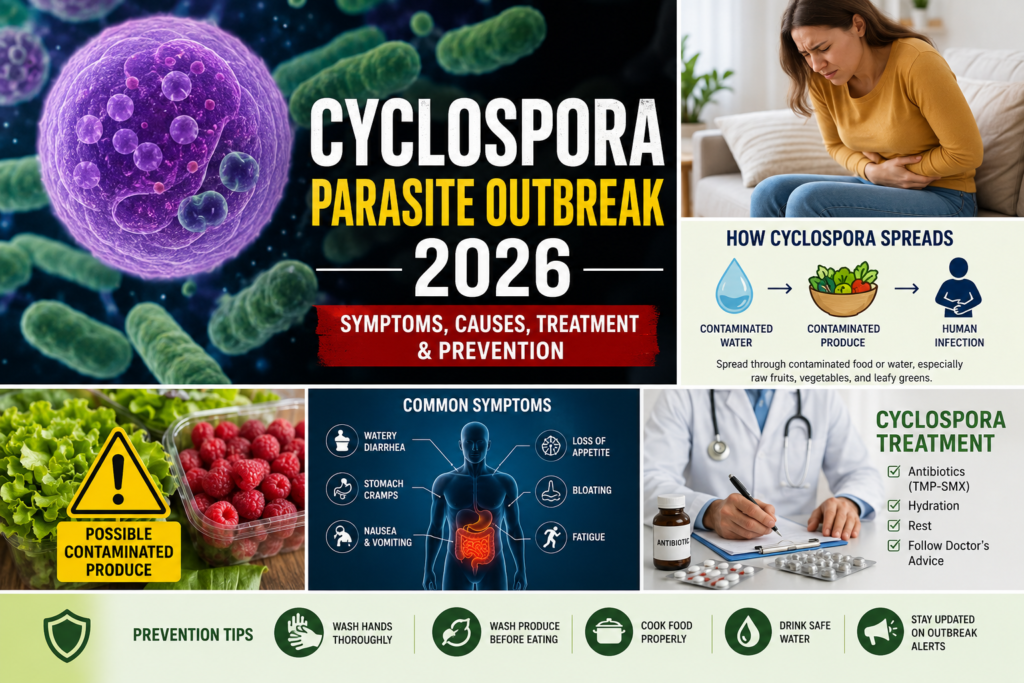
Cyclospora outbreak 2026 is causing widespread diarrhea cases linked to contaminated produce across multiple states.
Learn key symptoms, causes, and how to protect yourself from this growing parasite threat.
In this comprehensive guide, we’ll break down everything you need to know about cyclosporiasis, including symptoms, causes, outbreak trends, treatment, and prevention strategies.
For official updates and case tracking, refer to:
CDC Cyclosporiasis Outbreak Updates
What is Cyclospora Parasite?
Cyclospora cayetanensis is a microscopic parasite that infects the small intestine and causes cyclosporiasis, a disease known for triggering severe gastrointestinal symptoms.
More than 3,000 people in Michigan and Ohio have gotten severe diarrhea, bloating and cramping caused by the microscopic Cyclospora parasite.
Key Facts:
- It spreads through contaminated food or water
- Commonly linked to produce parasite outbreaks
- Not transmitted directly from person to person
- Requires days to become infectious outside the body
Cyclospora Parasite Outbreak 2026: Current Situation
The cyclospora outbreak 2026 has affected multiple regions, with reports of over 1000 confirmed cyclosporiasis cases. Health departments have identified clusters in:
Affected Areas:
- Ohio (including Jackson County)
- Michigan
- Indiana
- Massachusetts
- Maricopa County (Arizona)
- West Virginia
These outbreaks are often tied to contaminated salad vegetables, especially imported produce.
How Does Cyclospora Spread?
Cyclospora spreads through ingestion of contaminated food or water, especially raw produce like lettuce, salad greens, and raspberries. This parasite infection is commonly linked to poor sanitation during farming or handling. Unlike viruses, it doesn’t spread directly person-to-person but causes widespread diarrhea outbreaks through contaminated supply chains.
 Common Sources:
 Common Sources:
- Lettuce and leafy greens
- Fresh herbs (cilantro, basil)
- Raspberries
- Contaminated irrigation water
This is why many outbreaks are labeled as produce parasite outbreaks or vegetable parasite outbreaks.
Cyclosporiasis Symptoms
Symptoms of cyclosporiasis can range from mild to severe, often described as an explosive diarrhea parasite infection.
Common Symptoms:
- Watery diarrhea (sometimes explosive)
- Loss of appetite
- Weight loss
- Stomach cramps and bloating
- Nausea and vomiting
- Fatigue
Severe Cases:
- Prolonged diarrhea lasting weeks
- Dehydration
- Recurring symptoms
Why Is It Called an “Explosive Diarrhea Parasite”?
Cyclospora infections are often referred to as explosive diarrhea outbreaks because of the sudden onset and intensity of symptoms. Patients frequently report urgent, uncontrollable bowel movements.
This symptom makes it one of the most disruptive stomach parasite outbreaks currently circulating.
Cyclospora vs Stomach Virus
Many people confuse cyclosporiasis with a stomach bug going around or viral gastroenteritis.
Key Differences:
| Feature | Cyclospora | Stomach Virus |
|---|---|---|
| Cause | Parasite | Virus |
| Duration | Weeks | Few days |
| Transmission | Food/water | Person-to-person |
| Treatment | Antibiotics | Supportive care |
Cyclospora Outbreak Map & Trends
The cyclosporiasis outbreak map shows a pattern of seasonal spikes, especially in warmer months when fresh produce consumption increases.
High-Risk Period:
- Late spring to summer
- Increased import of fresh vegetables
Trend Insight:
Outbreaks are often linked to supply chain contamination rather than local hygiene issues.
Cyclospora Parasite and Contaminated Produce
One of the biggest concerns in the parasite outbreak 2026 is contaminated produce.
High-Risk Foods:
- Salad mixes
- Spinach and lettuce
- Fresh berries (especially raspberries)
- Imported vegetables
These foods are often consumed raw, making it easier for the parasite to enter the body.
Cyclospora Treatment
Cyclospora treatment typically involves the antibiotic trimethoprim-sulfamethoxazole (TMP-SMX), which is considered the most effective therapy for cyclosporiasis infection. Patients experiencing parasite diarrhea symptoms like watery or explosive diarrhea, fatigue, and stomach cramps should seek medical attention early. Along with antibiotics, proper hydration and electrolyte balance are essential to prevent complications from prolonged intestinal parasite infection. In untreated cases, symptoms may last for weeks or relapse. People searching for “cyclospora treatment CDC” or “how to treat cyclosporiasis fast” should note that there is no reliable over-the-counter cure medical treatment is necessary for full recovery.
Standard Treatment:
- Antibiotic: Trimethoprim-sulfamethoxazole (TMP-SMX)
- Hydration therapy
- Electrolyte balance
Important Note:
Without treatment, symptoms can persist for weeks or even relapse.
Who is at Risk?
Individuals at higher risk of cyclospora infection include travelers, people consuming raw or contaminated produce, and those with weakened immune systems. Children and older adults are also more vulnerable to severe cyclosporiasis symptoms, especially during a cyclospora outbreak, where exposure to infected food increases chances of parasite diarrhea infection.
High-Risk Groups:
- Travelers
- People consuming raw produce frequently
- Individuals with weakened immune systems
- Children and elderly
Prevention: How to Stay Safe
Preventing intestinal parasite infections like Cyclospora requires attention to food safety.
Practical Tips:
1. Wash Produce Thoroughly
Even pre-washed salad should be rinsed again.
2. Avoid Suspicious Sources
Be cautious with imported produce during outbreak alerts.
3. Maintain Hygiene
Wash hands before eating or preparing food.
4. Stay Updated
Follow outbreak news and advisories from health authorities.
Cyclospora in the News Today
Search trends like “what is the news today” and “stomach virus going around” often spike during outbreaks, reflecting public concern.
Local reports from regions like:
- Michigan
- Massachusetts
- Ohio
…highlight how rapidly disease outbreaks can spread when linked to food supply chains.
Why Cyclospora is Often Misunderstood
Despite being common, Cyclospora is frequently misdiagnosed due to symptom overlap with other illnesses.
Reasons:
- Symptoms resemble food poisoning
- Lack of awareness
- Requires specific lab testing
This leads to underreporting and delayed treatment.
Cyclospora vs Other Parasites
Cyclospora Parasite is just one type of parasite diarrhea infection, but it has unique traits.
Comparison:
- Giardia → spreads through water
- E. coli → bacteria, not parasite
- Norovirus → viral
Cyclospora stands out due to its link with fresh produce.
Global Impact of Cyclosporiasis
Though outbreaks are often reported in the U.S., Cyclospora is a global issue, especially in regions with:
- Poor sanitation
- Contaminated water sources
- Limited food safety regulations
Read more: France Confirms First Ebola Case| what Ebola is?,
How to Get Rid of Hyperpigmentation Naturally in 2026: A Guide for Every Skin Tone
Final Thoughts
The Cyclospora parasite outbreak 2026 highlights the growing risk of intestinal parasite infections linked to contaminated produce such as lettuce, salad greens, and raspberries. With increasing reports of cyclosporiasis outbreaks across states like Ohio, Michigan, and Massachusetts, it is crucial to stay informed about cyclospora symptoms, including persistent diarrhea, fatigue, and stomach cramps. Early diagnosis and proper cyclospora treatment using antibiotics can significantly reduce recovery time and prevent complications.
As this produce Cyclospora Parasite outbreak continues to spread, prevention remains the most effective strategy. Washing vegetables thoroughly, avoiding high-risk foods during alerts, and following updates from health authorities like the CDC can help minimize exposure. Many people mistake this condition for a common stomach bug going around, which delays proper treatment and increases risk.
Understanding what is cyclosporiasis and how it spreads empowers individuals to make safer food choices. With over 1000 confirmed cyclosporiasis cases, awareness is key to controlling this diarrhea outbreak. Staying proactive with hygiene, food safety, and medical care is essential to protect yourself and your family from this ongoing parasite outbreak.
This article is for informational purposes only and is not intended as medical advice. Always consult a qualified healthcare professional for diagnosis, treatment, or any health-related concerns.






















Leave a Comment
Your email address will not be published. Required fields are marked with *