
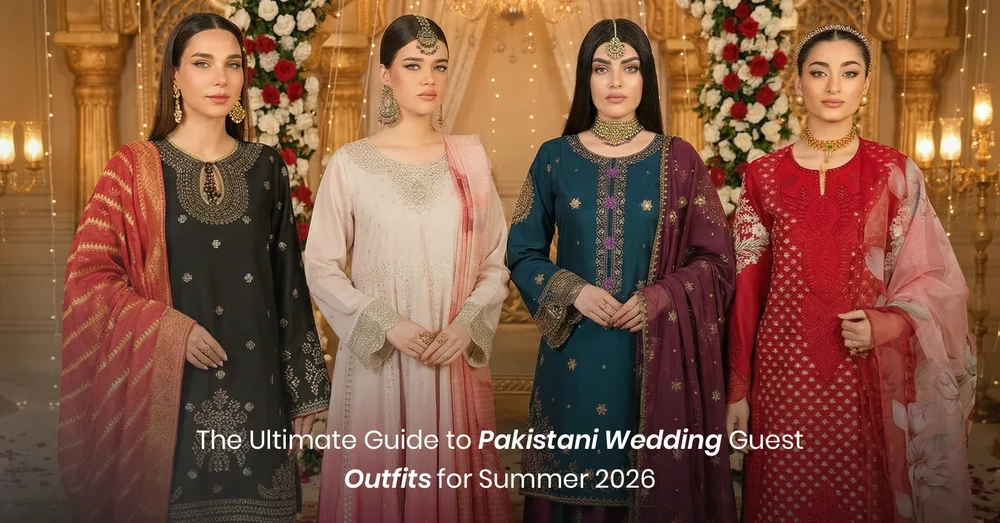
Confused about what to wear to a Pakistani wedding? Here’s your complete guide to guest outfits for mehndi, barat, and walima by function, dress code, and budget.
What to Wear to a Pakistani Wedding: The Complete Guest Outfit Guide (2026)
You got the invitation card thick, gold-foiled, with three or four function names printed on it that already feel like a mini itinerary. Mehndi. Barat. Walima. Maybe a Qawwali night or a Dholki thrown in for good measure. And now comes the question every guest quietly panics about: what am I actually supposed to wear to each one?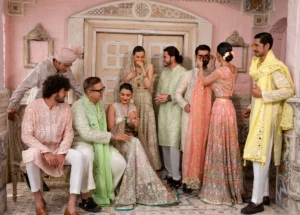
Unlike a Western wedding, where “formal attire” usually means one outfit for one evening, a Pakistani wedding is a multi-day event with its own dress code for every function. Getting it right isn’t about owning the most expensive outfit in the room it’s about understanding what each occasion calls for, so you look appropriate, comfortable, and genuinely put-together in every photo. This guide breaks it down function by function, for women and men, at every budget.
Why Pakistani Wedding Dressing Feels So Complicated
Part of the confusion comes from the fact that a single wedding can span three to five separate events, each with its own colour palette, formality level, and unwritten rules. A guest who shows up in barat-level formalwear to a casual mehndi will feel overdressed; someone who wears a plain kurta to the walima will feel underdressed next to the bride’s family in full sequins. The good news is that once you understand the logic behind each function, dressing for the rest of wedding season becomes second nature.
The general rule of thumb: dress up as the wedding progresses. Mehndi is playful and colourful, barat is the most formal and glamorous, and walima sits somewhere in between elegant but slightly more restrained.
 A Quick Dress-Code Cheat Sheet
 A Quick Dress-Code Cheat Sheet
| Function | Formality Level | Best Colours | Fabric Suggestions |
|---|---|---|---|
| Mehndi | Casual-festive | Yellow, orange, pink, colour-blocked | Cotton, chiffon, light silk |
| Barat | Most formal | Jewel tones (avoid bridal red) | Raw silk, organza, jamawar |
| Nikah | Modest, elegant | Pastels — ivory, blush, sage | Chiffon, crepe, light silk |
| Walima | Polished, refined | Metallics, soft tones | Organza, chiffon, net |
Quick rule: if you only remember one thing from this guide never wear the shade the bride has chosen, and always dress up (not down) for the barat.
 What to Wear to a Pakistani Mehndi
 What to Wear to a Pakistani Mehndi
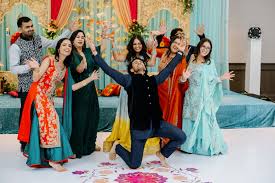
The mehndi is the most relaxed function on the wedding calendar, and it’s also the one where guests are expected to have the most fun with colour. Bright yellows, oranges, greens, pinks, and increasingly, colour-blocked outfits are the norm. Many families now assign specific colour palettes to guests to keep the event looking cohesive in photos — always check the invitation or ask the host before you shop.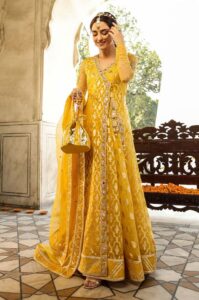
For women: A simple kurta with a lehenga or gharara, a shararra set, or even a well-fitted angrakha-style kurta with cigarette pants works well. Light embroidery, gota work, or mirror work suits the festive mood without tipping into overdressed territory. Comfortable footwear matters here more than at any other function, since mehndis usually involve dancing.
For men: A colourful kurta shalwar, ideally in a shade that complements the assigned palette, is the safest and most comfortable choice. Slightly more adventurous guests can try a Nehru jacket over a plain kurta for extra flair without needing to commit to a full sherwani.
⚠️ What NOT to wear to a mehndi: heavily embellished or floor-length gowns feel out of place here, and all-black or all-white outfits tend to clash with the deliberately colourful theme most hosts go for.
 What to Wear to a Pakistani Barat:
 What to Wear to a Pakistani Barat:
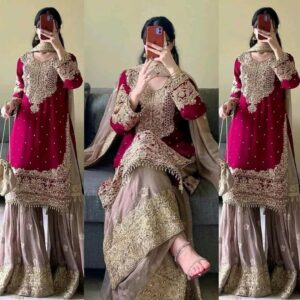
If there’s one event where guests genuinely dress to the nines, it’s the barat (also called the shaadi or rukhsati function in some families). This is where you’ll see the heaviest embroidery, the richest fabrics, and the most statement jewellery of the entire wedding season.
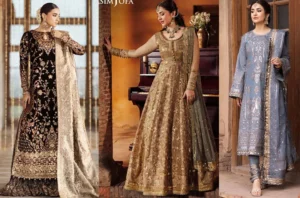
For women: A heavily embellished lehenga, a formal gharara or sharara set, or a structured gown in jewel tones (deep red, emerald, royal blue, or wine) is appropriate. Fabrics like raw silk, organza, and jamawar photograph beautifully under event lighting. This is also the function where a statement dupatta cape-style or double-layered makes the biggest visual impact, a trend that has become especially popular in recent wedding seasons.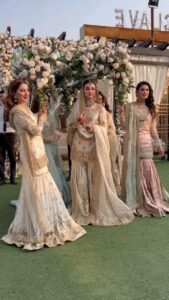
For men: A sherwani, ideally paired with a matching or contrasting churidar and a well-tied turban or safa if the family follows that tradition, remains the gold standard. For guests who prefer something lighter, a heavily embroidered waistcoat over a fitted kurta is an elegant middle ground.
⚠️ What NOT to wear to a barat: bridal red is traditionally reserved for the bride, so most guests avoid it here. Beyond that, almost any rich, formal colour works though it’s worth checking whether the hosts have requested guests avoid a specific shade reserved for the wedding party.
What to Wear to a Pakistani Nikah
The nikah ceremony is a religious occasion, and dressing for it calls for a slightly more modest and restrained approach than the other functions, even when it’s combined with a walima-style reception afterward.
For women: Pastel shades ivory, champagne, blush, powder blue, and sage have become increasingly popular for nikah functions, moving away from the darker, heavier tones once associated with formal wedding wear. A modest, well-tailored outfit with a dupatta that can easily cover the head during the ceremony itself is a thoughtful touch, particularly if the nikah is being conducted in a more traditional or religious setting.
For men: A simple, elegant kurta pajama in a neutral or pastel tone, paired with a light waistcoat, suits the tone of the occasion without competing with the more elaborate barat look worn later in the season.
 What to Wear to a Pakistani Walima
 What to Wear to a Pakistani Walima
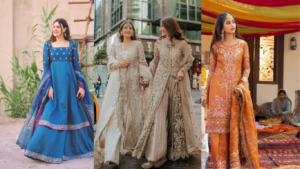
Hosted by the groom’s family, the walima is typically the most photographed reception after the barat, and guests are expected to look polished without necessarily matching the barat’s level of maximalism.
For women: A structured gown, a fitted lehenga with lighter embellishment than the barat outfit, or a well-tailored sharara in soft metallics works beautifully. Lighter fabrics such as organza and chiffon are especially popular for walima looks because they photograph well without adding bulk — a practical consideration for anyone attending back-to-back functions in the same week.
For men: A well-fitted suit, a lighter sherwani, or a smart kurta with a blazer are all acceptable, depending on how formal the specific family’s walima tends to be. When in doubt, a well-tailored suit is rarely wrong at a walima.
 What to Wear to a Dholki or Qawwali Night
 What to Wear to a Dholki or Qawwali Night
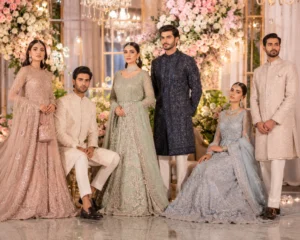
Smaller pre-wedding functions like the dholki or a qawwali night follow the same energy as the mehndi but with even more room to relax. A simple embroidered kurta with jeans or cigarette pants, or a lightly worked kurta set, works well for both men and women — save the heavier festive pieces for the mehndi itself. These low-stakes functions are also the easiest place to re-wear an outfit from earlier in the season without anyone noticing.
Dressing for a Diaspora Wedding (UK, US, Canada)
Pakistani weddings hosted abroad generally follow the same dress-code logic, but with a few practical adjustments. Venues are often indoor and air-conditioned year-round, so heavier winter fabrics like velvet are more common even in warmer months, and outfits are frequently rented or shipped in advance rather than bought last-minute locally.
If you’re attending a UK, US, or Canada-based Pakistani wedding, it’s worth asking the host whether the event will run on “desi time” or start closer to the printed time, since that can affect how early you’ll be standing around in formalwear.
Budget-Friendly Styling Tips
Not every guest needs a new outfit for every single function, and most experienced wedding-goers don’t buy one. A few practical strategies:
- Rotate accessories, not outfits. The same base outfit can look completely different across two functions with a different dupatta styling, jewellery set, or jacket layered on top.
- Rent for the barat. Since barat outfits tend to be the most expensive and the least reused afterward, renting from a boutique is an increasingly common choice, especially for out-of-town guests.
- Invest in one statement piece. A single well-made dupatta, jacket, or jewellery set can be restyled across multiple functions and outfits, stretching a smaller wardrobe further.
- Tailoring makes the biggest difference. A moderately priced outfit that’s been properly tailored to fit will almost always photograph better than an expensive one that doesn’t sit right.
Common Guest Dressing Mistakes to Avoid
Even well-intentioned guests sometimes get a few things wrong. Wearing bridal red or the exact shade the bride has chosen for her outfit is the most common misstep when in doubt, ask a close family member what colour the bride will be wearing. Overdressing for a casual mehndi or underdressing for the barat are the next most common issues, which is why checking the invitation’s dress code (many now specify it explicitly) is worth the extra minute.
Finally, comfort is often underestimated: weddings involve hours of standing, sitting on the floor, and dancing, so choosing fabrics and footwear that hold up over a long event matters just as much as how the outfit looks in photos.
Frequently Asked Questions
Can I wear the same outfit to two different functions? Yes, especially between smaller or more casual events like a dholki and a mehndi. Restyling with different jewellery or a different dupatta drape is a common and practical approach.
What should men wear if they don’t own a sherwani? A well-fitted kurta paired with a waistcoat or Nehru jacket is a widely accepted alternative to a full sherwani, particularly for guests rather than immediate family.
Is it ever appropriate to wear Western formalwear to a Pakistani wedding? For the walima specifically, a well-tailored suit or an elegant Western gown is increasingly common and generally well-received. For the mehndi and barat, traditional or fusion wear is still the safer and more festive choice.
How do I know what colour to avoid? Bridal red is the one colour guests should generally steer clear of across all functions. Beyond that, it’s worth checking with the hosts if they’ve assigned specific palettes for the mehndi.
“Every wedding and every family has its own version of these traditions, so when in doubt, a quick question to the host is always the safest styling decision you can make”.
Read more:















Leave a Comment
Your email address will not be published. Required fields are marked with *