

Easy Cheesy Macaroni: A Simple, Creamy Homemade Recipe A good bowl of cheesy macaroni should have tender pasta, plenty of cheese flavour, and a smooth sauce that coats every piece. The challenge is getting that creamy texture without ending up with dry pasta, a watery sauce, or cheese that turns grainy. This easy cheesy macaroni
Easy Cheesy Macaroni: A Simple, Creamy Homemade Recipe
A good bowl of cheesy macaroni should have tender pasta, plenty of cheese flavour, and a smooth sauce that coats every piece. The challenge is getting that creamy texture without ending up with dry pasta, a watery sauce, or cheese that turns grainy.
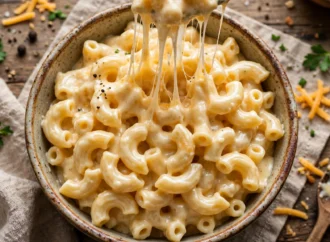
This easy cheesy macaroni recipe uses everyday ingredients and a simple stovetop method. You will make a basic white sauce with butter, flour, and milk, then stir in grated cheddar cheese until it melts into a creamy coating. There is no oven required, and you do not need special cooking equipment.
The recipe is suitable for beginners, students, busy families, and anyone looking for a comforting homemade meal. You can follow it as written or adapt the seasoning and cheese to suit your preferences.
What Makes This Easy Cheesy Macaroni Worth Making?
Accessible ingredients: Pasta, milk, butter, flour, and cheddar are available in many supermarkets and grocery stores.
A creamy homemade sauce: The butter-and-flour base helps thicken the milk before the cheese is added.
No oven needed: Everything comes together on the stovetop, making this a useful option when you do not want to bake a pasta dish.
Easy to customise: You can add vegetables, herbs, spices, or a different melting cheese.
Suitable for different occasions: Serve it as a quick lunch, a simple dinner, or a side dish with vegetables and other main courses.
The recipe makes four moderate servings. If you are serving it as the main meal for particularly hungry diners, you may prefer to increase the quantities.
Ingredients for Easy Cheesy Macaroni

Use the quantities below for a balanced sauce that clings to the pasta without becoming excessively heavy.
| Ingredient | US measurement | Metric measurement |
|---|---|---|
| Dry elbow macaroni | 8 oz | 225 g |
| Butter, preferably unsalted | 2 tbsp | 28 g |
| All-purpose flour | 2 tbsp | About 16 g |
| Milk | 2 cups | 480 ml |
| Sharp or medium cheddar cheese, freshly grated | 2 cups | About 200 g |
| Salt for the sauce | ½ tsp, or to taste | About 3 g |
| Mustard powder | ½ tsp | About 1 g |
| Paprika | ¼ tsp | About 0.5 g |
| Ground black pepper | ¼ tsp | About 0.5 g |
| Salt for the pasta water | As needed | See package and taste |
Measurements for grated cheese are approximate because the amount that fits into a cup depends on how finely it is grated and how firmly it is packed. Weighing the cheese gives you a more consistent result.
What each ingredient does
Macaroni: Elbow macaroni is the classic choice, but other short pasta shapes work well. The hollow centre and curved shape help hold the sauce.
Butter: Butter combines with the flour to create the base of the sauce. Unsalted butter makes it easier to control the final salt level.
All-purpose flour: Flour thickens the milk and gives the sauce body. Cooking it briefly with the butter helps remove its raw flour taste.
Milk: Milk creates the creamy liquid base. Whole milk gives a richer result, while lower-fat milk can work if you prefer a lighter texture. The sauce may be less rich with lower-fat milk.
Cheddar cheese: Cheddar supplies the main flavour and helps create the cheesy coating. Medium cheddar is a good choice for a gentler taste, while sharp cheddar gives a more pronounced cheese flavour.
Mustard powder: A small amount adds savoury depth without making the macaroni taste strongly of mustard. It is optional.
Paprika and black pepper: These provide gentle warmth and seasoning. Ordinary sweet paprika is suitable; smoked paprika gives the dish a more noticeable smoky flavour.
Salt: Salt seasons both the pasta and sauce. The amount needed depends on the cheese, the salt in the pasta water, and your personal taste.
Which Cheese Works Best

Cheddar is a practical starting point for homemade cheesy macaroni because it gives the sauce a familiar cheese flavour. However, not every cheese melts in the same way. The variety, moisture content, age, and processing can all affect the finished texture.
Here are some useful options:
| Cheese | Flavour and texture | Best use |
|---|---|---|
| Medium cheddar | Balanced flavour with a good melting texture | Everyday cheesy macaroni |
| Sharp cheddar | Stronger, more pronounced cheese flavour | A richer-tasting sauce |
| Monterey Jack | Mild flavour and smooth melting | Blending with cheddar |
| Gouda | Buttery, savoury flavour; results vary by age | Adding depth to the sauce |
| Mozzarella | Mild flavour and a stretchy texture | A small addition alongside cheddar |
| Parmesan | Salty, savoury flavour | A small amount for extra depth |
For this recipe, use 200 g (about 2 cups) of freshly grated cheddar. If you want to experiment, replace up to half of it with Monterey Jack or Gouda.
Freshly grated cheese is often a helpful choice because some pre-grated products contain anti-caking ingredients that can affect how smoothly they incorporate into a sauce. Most importantly, add the cheese gradually and avoid boiling the sauce after adding it. Illinois Extension also recommends gentle heat and gradual cheese addition for a smoother sauce.
Illinois+1
Choosing the Right Pasta
Elbow macaroni is ideal for this easy macaroni and cheese recipe, but you are not limited to one shape.
Other suitable choices include:
Small shells: Their curved interiors collect the sauce.
Penne: A convenient alternative with a firm shape.
Fusilli: The twists help the sauce cling to the pasta.
Small tubes: These offer a similar bite to elbow macaroni.
Choose a short pasta that is easy to stir and eat. Check the package directions for the recommended cooking time because different shapes and brands cook at different rates.
Cook the pasta until it is just tender rather than very soft. It will be mixed with the warm sauce, and pasta that is already overcooked can become mushy.
Kitchen Equipment You Need
You do not need specialist equipment to prepare stovetop cheesy macaroni. Gather these basic items before you begin:
A large saucepan for boiling the pasta.
A medium saucepan for preparing the cheese sauce.
A colander for draining the pasta.
A whisk for combining the milk with the flour mixture.
A wooden spoon or heat-resistant spatula for stirring.
A grater if you are using a block of cheese.
Measuring cups, spoons, or a kitchen scale.
Using two saucepans makes the process easier because you can prepare the sauce while the pasta cooks. If you have only one suitable saucepan, cook the pasta first, drain it, and set it aside while you prepare the sauce.
How to Make Easy Cheesy Macaroni Step by Step

Allow approximately 10 minutes for preparation and 20 minutes for cooking. The exact timing depends on your stove, pasta brand, and how quickly the sauce thickens.
Step 1: Prepare and Cook the Pasta
 Bring a large saucepan of water to a boil. Salt the water according to your usual cooking preference and the amount of water used.
Add the 225 g of dry elbow macaroni and stir immediately to help separate the pieces. Cook according to the package directions, checking the pasta near the lower end of the suggested time.
The macaroni should be tender but still hold its shape when bitten. If it is soft and falling apart, it has cooked too long.
Drain the pasta in a colander. Do not rinse it for this recipe; draining is enough. Set it aside while you prepare the sauce.
Step 2: Prepare the Sauce
 Place a medium saucepan over medium-low heat. Add the 28 g of butter and let it melt.
Sprinkle in the 16 g of flour. Whisk continuously for about one minute, until the mixture forms a smooth paste and looks slightly bubbly. Avoid letting it become dark brown.
Gradually pour in the 480 ml of milk, whisking as you go. Adding the milk in several small additions at first makes it easier to work out any lumps before the mixture becomes more liquid.
Continue stirring over medium-low to medium heat until the sauce begins to thicken. This may take around three to five minutes, although your stove and saucepan can affect the timing.
You are looking for a smooth sauce that lightly coats the back of a spoon. It should not become a stiff paste at this stage.
Step 3: Melt the Cheese Correctly
Turn off the heat and move the saucepan away from the hottest part of the burner. Add the grated cheddar in two or three small handfuls, stirring after each addition until it melts.
Once the cheese has melted, stir in the ½ teaspoon of mustard powder, ¼ teaspoon of paprika, ¼ teaspoon of black pepper, and ½ teaspoon of salt, adjusting the salt to taste.
The sauce should look smooth and creamy, with the cheese evenly distributed throughout.
Why turn off the heat first? Cheese can become grainy or separate when exposed to excessive heat. The residual warmth of the milk sauce is usually enough to melt finely grated cheddar. If the cheese is not melting, return the pan to the lowest heat briefly and stir gently rather than allowing the sauce to boil.
Illinois+1
Step 4: Combine the Pasta and Sauce

Add the drained macaroni to the cheese sauce. Stir gently until the pasta is evenly coated.
If the sauce looks a little loose, let the mixture stand for about one minute while stirring occasionally. The pasta will absorb some sauce as everything settles.
If the mixture looks too thick, add a small splash of milk and stir. Start with one tablespoon, then add more only if necessary. A little at a time is easier to control than pouring in a large amount.
Step 5: Adjust the Consistency and Serve
 Taste the macaroni before serving. Add a little more black pepper or salt if needed.
The finished dish should be creamy, with a sauce that clings to the pasta rather than pooling heavily at the bottom of the pan. Remember that the sauce will thicken as it cools, so it is best to serve the macaroni while it is warm.
Transfer to serving bowls and, if desired, finish with a light sprinkle of paprika or freshly ground black pepper. Serve immediately.
Tips for Creamy, Flavourful Cheesy Macaroni
Small adjustments can make a noticeable difference to the final dish.
Grate the cheese finely. Smaller pieces melt more easily than large chunks, helping you incorporate the cheese without prolonged heating.
Add the milk gradually. Whisking as you pour helps the flour mixture disperse evenly and reduces lumps.
Keep the sauce at a gentle temperature. Once the cheese has been added, avoid vigorous simmering or boiling.
Taste before adding extra salt. Cheddar can be quite salty, particularly if you use a mature variety. Seasoning gradually gives you better control.
Have the pasta ready before the sauce is finished. Cheese sauce is easiest to work with while warm. Preparing the components together helps prevent the sauce from sitting and thickening too much.
Reserve a little milk. Keep a few tablespoons available for adjusting the consistency just before serving.
Common Mistakes and How to Avoid Them
| Problem | Likely cause | What to do |
|---|---|---|
| Grainy cheese sauce | Excessive heat, unsuitable cheese, or cheese added too quickly | Remove from the heat and whisk gently; avoid boiling after adding cheese |
| Lumpy sauce | Milk added too quickly or insufficient whisking | Add milk gradually and whisk thoroughly |
| Overcooked macaroni | Pasta cooked well beyond the package’s suggested time | Check it early and drain when just tender |
| Bland flavour | Too little seasoning or a very mild cheese | Taste and adjust salt, pepper, mustard powder, or cheese |
| Sauce too thick | Too much evaporation or cooling | Stir in milk one tablespoon at a time |
| Sauce too thin | Insufficient thickening before adding cheese | Gently warm the milk-and-flour base a little longer before adding cheese |
| Oily sauce | Cheese overheated or separated | Remove from heat and stir gently; severe separation may not be fully reversible |
If a cheese sauce becomes grainy, avoid trying to fix it by boiling it harder. Excessive heat can worsen the texture. A small splash of warm milk and gentle whisking may help, but the result depends on how far the sauce has separated.
Easy Ingredient Substitutions
You can adapt the recipe to suit your pantry, although substitutions may change the flavour or texture.
Milk: Whole milk gives the richest result. Lower-fat milk can also work. Plant-based milk is less predictable; an unsweetened, unflavoured variety is the better starting point, but the sauce may taste and behave differently.
Butter: A suitable non-dairy butter alternative can replace dairy butter, although flavour and consistency may vary.
All-purpose flour: Plain flour is another name for the same general ingredient in many regions. Gluten-free flour blends may work, but thickening results depend on the blend.
Cheddar: Monterey Jack, young Gouda, or a suitable melting cheese can replace some or all of the cheddar. Expect changes in flavour and texture.
Elbow macaroni: Use shells, fusilli, or another short pasta, following the cooking directions on its package.
Mustard powder: Leave it out if unavailable. The dish will still work, with a slightly different flavour profile.
Paprika: Omit it or use a small pinch of another mild spice you enjoy.
For a dairy-free version, use compatible plant-based butter, milk, and cheese alternatives. Because their melting properties differ, you may need to adjust the liquid and thickening method.
Delicious Variations to Try
Once you have mastered the basic recipe, try one small variation at a time.
Vegetable Cheesy Macaroni
Stir in cooked broccoli florets, peas, sweetcorn, or finely chopped spinach. Cook the vegetables separately until tender, then add them when combining the pasta and sauce. This keeps excess vegetable water from unnecessarily thinning the sauce.
Garlic and Herb Macaroni
Add a small amount of garlic powder to the sauce, or briefly cook finely minced garlic in the melted butter before adding the flour. Finish with chopped parsley if available.
Mildly Spiced Macaroni
Add a pinch of chilli flakes or cayenne pepper if you like a little heat. Start with a small amount because the flavour can become dominant quickly.
Extra-Cheesy Macaroni
Replace up to half the cheddar with Monterey Jack or another cheese known to melt well in a sauce. A little Parmesan can also add savoury flavour, but using it as the only cheese may produce a less smooth result.
Protein-Boosted Macaroni
Fold in cooked chicken or drained, rinsed beans. Keep additions moderate so that the sauce can still coat the pasta. Any meat or other perishable ingredients should be cooked and handled safely.
What to Serve with Cheesy Macaroni
Creamy macaroni is rich and filling, so fresh vegetables and lighter sides provide a useful contrast.
Green salad: Crisp lettuce, cucumber, and a tangy dressing balance the richness of the cheese.
Steamed broccoli: Its mild, slightly earthy flavour complements cheddar.
Roasted vegetables: Carrots, courgettes, and bell peppers add colour and texture.
Tomato salad: Fresh tomatoes offer a bright contrast to the creamy sauce.
Garlic bread: A good option if you want a more substantial comfort-food meal.
Grilled chicken or beans: These can turn the macaroni into a fuller main course with additional protein.
For a simple lunch, serve the macaroni with a green salad. For a family dinner, add steamed vegetables and your preferred protein.
How to Store and Reheat Leftovers Safely
Cheesy macaroni is best freshly made, but leftovers can be stored for another meal if handled properly.
Refrigeration
Transfer leftovers to a clean, shallow, covered container and refrigerate promptly. Food-safety guidance recommends refrigerating perishable food within two hours, or within one hour when temperatures exceed 90°F (32°C). Keep the refrigerator at or below 40°F (4°C).
Use refrigerated leftovers within three to four days, following USDA guidance. If the macaroni has been left out beyond the recommended time, discard it rather than relying on smell or appearance to judge whether it is safe.
Ask USDA+1
Reheating on the stovetop
Place the portion you intend to eat in a saucepan. Add one or two tablespoons of milk and warm over low to medium-low heat, stirring regularly.
Add a little more milk if the sauce remains thick. Avoid aggressive boiling, which can make the cheese sauce separate and affect its texture.
Reheat leftovers thoroughly to an internal temperature of 165°F (74°C), checking with a food thermometer.
Ask USDA+1
Reheating in the microwave
Place a serving in a microwave-safe bowl and add a small splash of milk. Cover loosely with a microwave-safe cover, leaving room for steam to escape.
Heat in short intervals, stirring between them so the food warms evenly. Check that the entire portion reaches 165°F (74°C), including the centre.
Can you freeze it?
You can freeze cheesy macaroni in a suitable airtight freezer container, but the texture may change. Dairy-based sauces can become less smooth after freezing and reheating. Freeze promptly if you do not expect to eat the leftovers within the recommended refrigerated period, and reheat thoroughly after thawing.
Frequently Asked Questions
1. How do you make cheesy macaroni creamy?
Use a properly thickened milk sauce, add freshly grated cheese gradually, and avoid boiling the sauce after adding the cheese. If the finished macaroni becomes too thick, stir in a little milk until it reaches your preferred consistency.
2. Which cheese is best for macaroni?
Cheddar is a reliable choice for a familiar, savoury flavour. Medium cheddar provides a balanced taste, while sharp cheddar produces a stronger cheese flavour. Monterey Jack or young Gouda can be blended with cheddar for a different flavour and texture.
3. Can I make cheesy macaroni without an oven?
Yes. This is a stovetop macaroni and cheese recipe, so you do not need an oven. Cook the pasta, prepare the sauce in a saucepan, and combine them before serving.
4. Why did my cheese sauce turn grainy?
The sauce may have become too hot, or the cheese may not have melted smoothly into the liquid. Remove the pan from the heat and stir gently. Next time, grate the cheese finely, add it gradually, and avoid boiling the finished sauce. Some cheese varieties are also less suitable for smooth sauces.
Illinois+1
5. Can I use a different type of pasta?
Yes. Small shells, fusilli, penne, and other short pasta shapes can work. Check the cooking instructions for your chosen pasta and cook it until just tender. Different shapes may hold the sauce differently.
6. How can I make the sauce thicker or thinner?
For a thicker sauce, let the milk-and-flour mixture cook a little longer before adding the cheese. For a thinner sauce, stir in milk one tablespoon at a time. Remember that the sauce naturally thickens as it cools.
7. Can I prepare cheesy macaroni ahead of time?
You can prepare the components ahead of time, but the smoothest texture usually comes from combining the pasta and sauce shortly before serving. If you make the entire dish in advance, refrigerate it promptly and reheat it thoroughly with a little milk to help loosen the sauce.
8. How should I reheat leftover macaroni?
Reheat it gently on the stovetop with a splash of milk, stirring until evenly hot. Alternatively, microwave it in a covered, microwave-safe container, stirring between heating intervals. Reheat leftovers to 165°F (74°C) throughout.
Conclusion
 Homemade easy cheesy macaroni does not require complicated ingredients or advanced cooking skills. With tender pasta, a simple milk-based sauce, and carefully melted cheddar, you can prepare a comforting meal in about 30 minutes.
Follow the method, keep the heat gentle when adding the cheese, and adjust the sauce with a little milk if needed. Once you are comfortable with the basic recipe, experiment with vegetables, herbs, or other melting cheeses to make it your own.
Recipe Card: Easy Cheesy Macaroni
Easy Cheesy Macaroni
A simple stovetop macaroni recipe with tender elbow pasta and a creamy cheddar cheese sauce.
Prep time
10 minutes
Cook time
20 minutes
Total time
30 minutes
Servings
4
Ingredients
Copy ingredient list
Instructions
- Bring a large saucepan of salted water to a boil. Add the macaroni and cook according to the package directions until just tender. Drain without rinsing.
- Melt the butter in a medium saucepan over medium-low heat. Whisk in the flour and cook for about one minute.
- Gradually whisk in the milk. Cook for approximately three to five minutes, stirring, until the sauce thickens enough to coat the back of a spoon.
- Remove the saucepan from the heat. Stir in the grated cheddar in two or three additions until melted. Add the salt, mustard powder, paprika, and black pepper.
- Add the drained macaroni and stir gently until coated. If the sauce is too thick, add milk one tablespoon at a time.
- Taste, adjust the seasoning if needed, and serve warm.
Recipe notes
Use freshly grated cheese for a smoother sauce.
Do not boil the sauce after adding the cheese.
Refrigerate leftovers promptly and use within three to four days.
Suitable for a vegetarian diet when the cheese is made without animal-derived rennet and all other ingredients meet your dietary requirements.





















Leave a Comment
Your email address will not be published. Required fields are marked with *