
Mental Health & Anxiety: Clinical Signs, 2026 Trends & Evidence-Based Solutions Everyone feels nervous before a major job interview or a significant life transition. However, when persistent worry paralyzes your routine and shadows your daily life, it morphs from temporary stress into something deeper. Navigating the complex world of mental health & anxiety – signs
Mental Health & Anxiety: Clinical Signs, 2026 Trends & Evidence-Based Solutions
Everyone feels nervous before a major job interview or a significant life transition. However, when persistent worry paralyzes your routine and shadows your daily life, it morphs from temporary stress into something deeper. Navigating the complex world of mental health & anxiety – signs & solutions is the critical first step toward reclaiming your cognitive freedom and long-term peace of mind.
According to data from the World Health Organization, (WHO), anxiety disorders stand as the most common mental health conditions worldwide, impacting hundreds of millions globally. Yet, a massive percentage of individuals suffer in silence, misinterpreting their symptoms as simple fatigue or personal failure.
Understanding the precise red flags and evidence-based lifestyle interventions empowers you to intercept the chronic worry cycle before it alters your neural health.
What is Anxiety? Understanding the Neurological Baseline
At its core, anxiety is your body’s evolutionary survival mechanism. It is a biological “fight-or-flight” response controlled by the amygdala (the brain’s fear center), designed to preserve life in the face of immediate physical danger. When a threat is perceived, your brain floods your system with catecholamines like cortisol and adrenaline, altering your heart rate and respiration to prepare you to fight or flee.
The pathology begins when this internal alarm system jams in the “on” position. While acute stress naturally dissipates once an external challenge concludes, chronic anxiety persists for months at a time, entirely uncoupled from immediate realities and fixated instead on future uncertainties.
The Primary Clinical Classifications of Anxiety
Anxiety does not manifest identically in every nervous system. To apply targeted solutions, professionals categorize chronic anxiety into distinct clinical disorders:
-
Generalized Anxiety Disorder (GAD): Chronic, exaggerated, and uncontrollable worry regarding everyday variables—such as finances, career stability, or family health—stretching continuously for at least six months.
-
Panic Disorder: Sudden, unpredictable, and recurring spikes of visceral terror (panic attacks) accompanied by severe somatic symptoms like chest constriction, hyperventilation, or deep depersonalization.
-
Social Anxiety Disorder (SAD): An intense, irrational fear of being scrutinised, judged, or humiliated in social, public, or occupational environments.
-
Specific Phobias: An overwhelming, highly localized fear response triggered by a specific object or environment (e.g., heights, enclosed spaces, flying).
Tracking the Red Flags: How Chronic Anxiety Manifests
To properly manage anxiety, you must identify how its symptoms distribute across three core vectors: emotional, physical, and behavioral.
                     +---------------------------------------+
                     |       CHRONIC ANXIETY SYMPTOMS        |
                     +---------------------------------------+
                                         |
         +-------------------------------+-------------------------------+
         |                               |                               |
         v                               v                               v
+-----------------+             +-----------------+             +-----------------+
|    EMOTIONAL    |             |    PHYSICAL     |             |   BEHAVIORAL    |
+-----------------+             +-----------------+             +-----------------+
| * Constant dread|             | * Tachycardia   |             | * Avoidance of  |
| * Irritability  |             | * Muscle tension|             |   social events |
| * Brain fog     |             | * GI distress   |             | * Hypervigilant |
| * Restlessness  |             | * Insomnia      |             |   over-planning |
+-----------------+             +-----------------+             +-----------------+
1. Psychological and Emotional Indicators
Anxiety fundamentally hijacks your cognitive frameworks. Key cognitive red flags include:
-
A pervasive, background sense of impending doom or catastrophic failure.
-
Heightened irritability and a low threshold for frustration or sensory overload.
-
Cognitive fatigue (“brain fog”) and diminished working memory caused by a mind continuously processing hypothetical worst-case scenarios.
2. Somatic and Physical Symptoms
 Because the nervous system is inextricably linked to the rest of your body, chronic emotional tension manifests as physical wear:
-
Muscle Hypertonia: Chronic jaw clenching (bruxism), rigid shoulders, and recurring tension headaches.
-
Cardiovascular & Respiratory Shifts: Intermittent tachycardia (racing heart), chest tightness, or a sensation of air hunger.
-
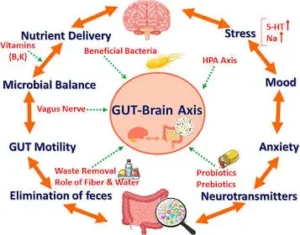
The Gut Connection: Nausea, chronic bloating, stomach cramps, or a direct flare-up of Irritable Bowel Syndrome (IBS).
-
Sleep Disruptions: Sleep-onset insomnia driven by cognitive hyperarousal (a racing mind at bedtime).
3. Behavioral Adaptations
When anxiety dictates your actions, it leaves behind telling behavioral breadcrumbs:
-
Maladaptive Avoidance: Methodically skipping social events, specific career meetings, or geographic environments that trigger discomfort.
-
Anxiety Procrastination: Putting off crucial tasks because the sheer emotional friction of starting them induces acute overwhelm.
-
Compulsive Over-planning: Spending hours engineering minor details of future scenarios to create an illusion of absolute certainty.
Actionable, Evidence-Based Lifestyle Solutions
For mild to moderate baseline anxiety, implementing highly structured daily interventions can rapidly down-regulate a hyperactive nervous system.
1. Immediate Neurological Grounding: The 3-3-3 Rule & Box Breathing
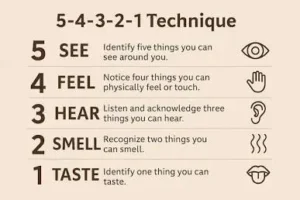 When an anxiety spike hits, your sympathetic nervous system takes the wheel. Grounding exercises rapidly force cognitive focus back onto real-time sensory inputs.
-
The 3-3-3 Rule: Dynamically label three visual objects in your room, identify three distinct auditory sounds, and physically move three distinct muscle groups (e.g., rolling ankles, shrugging shoulders).
-
Box Breathing: Adopted by tactical operators, this involves a 4-second inhalation, a 4-second breath retention, a 4-second exhalation, and a 4-second empty hold. This mechanical pacing stimulates the vagus nerve, triggering the parasympathetic nervous system to drop your heart rate.
2. Biomechanical Depletion: Strategic Cardiovascular Exercise
Physical exertion acts as a natural metabolizer of excess systemic stress hormones. Aerobic exercise rapidly burns off floating adrenaline while stimulating the production of brain-derived neurotrophic factor (BDNF) and mood-regulating endorphins. Aim for 20 to 30 minutes of moderate aerobic output (e.g., zone 2 running, cycling, or swimming) four to five times a week.
3. Precision Dietary Adjustments
Your nutritional inputs alter your baseline neurochemistry:
-
Caffeine Decoupling: Caffeine is a potent central nervous system stimulant that triggers chemical releases mirroring panic physiology (heart palpitations, jitteriness). Tapering down off high-dose coffee or energy drinks directly stabilizes baseline somatic tension.
-
Glucose Regulation: Skipping meals prompts sudden drops in blood glucose, causing the adrenals to release emergency cortisol to mobilize sugar. This physiological spike feels identical to sudden psychological panic. Prioritize stable, complex carbohydrates paired with lean proteins and healthy fats.
Clinical Options: Navigating Professional Support
If behavioral and lifestyle modifications fail to lower your anxiety to a manageable baseline, pursuing clinical validation is standard, necessary medical care.
| Therapeutic Intervention | Neurological Mechanism | Primary Clinical Target |
| Cognitive Behavioral Therapy (CBT) | Identifies, challenges, and restructures cognitive distortions and unhelpful behavioral loops. | Considered the gold-standard psychological treatment for sustained GAD and SAD relief. |
| Exposure Therapy | Safely, systematically, and gradually exposes the individual to their core triggers to desensitize the fear response. | Highly specialized for eradicating specific phobias, OCD loops, and Panic Disorder. |
| Medication Management | Modulates neurotransmitter availability (such as Serotonin via SSRIs or SNRIs) or dampens physical adrenaline responses (via Beta-Blockers). | Essential for lowering severe emotional and physical symptoms to a baseline where therapy can take hold. |
Clinical Resource: For structured assistance in mapping out clinical care or verifying local providers, consult the public health toolkits and guidelines maintained by the National Institute of Mental Health (NIMH) or the Anxiety and Depression Association of America (ADAA).
Horizon Insights: How Anxiety Care is Changing
The landscape of mental health optimization is shifting rapidly, driven by breakthrough neuroscience and tech-assisted care.
-
Virtual Reality Exposure Therapy (VRET): Therapists are now leveraging immersive VR environments to treat phobias and social anxieties in a completely safe, hyper-controlled clinical space.
-
The Gut-Microbiome Axis: Emerging clinical research continues to establish how deep microbiome diversity and gut health modulate the production of systemic neurotransmitters (including up to 90% of the body’s serotonin supply). Personalized nutritional psychiatry is fast becoming a standard weapon against chronic mood disorders.
Most Frequently Searched Anxiety Questions
To maximize comprehensive value, here are the exact answers to the internet’s most highly searched questions about managing anxiety.
1. What is the difference between a panic attack and an anxiety attack?
While often used interchangeably in casual conversation, they are clinically distinct. A panic attack is sudden, incredibly intense, and often occurs without an obvious situational trigger, peaking within 10 minutes with severe physical symptoms (like a pounding heart or feeling like you are losing control).
An anxiety attack is not an official clinical term in the DSM-5, but it describes a prolonged period of intense, escalating worry that builds up gradually over days or weeks, directly tied to a specific perceived stressor or future worry.
2. Can anxiety cause real physical symptoms even if “it’s all in my head”?
Yes, absolutely. Anxiety is inherently a whole-body state. When your brain perceives a threat, it activates the sympathetic nervous system, shifting blood flow, tensing muscles, and releasing cortisol. This can produce very real, measurable physical issues, including severe muscle pain, tension headaches, dizziness, chronic fatigue, nausea, and long-term digestive complications like IBS.
3. Why does my anxiety feel significantly worse in the morning?
Morning hyperarousal is tied directly to the Cortisol Awakening Response (CAR). Your body naturally spikes its cortisol production within the first 30 to 45 minutes of waking up to help you feel alert. However, if your baseline stress levels are already overloaded, this natural hormone surge pushes your nervous system past its threshold, causing you to wake up with a racing heart, nausea, or a sudden wave of immediate dread.
4. Is chronic anxiety hereditary, or is it caused by environment?
It is a combination of both. Clinical studies indicate that anxiety disorders possess an estimated 30% to 40% heritability rate, meaning you can inherit a biological vulnerability or a more sensitive nervous system. However, environmental factors—such as early childhood trauma, chronic workplace burnout, relational stress, and modern digital overload—play an equally powerful role in determining whether those genetic traits are fully triggered.
5. When should I stop trying self-care and go see an anxiety therapist?
You should reach out to a professional if your anxiety begins to shrink your daily life. Specifically, seek professional help if your worry interferes with your ability to perform at your job, strains your personal relationships, causes chronic sleep deprivation, or leads you to constantly avoid normal activities out of fear. You do not need to wait until you are in an absolute crisis to begin therapy; early intervention dramatically speeds up long-term recovery.
Summary: The Path to Lasting Peace
Anxiety is a common medical condition affecting millions of highly functional people—it is never a character flaw, a personal weakness, or a permanent life sentence. By learning to intercept the early emotional, physical, and behavioral red flags, you can intervene before the worry loop spins out of control. Whether your recovery framework involves daily somatic grounding, structured nutritional changes, or clinical therapy, highly effective options are always within arm’s reach. Taking care of your mental health is a progressive, lifelong journey, and every intentional step forward recalibrates your mind for balance.
















Leave a Comment
Your email address will not be published. Required fields are marked with *