
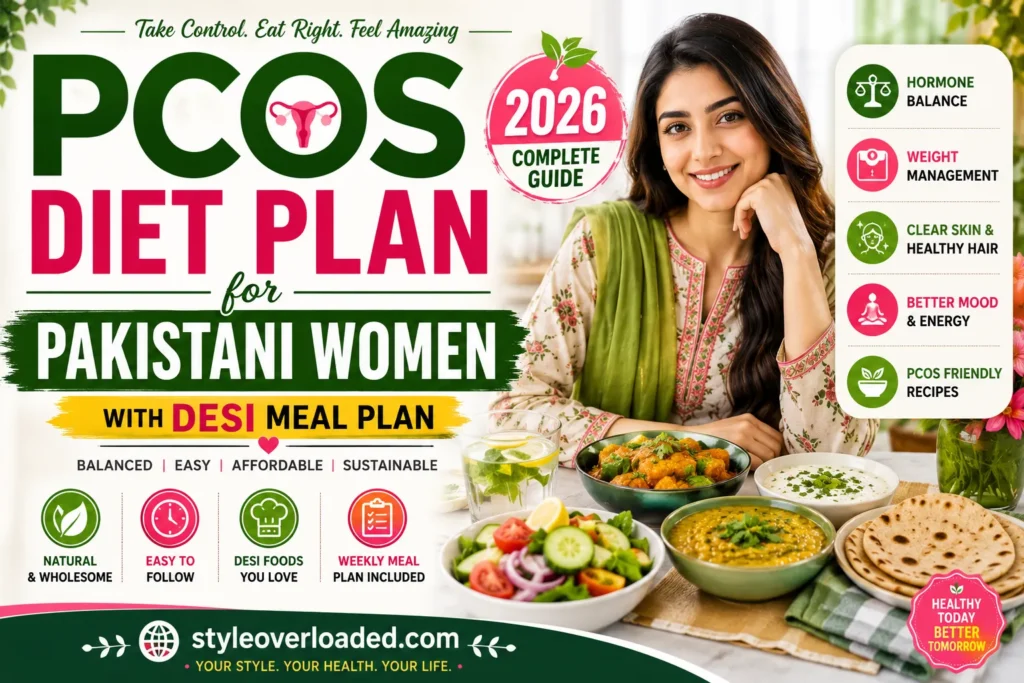
PCOS Diet Plan for Pakistani Women 2026 | Complete Guide With Desi Meal Plan By Style Overloaded | Updated June 2026 | 17 min read A PCOS diet plan for Pakistani women should focus on low-glycemic-index foods, lean protein, fiber-rich carbs, and anti-inflammatory spices that are already common in desi cooking turmeric, fenugreek (methi), and
PCOS Diet Plan for Pakistani Women 2026 | Complete Guide With Desi Meal Plan
By Style Overloaded | Updated June 2026 | 17 min read
A PCOS diet plan for Pakistani women should focus on low-glycemic-index foods, lean protein, fiber-rich carbs, and anti-inflammatory spices that are already common in desi cooking turmeric, fenugreek (methi), and cinnamon. The core principle: avoid white bread, sugary foods, and processed snacks that spike insulin, and instead build meals around dal, brown rice, grilled chicken or fish, vegetables, and yogurt. PCOS affects an alarmingly high 52% of Pakistani women of reproductive age, making this one of the most urgent health and dietary concerns for women in Pakistan in 2026, far higher than the global average of 21–23%.
 PCOS in Pakistan: A National Health Crisis Hiding in Plain Sight
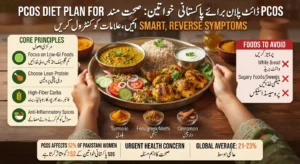 PCOS in Pakistan: A National Health Crisis Hiding in Plain Sight
Polycystic Ovary Syndrome (PCOS) has quietly become one of the most widespread yet under-discussed health conditions affecting Pakistani women today. The scale of the problem is staggering.
According to a peer-reviewed case-control study conducted in Lahore, Pakistan, PCOS is a reproductive hormonal anomaly prevalent among women of reproductive age, with an alarmingly high prevalence of 52% reported among Pakistani women — compared to a prevalence of 33% in British women, 21–23% in Australian and New Zealand women, and 21.6% in Finnish women of reproductive age.
This means more than 1 in 2 Pakistani women of reproductive age may be living with PCOS — a rate more than double the global average. This makes a properly designed PCOS diet plan for Pakistani women not a lifestyle choice, but a public health necessity.
What Is PCOS and Why Does Diet Matter So Much?
PCOS is fundamentally a metabolic and hormonal condition. In most women with PCOS, the root driver is insulin resistance, meaning the body’s cells do not respond properly to insulin, forcing the pancreas to overproduce insulin to compensate. When insulin levels are chronically high, they signal the ovaries to produce excess androgens (male hormones like testosterone), and these androgens disrupt ovulation, cause irregular or absent periods, and lead to the visible symptoms of PCOS like acne, excess body hair, and weight gain.
This is precisely where diet becomes a direct intervention tool, not just a general wellness suggestion. As the food connection explains clearly: foods that cause blood sugar to spike quickly (high glycemic index foods like white rice and refined flour) force the pancreas to produce even more insulin, worsening insulin resistance and all the hormonal problems that follow while foods that release sugar slowly, like millets, dal, and vegetables, keep blood sugar stable and reduce the demand for excess insulin.
Common PCOS Symptoms Among Pakistani Women
A descriptive cross-sectional study conducted among 100 women diagnosed with PCOS at tertiary-care hospitals in Rawalpindi, Pakistan provides important local data on symptom prevalence. The study found that participants had a mean age of 30.8 years and a mean BMI of 30.7 kg/m², with central adiposity prevalent and frequently reported symptoms including painful menstruation (56%), acne (52%), weight gain (52%), and difficulty conceiving (45%).
Symptom Prevalence Among Pakistani PCOS Patients (Rawalpindi Study)
| Symptom | Prevalence |
|---|---|
| Painful menstruation | 56% |
| Acne | 52% |
| Weight gain | 52% |
| Difficulty conceiving | 45% |
The same study importantly found that dietary intake patterns among Pakistani PCOS patients showed low consumption of milk and yogurt, high intake of oils and processed foods, and suboptimal hydration levels identifying specific, correctable dietary gaps in how Pakistani women with PCOS are currently eating.
The Science Behind a PCOS Diet Plan for Pakistani Women
Why Low-Glycemic Foods Are the Foundation
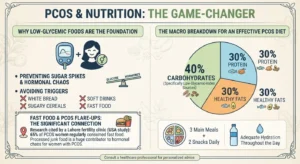
Since PCOS and insulin resistance go hand in hand, low-glycemic foods are described as a genuine game-changer, preventing sugar spikes and supporting hormone regulation while foods to avoid include white bread, sugary cereals, soft drinks, and fast food.
The connection between fast food and PCOS flare-ups is significant. According to research cited by a Lahore-based fertility clinic, a study conducted in the USA showed that 65% of PCOS women regularly consumed fast food identifying processed junk food as a huge contributor to hormonal chaos for women managing this condition.
The Macro Breakdown for an Effective PCOS Diet
A structured PCOS diet plan should follow these general macronutrient principles: approximately 40% carbohydrates (specifically low-glycemic-index sources), 30% protein, and 30% healthy fats, spread across 3 main meals plus 2 snacks daily, with adequate hydration throughout the day.
Desi Foods That Help Balance PCOS Hormones
This is where a PCOS diet plan for Pakistani women has a genuine cultural advantage many of the most effective PCOS-friendly ingredients are already staples in Pakistani kitchens.
Power Foods for Pakistani PCOS Management
| Desi Food | PCOS Benefit |
|---|---|
| Methi (Fenugreek) | Seeds soaked overnight in water improve ovulation |
| Turmeric (Haldi) | Curcumin reduces ovarian cysts and inflammation |
| Ghee (in moderation) | Butyrate content reduces PCOS-related inflammation |
| Cinnamon (Dalchini) | Half a teaspoon can lower fasting glucose by approximately 10% |
| Spearmint Tea | Two cups daily may lower free testosterone levels by up to 30% |
| Curd/Yogurt (Dahi) | Probiotic support for the gut-hormone axis, reduces inflammation |
| Drumstick Leaves (Sohanjna/Moringa) | Rich in iron, folate, and vitamin C — supports reproductive health |
| Spinach and Leafy Greens | Folate and magnesium support ovarian health |
| Tulsi Leaves (where available) | Anti-androgenic properties, reduces cortisol |
According to fertility research, women with PCOS who follow a consistent low-glycemic, anti-inflammatory desi diet often see improvements in menstrual regularity within 2 to 6 months — a realistic and encouraging timeline for Pakistani women starting this journey.
Turmeric’s Specific Role
Clinical studies show turmeric’s curcumin compound may help improve insulin sensitivity and reduce androgens in PCOS, although direct evidence for ovulation support specifically is still emerging making it a valuable but not standalone intervention.
7-Day Sample PCOS Diet Plan for Pakistani Women
This sample plan adapts proven PCOS dietary principles to Pakistani and South Asian ingredients widely available in local markets.
Day 1
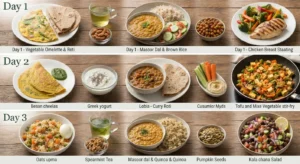
- Breakfast: Vegetable omelette with 1 roti (whole wheat)
- Mid-morning snack: Handful of almonds + green tea
- Lunch: Masoor dal + brown rice + cucumber salad
- Evening snack: Roasted chana (chickpeas)
- Dinner: Grilled chicken with sautéed vegetables
Day 2
- Breakfast: Besan (chickpea flour) cheela with mint chutney
- Mid-morning snack: Greek yogurt with chia seeds
- Lunch: Lobia (black-eyed peas) curry + 1 roti
- Evening snack: Cucumber and carrot sticks with hummus
- Dinner: Tofu or paneer stir-fry with vegetables
Day 3
- Breakfast: Oats upma with vegetables + 1 boiled egg
- Mid-morning snack: Spearmint tea + walnuts
- Lunch: Masoor dal + quinoa or brown rice
- Evening snack: Roasted pumpkin seeds
- Dinner: Kala chana (black chickpea) salad with lemon dressing
Day 4
- Breakfast: Ragi (millet) or oats porridge with cinnamon
- Mid-morning snack: Apple slices with peanut butter
- Lunch: Chana masala + jeera (cumin) rice
- Evening snack: Greek yogurt
- Dinner: Air-fried paneer tikka with salad
Day 5
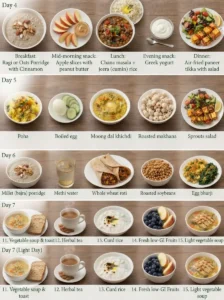
- Breakfast: Poha (flattened rice) with peanuts and vegetables
- Mid-morning snack: Boiled egg + cucumber
- Lunch: Moong dal khichdi with vegetables
- Evening snack: Roasted makhana (fox nuts)
- Dinner: Sprouts salad with grilled fish
Day 6
- Breakfast: Millet (bajra) porridge with chopped nuts
- Mid-morning snack: Methi water (fenugreek seeds soaked overnight)
- Lunch: Rajma (kidney beans) wraps in whole wheat roti
- Evening snack: Roasted soybeans
- Dinner: Egg bhurji with sautéed spinach
Day 7 (Light Day)
- Breakfast: Vegetable soup with whole grain toast
- Mid-morning snack: Herbal tea + 5–6 almonds
- Lunch: Curd rice with cucumber raita
- Evening snack: Fresh fruit (low-GI options like berries or apple)
- Dinner: Light vegetable soup with grilled chicken strips
Total daily target: Approximately 1,400 kcal, 85+ grams protein, 40+ grams fiber balanced macros designed to manage insulin response.
| Food Category | Why to Limit | Better Alternative |
|---|---|---|
| White rice, white bread | High glycemic index, spikes insulin | Brown rice, whole wheat roti |
| Sugary chai/desserts | Direct sugar spike | Cinnamon-spiced tea, fruit-based desserts |
| Fried snacks (samosa, pakora) | High processed fat, inflammatory | Air-fried or baked versions |
| Fast food | 65% of PCOS women studied consumed it regularly | Home-cooked desi meals |
| Sugary soft drinks | Direct blood sugar spike | Lemon water, herbal/spearmint tea |
| Excess refined oil cooking | Increases inflammation | Cook with controlled amounts of olive or mustard oil |
Lifestyle Factors Beyond Diet: What the Research Shows
A comparative case-control study in Lahore comparing physical activity levels between PCOS and healthy women found that the Rotterdam criteria for PCOS diagnosis requires the presence of at least two of three clinical features: oligomenorrhea or anovulatory menstrual pattern (cycle length 35+ days), biochemical or clinical signs of hyperandrogenism, and polycystic ovarian morphology with clinical signs like hirsutism, androgenic alopecia, and acne commonly observed alongside insulin resistance.
This underscores an important point: a PCOS diet plan for Pakistani women works best when combined with regular physical activity, not as a standalone solution. The same comparative research highlights physical activity levels as a key differentiator between PCOS and non-PCOS women, supporting the integration of movement alongside dietary changes.
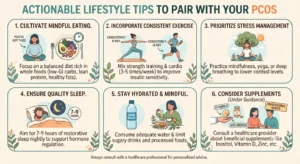
- Walk for 30 minutes daily even moderate movement significantly improves insulin sensitivity
- Prioritize 7–8 hours of sleep poor sleep worsens insulin resistance and cortisol levels
- Manage stress through prayer, meditation, or light yoga chronic stress elevates cortisol, which exacerbates PCOS symptoms
- Stay consistently hydrated aim for 3 liters of water daily, including jeera (cumin) water which is traditionally used in Pakistani households
- Maintain consistent meal timing irregular eating patterns worsen blood sugar control
A Lahore-based PCOS dietary guide reinforces this directly, noting that many patients found consistent meal timing combined with smart snacking helped reduce cravings and mood swings significantly.
Real Pakistani Women’s PCOS Diet Journeys
Anam, 28, Lahore: “I was diagnosed with PCOS after 2 years of irregular periods and unexplained weight gain. My dietician switched me to brown rice instead of white, added methi water every morning, and cut fried snacks almost completely. It took about 4 months, but my cycles became regular again.”
Maria, 32, Karachi: “The hardest part was giving up chai with extra sugar I switched to cinnamon-spiced tea instead. Combined with daily walks and cutting fast food, my acne cleared up significantly within 3 months and I finally started losing the stubborn weight.”
Zoya, 25, Islamabad: “My gynecologist told me 1 in 2 Pakistani women might have PCOS like me, which honestly made me feel less alone. Switching to a low-GI desi diet with more dal, vegetables, and yogurt and less rice and sugar has genuinely helped my symptoms more than any medication alone did.”
When to See a Doctor: PCOS Diet Plans Have Limits
While a well-structured PCOS diet plan for Pakistani women can significantly improve symptoms, diet alone cannot replace medical diagnosis and treatment. According to the World Health Organization, PCOS diagnosis and management should always involve a qualified healthcare provider, particularly because PCOS symptoms overlap with thyroid disorders and other endocrine conditions that require different treatment approaches.
Consult a gynecologist or endocrinologist if you experience:
- Periods absent for 3+ consecutive months
- Severe, unexplained weight gain despite dietary changes
- Significant hair loss or excessive facial/body hair growth
- Difficulty conceiving after 6+ months of trying
- Persistent, severe acne unresponsive to dietary changes
Statistics Summary: PCOS in Pakistan
According to peer-reviewed research published via the National Center for Biotechnology Information, key statistics on PCOS in Pakistan include:
- 52% prevalence among Pakistani women of reproductive age (versus 21–33% in Western countries)
- 56% of Pakistani PCOS patients report painful menstruation
- 52% report both acne and weight gain
- 45% report difficulty conceiving
- Mean BMI of 30.7 kg/m² among studied Pakistani PCOS patients, indicating a strong overweight/obesity correlation
- Low milk/yogurt consumption and high processed food intake identified as correctable dietary patterns among Pakistani PCOS patients
More Health & Wellness Guides on Style Overloaded
Frequently Asked Questions about PCOS
Q: How common is PCOS among Pakistani women?
PCOS affects an alarmingly high 52% of Pakistani women of reproductive age, according to a Lahore-based case-control study significantly higher than the 21–33% prevalence reported in British, Australian, and Finnish populations.
Q: What foods should Pakistani women with PCOS eat?
Focus on low-glycemic-index foods like dal, brown rice, whole wheat roti, and vegetables, paired with lean protein (chicken, fish, eggs, paneer) and anti-inflammatory desi spices like turmeric, fenugreek (methi), and cinnamon.
Q: What foods should be avoided in a PCOS diet plan?
Avoid white bread, white rice, sugary chai and desserts, fried snacks, fast food, and sugary soft drinks all of which spike insulin and worsen PCOS symptoms. Studies show 65% of PCOS patients regularly consumed fast food.
Q: Can methi (fenugreek) really help with PCOS symptoms?
Yes fenugreek seeds soaked overnight in water are traditionally used to improve ovulation in PCOS, and several studies support its role in improving insulin sensitivity and hormonal balance.
Q: How long does it take to see results from a PCOS diet plan?
Most Pakistani women following a consistent, low-GI, anti-inflammatory desi diet report improvements in menstrual regularity within 2 to 6 months. Weight loss and acne improvement timelines vary but often show progress within 3–4 months of consistent dietary changes.
Q: Does PCOS diet alone cure PCOS?
No diet significantly improves PCOS symptoms and can restore menstrual regularity, but PCOS itself is a chronic hormonal condition requiring ongoing management. Severe cases may still require medication; always consult a gynecologist or endocrinologist for proper diagnosis and treatment alongside dietary changes.
Q: Is ghee allowed in a PCOS diet plan for Pakistani women?
Yes, in moderation ghee contains butyrate, which can help reduce PCOS-related inflammation. A small amount (around 1 teaspoon) added to meals is considered beneficial rather than harmful.
Conclusion:
Managing Polycystic Ovary Syndrome in Pakistan is no longer just a personal health struggle; it is a critical public health necessity. Reclaiming your health starts in the kitchen, where a structured PCOS weight loss diet plan in Pakistan serves as a direct intervention rather than a temporary lifestyle choice. By pivoting toward a targeted diet chart for PCOS patients built around low-glycemic desi staples, lean proteins, and powerful anti-inflammatory spices like turmeric and methi you can significantly improve insulin resistance, drop stubborn weight, and naturally balance your hormones.
Managing this metabolic condition requires consistency, but adopting the best diet for PCOS weight loss combined with mindful hydration and daily movement provides a sustainable roadmap to reverse your symptoms and take full control of your reproductive and metabolic future.
Style Overloaded | This article is for informational purposes only and is not a substitute for professional medical advice. Please consult a qualified healthcare provider for PCOS diagnosis and treatment. | styleoverloaded.com





















Leave a Comment
Your email address will not be published. Required fields are marked with *