
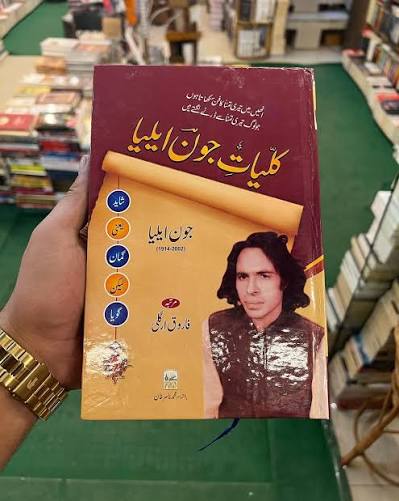
Jaun Elia – Unconventional Urdu Poet
An unconventional Urdu poet, Jaun Elia (1931-2002) is celebrated for his poignant verses on love, nihilism, and existential sorrow, earning him a cult following.
21 Fascinating Facts About Jaun Elia: Biography, Poetry, Books, Philosophy, Love Life & Literary Legacy
“Jaun was very particular about language. While his diction is rooted in the classical tradition, he touches on new subjects. He remained in quest of an ideal all his life. Unable to find the ideal eventually, he became angry and frustrated. He felt, perhaps with reason, that he had squandered his talent.”
— Jaun Elia – Unconventional Urdu Poet (Said by Poet Pirzada Qasim)
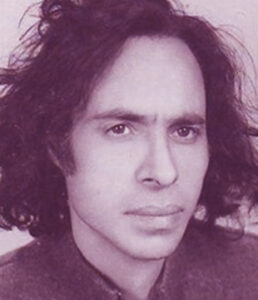 Few names in modern Urdu literature carry the emotional weight that Jaun Elia’s does. Decades after his death, he remains one of the most searched and most quoted poets from Pakistan, his verses shared endlessly across social media by readers who never encountered him in person. This article brings together his early life, education, marriage, writing career, political views, and cultural legacy into one detailed, easy-to-read guide.
1. His Full Birth Name Was Syed Hussain Sibt-e-Asghar Naqvi
The poet the world knows as Jaun Elia was born Syed Hussain Sibt-e-Asghar Naqvi. “Jaun Elia” was the pen name under which almost all of his published work appears, and it is the name by which he is remembered today.
2. He Was Born in Amroha, British India
Jaun Elia was born on 14 December 1931 in Amroha, a town in the United Provinces of British India (present-day Uttar Pradesh), into an educated Shia family.
3. He Came From a Family of Scholars and Writers
His father, Allama Shafiq Hasan Elia, was a respected scholar of literature and astronomy, well-versed in Arabic, English, and Persian, who is said to have corresponded with intellectuals such as Bertrand Russell. This scholarly household shaped Jaun’s own path from an early age.
4. He Was the Youngest of His Siblings, and His Brothers Were Notable in Their Own Right
Jaun was the youngest child in his family. His elder brother Rais Amrohvi became a well-known poet and psychoanalyst, while another brother, Syed Mohammed Taqi, worked as a philosopher and translator, known for translating Karl Marx’s “Das Kapital” into Urdu.
5. He Was Related to Filmmaker Kamal Amrohi and Actor Munawar Saeed
Jaun Elia’s family connections extended into Indian and Pakistani cinema. Acclaimed Indian film director Kamal Amrohi, known for films such as “Mahal” and “Pakeezah,” was his first cousin, while Pakistani film actor Munawar Saeed, recognized for his villain roles, was also a relative.
6. He Was Considered a Child Prodigy
Jaun Elia began writing poetry at the age of eight, and was regarded even in childhood as an exceptionally gifted student, laying the foundation for the scholarly and literary reputation he would carry into adulthood.
7. His Early Education Was at a Traditional Madrassah
He was initially educated at Syed-ul-Madaris in Amroha, a madrassah affiliated with the Darul Uloom Deoband, where he built the grounding in classical Arabic and Persian that would later surface throughout his poetry.
8. He Was Fluent in Multiple Languages
Beyond Urdu, Jaun Elia had command of Arabic, Sindhi, English, and Persian, an unusually wide linguistic range for a poet of his generation and one that deepened the allusive, layered quality of his verse.
9. He Was Deeply Read in Philosophy, Sufism, and Comparative Religion
His intellectual interests extended into logic, Islamic history, Sufi thought, Muslim religious sciences, Western literature, and Kabbalah, giving his poetry a philosophical undertone that distinguished him from many of his contemporaries.
10. He Was Associated With the Progressive Writers Movement
As a poet, Jaun Elia’s work is linked to the Progressive Writers Movement, a literary tradition in South Asia that emphasized social consciousness, class awareness, and political engagement through literature.
11. He Opposed the Partition of India as a Committed Communist
Being a communist in his younger years, Jaun Elia opposed the idea of partitioning India, a stance rooted in his broader political beliefs about class and unity rather than religious or nationalist lines.
12. He Migrated to Karachi in 1956
Despite his political opposition to partition, Jaun Elia eventually migrated to Pakistan in 1956 and settled in Karachi, the city that remained his home for the rest of his life.
13. His Poetry Carried Strong Threads of Communism and Class Consciousness
Even after settling in Pakistan, Jaun Elia’s poetry continued to reflect his communist sympathies, with recurring references to class consciousness. He has also been described by commentators as an anarchist and a nihilist as well as a poet.
14. He Married Writer Zahida Hina in 1970
Jaun Elia married Zahida Hina, a noted writer, in 1970. The two met during the publication of the Urdu-language magazine “Insha” and fell in love while working together on it.
15. He Had Three Children
Jaun Elia and Zahida Hina had three children together: Zeryoun Elia, Fainnana, and Sohaina Elia.
16. He Separated From Zahida Hina in 1984
The couple separated in 1984 and later divorced, a split attributed to differences in temperament between the two. The breakdown of the marriage became one of the defining emotional undercurrents associated with his later poetry.
17. He Did Not Publish His First Book Until Age 60
Although he had been writing poetry since he was eight years old and was already well known on the mushaira (poetry recital) circuit, his first published collection, “Shayad,” did not appear until he was around 60.
18. He Was a Prolific Translator as Well as a Poet
Beyond his own poetry, Jaun Elia worked extensively as an editor and translator of classical Sufi, Mutazili, and Ismaili texts from Arabic and Persian, including works such as “Masih-i-Baghdad Hallaj,” “Tawasin,” “Isaghoji,” and the “Rasail Ikhwan al-Safa.” In the process, he is credited with introducing several new words into the Urdu language.
19. He Received Pakistan’s Pride of Performance Award
In recognition of his literary contributions, Jaun Elia was awarded the Pride of Performance award by the President of Pakistan in 2000, one of the country’s highest civil honors for achievement in the arts.
20. He Died in Karachi in 2002 at Age 70
Jaun Elia passed away on 8 November 2002 in Karachi at the age of 70. Those who knew him often described him as brilliant but difficult and temperamental, and his heavy drinking in his later years contributed to his declining health.
21. His Legacy Has Grown Through Postage Stamps, Music, and a New Generation of Fans
In 2013, Pakistan Post issued a commemorative postage stamp honoring Jaun Elia as part of its “Men of Letters” series. In the years since, his poetry has also found its way into popular music, influencing songs by artists such as Kay Kap, the band Nishtar Park, and rapper Talha Anjum, introducing his work to entirely new generations of listeners who discovered him long after his death.
The Poetry of Pain: Major Works and Thematic Concerns
After decades of resistance, Jaun Elia finally relented and published his first collection of poetry, “Shayad“ (Perhaps), in 1991, at the age of 60. The title itself was a perfect encapsulation of his philosophy a worldview steeped in doubt, uncertainty, and a rejection of absolute truths. The book was an immediate success, cementing his status as a major voice in contemporary Urdu poetry.
After his death on November 8, 2002, his devoted friend and admirer, Khalid Ahmed Ansari, painstakingly compiled and published his subsequent collections from the vast trove of manuscripts he had left behind. These posthumous works “Ya’ani“ (Meaning), “Gumaan“ (Supposition), “Lekin“ (But), and “Goya“ (As if) further revealed the staggering depth and breadth of his genius.
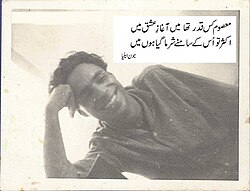 Jaun’s poetry is a deep dive into the darkest corners of the human psyche. His primary themes were:
- Love, Betrayal, and Annihilation: For Jaun, love was not a gentle, romantic affair. It was a devastating, all-consuming force that inevitably led to heartbreak, betrayal, and the annihilation of the self. His personal life, including a tumultuous marriage to and eventual separation from the prominent writer Zahida Hina, provided a deep well of experience from which he drew this agonizingly personal poetry. His verses on separation are not just laments; they are philosophical inquiries into the nature of connection and loss.
- Nihilism and Anarchy: Jaun proudly declared himself an anarchist and a nihilist. He relentlessly questioned everything: God, state, society, relationships, and even the existence of the self. His poetry is a testament to a profound existential crisis, a feeling of cosmic absurdity. He saw chaos as the fundamental principle of the universe and believed that all human constructs from morality to ambition were ultimately meaningless.
- The Agony of Being (Dard): The concept of dard (pain) is the very bedrock of Jaun’s creative world. It was not an emotion to be overcome but a condition to be inhabited. For him, pain was a source of heightened consciousness, a brutal but honest lens through which to perceive reality. He wrote of his own suffering with a self-deprecating wit and an unnerving clarity, making his personal anguish a universal experience.
- A Dialogue with the Self: The “I” in Jaun’s poetry is a complex and fascinating character. He is arrogant, self-pitying, brilliant, and broken. Jaun’s ghazals are often an intense, ongoing dialogue with this fragmented self, a relentless psychoanalysis set to meter and rhyme. He lays his own flaws and contradictions bare for the world to see, and in this radical honesty, readers find a reflection of their own.
Jaun Elia was a paradox
He was a classical scholar who mastered the intricate rules of the ghazal only to infuse it with a fiercely modern, conversational, and iconoclastic spirit. He was a man deeply rooted in the history of Islamic and Western thought who became a postmodern prophet of meaninglessness. He was a poet of intense personal suffering whose words have brought solace and a sense of belonging to countless souls.
He once wrote:
ایک ہی فن تو ہم نے سیکھا ہے
جس سے ملیے اُسے خفا کیجیے(I have learned only one art, Whomever you meet, make them upset.)
A Note on His Literary Reputation
Fellow poets and critics often described Jaun Elia as someone who never stopped chasing an unreachable ideal, a restlessness that some said left him frustrated with how much of his talent went unpublished during his lifetime. Others who knew him personally recalled a man who could be sharply critical yet was, underneath it, a loyal friend lost in his own thoughts. The respected Indian poet Majrooh Sultanpuri is remembered for calling him nothing less than “a poet of poets,” a description that has stuck with Jaun Elia’s legacy ever since.
Selected Works
| Poetry Collections | Prose & Translations |
|---|---|
| Shayad | Farnood |
| Yani | Masih-i-Baghdad Hallaj |
| Lekin | Tawasin |
| Gumaan | Isaghoji |
| Goya | Rahaish-o-Kushaish |
| Ramooz | Hasan bin Sabah |
| Sukhan Meri Udasee Hai | Tajrid / Masail-i-Tajrid |
| Zakham-e-Umeed | Rasail Ikhwan al-Safa |
| Firaaq | — |
Frequently Asked Questions About Jaun Elia
Who was Jaun Elia?
Jaun Elia was a Pakistani Urdu poet born Syed Hussain Sibt-e-Asghar Naqvi, known for his ghazals and for blending classical Urdu poetic form with deeply personal themes of love, loss, and philosophical doubt.
What is Jaun Elia’s real name?
His real name was Syed Hussain Sibt-e-Asghar Naqvi. “Jaun Elia” was his pen name.
Why is Jaun Elia so popular today?
Much of his popularity grew after his death in 2002, as his poetry spread widely online and through music influenced by his work, resonating with younger readers and listeners drawn to its raw, direct emotional honesty.
Who was Jaun Elia’s wife?
He was married to writer Zahida Hina from 1970. The couple separated in 1984 and later divorced due to differences in temperament.
What is Jaun Elia’s first book?
His first published poetry collection was “Shayad,” released when he was around 60 years old, despite having written poetry since childhood.
How did Jaun Elia die?
Jaun Elia died on 8 November 2002 in Karachi at age 70, following years of declining health linked to heavy alcohol use.
What languages did Jaun Elia speak?
He was fluent in Urdu, Arabic, Sindhi, English, and Persian.
What awards did Jaun Elia receive?
He was honored with Pakistan’s Pride of Performance award by the President of Pakistan in 2000, and was commemorated on a Pakistan Post postage stamp in 2013.
What is Jaun Elia’s poetry about?
His poetry largely explores themes of love, separation, existential doubt, and disillusionment, often carrying undertones of the communist and class-conscious politics he held throughout his life.
- Collection of writings on Jaun Elia (in Urdu)
Final Thoughts
Jaun Elia’s life resists a simple summary — a child prodigy fluent in five languages, a translator of obscure Sufi and Ismaili texts, a committed communist who nonetheless migrated to the country whose creation he had opposed, and a poet who waited until 60 to publish, only to become one of the most quoted writers of the internet age decades after his death. That contradiction is precisely why readers across Pakistan and beyond keep returning to his verses today.
Read more:
Naina Adil: Biography, Books, Poetry, Literary Journey & Contributions to Urdu Literature





















Leave a Comment
Your email address will not be published. Required fields are marked with *