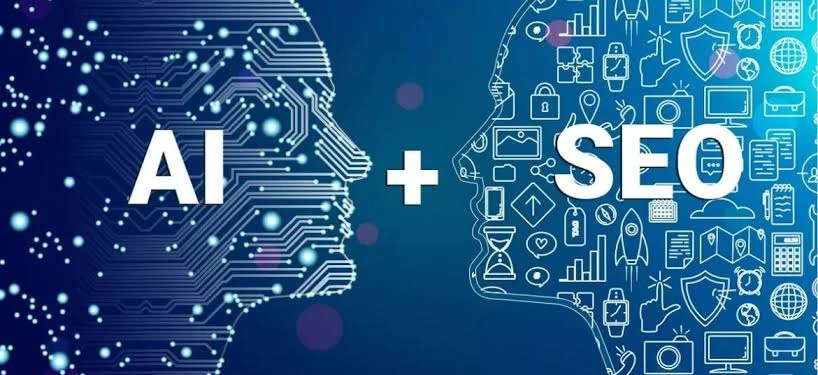
Introduction If you’ve noticed your website traffic dipping in 2026, you’re not imagining things. The way people search and how search engines respond, has fundamentally shifted. AI agents are now doing the searching for people. That means your content no longer just needs to rank; it needs to be cited, referenced, and trusted by autonomous
Introduction
If you’ve noticed your website traffic dipping in 2026, you’re not imagining things. The way people search and how search engines respond, has fundamentally shifted. AI agents are now doing the searching for people. That means your content no longer just needs to rank; it needs to be cited, referenced, and trusted by autonomous AI systems.
Whether you run a fashion blog, a lifestyle site, or an e-commerce store, understanding the most popular SEO keywords for AI agents is now as essential as knowing your target audience. Here’s everything you need to know.
 What Are AI Agents in SEO?
AI agents are autonomous systems that search, evaluate, compare, and even transact on behalf of users — without direct human input at every step. Unlike traditional search where a person types a query and clicks a link, AI agents independently gather information and deliver a synthesized answer.
Gartner has predicted that by 2026, traditional search engine volume will drop 25%, with search marketing losing market share to AI chatbots and other virtual agents. This is not a future problem it’s happening right now.
92% of the time, ChatGPT agents rely on the Bing Search API to search for information. After landing on a page, 63% of ChatGPT agents leave immediately, with common reasons including HTTP errors, 301 redirects to unexpected URLs, slow load times, CAPTCHAs, and bot blocking.
This means your site’s technical health is now directly tied to AI visibility.
Most Popular SEO Keywords & Topics for AI Agents in 2026
Below are the highest-impact keyword clusters that are driving traffic in the AI-agent era:
 Cluster 1. AI Search Optimization
- AI overview optimization
- generative engine optimization (GEO)
- answer engine optimization (AEO)
- AI search ranking factors 2026
- how to rank in ChatGPT answers
- how to appear in Google AI Overviews
- zero-click search strategy
- LLM visibility optimization
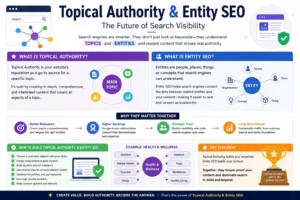
Cluster 2. Topical Authority & Entity SEO
- topical authority building 2026
- entity SEO strategy
- semantic search optimization
- knowledge graph optimization
- brand entity clarity
- structured data for AI search
- schema markup 2026
 Cluster 3. Agentic Search SEO
- agentic AI SEO
- AI agent content strategy
- how AI agents crawl websites
- llms.txt file for SEO
- AI bot crawling optimization
- content for AI discovery
Cluster 4. Content & Technical SEO
- AI-friendly content structure
- extractable snippets for LLMs
- content depth for AI citations
- semantic HTML for AI crawlers
- core web vitals AI impact
- site speed for AI agents
Cluster 5. Brand & Trust Seo
- brand mentions in AI answers
- digital PR for AI visibility
- E-E-A-T 2026
- author authority signals
- human expertise content signals
Real Example: How to Optimize for AI Agents
Step 1: Build Topical Clusters, Not Just Pages Establishing topical authority is becoming a fundamental part of success in AI search results. AI search engines take context and intentions into account when surfacing responses targeting a keyword alone won’t cut it. You need to cover all angles of a topic so you have a better chance of being pulled as part of AI’s response.
Step 2: Write for Answer Extraction When it comes to securing AI mentions and citations, content depth (sentence and word counts) and readability matter most, while traditional SEO metrics like traffic and backlinks have little impact.
Actionable: Use clear H2/H3 headers with direct, declarative answers directly below them. Structure your content so a single paragraph can stand alone as an answer.
Step 3: Fix Your Technical Foundation 46% of ChatGPT bot visits begin in reading mode — a plain HTML version of a webpage with no images, CSS, JavaScript, and schema markup. If your page breaks in plain HTML, AI agents may skip it entirely.
Actionable: Test your pages with JavaScript disabled. Ensure all critical content is in clean, crawlable HTML.
Step 4: Consistent Entity Signals Search engines and large language models have shifted from keyword matching to entity understanding. Brands need crystal-clear information about who they are, what they offer, and why they’re credible, presented consistently across websites, profiles, and structured data. Ambiguity or inconsistent messaging leads to misclassification, directly harming visibility in AI-driven results.
Actionable: Make sure your About page, author bios, social profiles, and schema markup all say the same things about your brand and contributors.
 Stats That Prove You Need to Act Now
- Over 60% of all Google searches and 77% of mobile searches are resulting in zero-clicks, more than half of all internet searches now end at the AI Overview or featured results, without users ever visiting a website.
- Traffic from LLM platforms like ChatGPT and Gemini grew 527% year over year.
- Nearly 6 in 10 US Google searches now end without a click, a trend accelerated by the expansion of Google’s AI Overviews, which now reach more than 2 billion monthly users.
Actionable Checklist for AI Agent SEO in 2026
- Build topical content clusters around your niche (fashion, beauty, lifestyle)
- Add FAQ schema to every article
- Ensure your site loads fast with no crawl errors
- Create or update a clear Author/About page with E-E-A-T signals
- Write structured, scannable content with direct answers under each heading
- Add schema markup (Article, Person, Organization, FAQPage)
- Publish consistently to signal content freshness to AI systems
- Build brand mentions through digital PR and guest posts
- Monitor your “share of model” in ChatgPT, Gemini, and Perplexity
Know more about AI SEO:
Q: What is the difference between SEO and AEO?
A: Traditional SEO focuses on ranking in Google’s 10 blue links. AEO (Answer Engine Optimization) focuses on getting your content cited or used as a source inside AI-generated answers from tools like ChatGPT, Gemini, or Google’s AI Overviews.
Q: Do keywords still matter in 2026?
A: Yes, but the focus has shifted. Rather than targeting single keywords, you now need to cover topics comprehensively so AI engines can extract intent-matching answers from your content.
Q: Does schema markup help AI visibility?
A: Recent studies by Ahrefs found that schema markup has no major impact on AI visibility adding sChema produced no major uplift in citations on AI Overviews, AI Mode, and ChatGPT. However, schema still helps Google’s traditional ranking and featured snippets.
Q: How do I know if AI agents are visiting my site?
A: Check your server logs for bot agents like GPTBot, Google-Extended, ClaudeBot, and Perplexitybot. Ensure your robots.txt is not blocking them if you want AI visibility.
Q: What content format works best for AI citations?
A: Clear, factual, well-structured prose with direct H2/H3 answers, short paragraphs, and specific statistics or examples. Lists and tables are also highly ex-tractable by AI systems.
Read more: Google Search Central — How AI Overviews Work , Ahrefs — AI SEO Research 2026 , How to Grow Your Blog with SEO in Pakistan →

















Leave a Comment
Your email address will not be published. Required fields are marked with *