
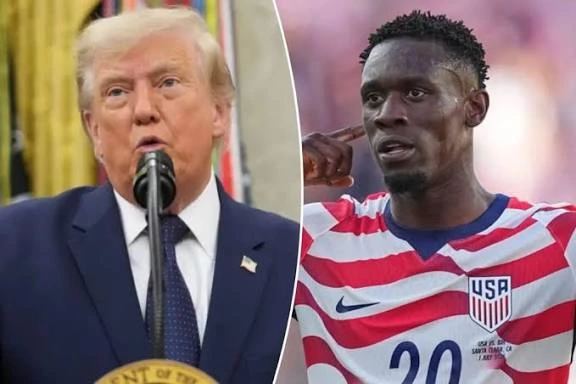
Folarin Balogun USMNT Red Card Controversy Explained: Why He Was Sent Off, Why FIFA Reversed the Ban, and What It Meant for the USA The Folarin Balogun red card controversy explained story quickly became one of the biggest talking points around the USMNT at the 2026 World Cup. What started as a controversial sending-off in
Folarin Balogun USMNT Red Card Controversy Explained: Why He Was Sent Off, Why FIFA Reversed the Ban, and What It Meant for the USA
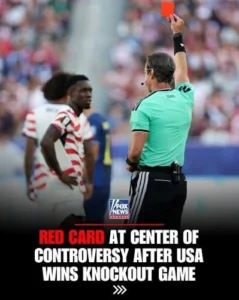
The Folarin Balogun red card controversy explained story quickly became one of the biggest talking points around the USMNT at the 2026 World Cup. What started as a controversial sending-off in the United States’ knockout win over Bosnia and Herzegovina turned into a much bigger debate about FIFA rules, player eligibility, and whether the striker should have been suspended for the next round.
For American fans, the drama was especially important because Folarin Balogun is one of the USMNT’s key attacking players. His finishing, movement, and ability to stretch defenses have made him central to the team’s attack. So when he was shown a red card, the immediate question was simple: would Balogun miss the USA’s next match? But as the story developed, that question led to an even more controversial one: why was Folarin Balogun allowed to play after the red card?
 This article breaks down the full story in simple terms why Balogun was sent off, why the decision caused such a backlash, what FIFA did next, and what the controversy meant for the USMNT during a crucial stage of the World Cup.
Why was Folarin Balogun sent off for the USMNT?
The heart of the story is the challenge that led to Folarin Balogun’s red card against Bosnia and Herzegovina. During the knockout match, Balogun was involved in a heavy challenge that the referee judged to be serious enough for a sending-off. The decision immediately changed the mood of the game and became the defining moment of the match.
For viewers trying to understand why Folarin Balogun was sent off, the official reasoning centered on the nature of the tackle. The referee deemed the challenge dangerous enough to meet the threshold for a red card, with the incident widely discussed as an example of serious foul play. In matches of this importance, referees are expected to protect players and take strong action if they believe a challenge puts an opponent at risk.
The problem was that many fans, pundits, and even neutral observers felt the decision was too harsh. In real time, the incident did not look like a classic violent act. Instead, it appeared to many as a strong, mistimed challenge that could have been punished with a yellow card rather than a straight red. That difference matters a lot, because a yellow card keeps the player on the field, while a red card not only removes him from the match but can also trigger a suspension.
Because of that, the phrase “Folarin Balogun red card explained” quickly became a major search topic. People were not just asking what happened; they were asking whether the referee got it right.
Why is Folarin Balogun’s red card so controversial?
The Folarin Balogun red card controversy is not just about one tackle. It became controversial because of three different layers: the nature of the challenge, the consistency of officiating, and the consequences for the USMNT.
1. Many people felt the punishment did not fit the incident
A lot of football supporters believed Balogun’s challenge looked reckless rather than malicious. That distinction matters. A reckless tackle is often punished with a yellow card, while a dangerous tackle with excessive force can lead to a straight red. The argument from critics was that Balogun’s action did not clearly cross that line.
This is why searches such as “was Folarin Balogun’s red card deserved” and “why was Balogun’s red card controversial” started trending. Fans wanted to know whether the decision was supported by the laws of the game or whether it was simply too severe for the incident.
2. The USMNT felt the decision had a huge competitive impact
Balogun is not just another squad player. He is one of the USMNT’s biggest attacking threats, especially in transition and in the penalty box. Losing him for a knockout match would have had major tactical consequences. That made the red card feel bigger than a normal disciplinary moment.
In tournament football, suspensions can completely change a team’s path. A country might spend years building toward a World Cup, only to lose a star player because of one controversial decision. That is why the USMNT Balogun red card controversy became such a hot topic. It was never only about whether the foul deserved punishment; it was also about whether the punishment would reshape the USA’s tournament.
3. The aftermath created even more confusion
Normally, when a player receives a red card in a major FIFA competition, the expectation is straightforward: the player will serve at least a one-match suspension unless there is some unusual disciplinary review. In Balogun’s case, however, the story did not end with the sending-off. Instead, it evolved into a debate over whether the suspension would stand, whether the decision could be reconsidered, and what FIFA’s final ruling would be.
That second phase of the story is what turned a refereeing debate into a full FIFA Balogun controversy.
 Why was Folarin Balogun allowed to play after the red card?
This is the part of the story that confused the most fans. Once Balogun had been sent off, many assumed the matter was settled and that he would automatically miss the next match. But then the conversation shifted toward his availability, and suddenly a new question dominated coverage: why is Folarin Balogun allowed to play after the red card?
The answer lies in the disciplinary process that follows a sending-off at a FIFA tournament. A red card on the field does not always mean the final disciplinary outcome is fixed forever. Governing bodies can review incidents, clarify the type of offense, and decide how a suspension should be applied.
In Balogun’s case, the controversy deepened because there was widespread reporting and discussion around whether his suspension would be enforced in the usual way. As the story developed, it became clear that the issue was no longer only about the referee’s original call; it was about the broader FIFA decision-making process. That is why related searches such as “Folarin Balogun suspension explained,” “Balogun suspension overturned,” and “FIFA Balogun suspension decision” became central to the story.
For fans, this created two separate debates at once:
- Debate one: Did Balogun deserve the red card in the first place?
- Debate two: If the red card stood, should the suspension also stand?
The second debate arguably became even bigger than the first because it directly affected whether the USMNT could use one of its best forwards in the next knockout game.
Did FIFA overturn Folarin Balogun’s suspension?
One of the biggest reasons the story exploded online was the perception that Folarin Balogun’s suspension was overturned or at least softened in a way that changed the USMNT’s situation.
Whenever a player receives a red card in a World Cup knockout match, fans expect a simple chain of events: red card, suspension, next match missed. But Balogun’s case turned into a more complicated disciplinary conversation. Reports and commentary focused on whether FIFA had effectively reversed or suspended the punishment, allowing him to remain eligible.
This is where keywords like “Balogun ban overturned,” “Balogun red card overturned,” and “why FIFA overturned Balogun suspension” became so important from an SEO perspective. They reflect what audiences actually wanted to understand: not just the foul, but the logic of the ruling that followed it.
From a football perspective, this matters because tournament rules are often highly technical. There is a difference between the referee’s in-match decision, the disciplinary committee’s interpretation, and the final application of a ban. For casual fans, those layers can feel confusing or inconsistent. That confusion is exactly what fueled the Balogun suspension reversal explained angle.
What did the Balogun decision mean for the USMNT?
The practical importance of the story is easy to understand: Folarin Balogun’s availability could change the USMNT’s entire attacking plan.
Balogun offers the United States something few strikers can provide at international level. He can play on the shoulder of defenders, run behind the back line, finish quickly in the box, and create space for attacking midfielders. In a knockout tournament, those qualities are invaluable because matches are often decided by one transition, one finish, or one mistake.
If Balogun had been unavailable, the USMNT would likely have needed to adjust in several ways:
1. Less pace and direct threat up front
Balogun’s speed and movement make defenders uncomfortable. Without him, the USA could have become easier to defend against, especially against elite opposition.
2. More pressure on midfield creators
When a striker can stretch the line and make dangerous runs, midfielders have clearer passing options. Without Balogun, creative players may have had to do more work in tighter spaces.
3. A possible change in shape or personnel
A missing striker can force a coach to alter the front line, use a false nine, or rely on a less experienced option. In tournament football, even a small tactical adjustment can have a major impact.
That is why Balogun’s red card impact on the USMNT became such an important topic. It was not only about discipline; it was about whether the USA could continue its World Cup run with its preferred attacking structure intact.
Why did FIFA’s Balogun ruling spark such a big reaction?
The strong reaction came from a mix of football passion, tournament pressure, and uncertainty around the decision-making process. Fans tend to accept tough calls more easily when the rules feel clear and consistent. The Balogun case did not feel simple or clear. Instead, it moved through several stages:
- the original red card
- immediate outrage over whether it was deserved
- debate over an automatic suspension
- discussion over whether the ban would be reduced, reversed, or paused
- confusion about the final eligibility outcome
When a story keeps changing like that, it naturally creates more headlines, more opinion pieces, and more fan anger. That is why the Folarin Balogun World Cup controversy became bigger than a standard refereeing decision. It touched on fairness, transparency, and competitive balance.
For some fans, the problem was the red card itself. For others, the bigger problem was the feeling that FIFA’s process was too confusing. And for USMNT supporters, the entire situation was emotionally charged because it involved a player who could be the difference between winning and losing on the biggest stage.
Was Folarin Balogun’s red card deserved?
This is still the question at the center of the debate. The honest answer is that it depends on how you interpret the challenge and how strictly you believe the laws of the game should be applied.
Those who defend the referee’s decision argue that dangerous tackles must be punished firmly, especially in a World Cup knockout match where player safety is critical. From that viewpoint, even if Balogun did not intend harm, the challenge itself may have justified a straight red.
Those who oppose the decision argue that the punishment was too severe for the actual action. They believe a yellow card would have been more appropriate and that the red card escalated the situation unnecessarily. That side of the debate is why terms like “was Balogun red card harsh or fair” and “Balogun referee decision controversy” continue to attract attention.
In the end, the controversy remains powerful because reasonable people can still disagree. And in football, those are the decisions that never really disappear.
Final thoughts on the Folarin Balogun USMNT red card controversy
The Folarin Balogun USMNT red card controversy explained story became far bigger than one refereeing moment. It brought together everything that makes tournament football so dramatic: split-second decisions, disciplinary confusion, star-player availability, and intense national pressure.
First, there was the challenge itself and the question of why Folarin Balogun was sent off. Then came the debate over whether the punishment was fair. After that, the story shifted again as fans tried to understand why Balogun was allowed to play after the red card and what FIFA’s ruling actually meant.
For the USMNT, the incident mattered because Balogun is a major part of the team’s attacking identity. For fans around the world, it mattered because it raised familiar football questions about consistency, fairness, and how much influence one controversial decision can have on a World Cup campaign.
Whether you believe the original call was correct or harsh, one thing is clear: the Balogun red card controversy became one of the defining USMNT stories of the tournament. And because it combined a major player, a knockout match, a disciplinary twist, and a global audience, it is likely to remain a talking point long after the final whistle.
FAQs About the Folarin Balogun Red Card Controversy
Why did Folarin Balogun get a red card?
Balogun received a red card after a challenge in the USMNT’s World Cup knockout match against Bosnia and Herzegovina. The referee judged the tackle to be serious enough for a sending-off.
Why was Folarin Balogun’s red card controversial?
The red card was controversial because many fans and pundits believed the challenge did not deserve a straight red and should have been punished with a yellow card instead.
Did FIFA overturn Folarin Balogun’s suspension?
The controversy grew because of debate around Balogun’s eligibility and whether the expected suspension would be enforced in the normal way after the red card.
Why was Folarin Balogun allowed to play after the red card?
This became a major talking point because the disciplinary process after the sending-off created confusion over whether Balogun would serve a suspension or remain available.
How did the Balogun decision affect the USMNT?
Balogun is one of the USMNT’s most important attacking players, so any suspension or eligibility decision had a direct impact on the team’s tactics, attacking depth, and chances in the tournament.
Conclusion
What should have been remembered as a tense World Cup moment instead turned into one of the USMNT’s biggest off-field controversies of the tournament. The Balogun suspension reversal controversy pushed the story far beyond a single tackle, forcing fans to ask why Balogun could play after a red card, how the Balogun red card was overturned, and whether FIFA’s disciplinary process was applied fairly. As interest grew around Folarin Balogun Trump FIFA, Trump Balogun FIFA call, and why FIFA overturned Balogun suspension, the debate became less about the foul itself and more about power, transparency, and trust in football’s governing system.
FIFA’s use of its disciplinary framework covered in the AP’s report on Balogun’s suspension reversal only intensified scrutiny, especially after the punishment shifted away from a straightforward ban. That is why keywords like FIFA disciplinary code Balogun, Balogun probation FIFA, and Balogun red card reversal explained now dominate the conversation: they reflect a story that has become bigger than one player and one match. For the USMNT, it was a controversy with real tournament consequences. For fans around the world, it became another example of how a World Cup can be shaped not only by goals and referees, but also by the opaque decisions made behind closed doors.
Read more: Cristiano Ronaldo World Cup 2026 Exit | Tears, Records & the End of an Era | 2026 FIFA World Cup: Everything You Need to Know Right Now
Style Overloaded | styleoverloaded.com




















Leave a Comment
Your email address will not be published. Required fields are marked with *