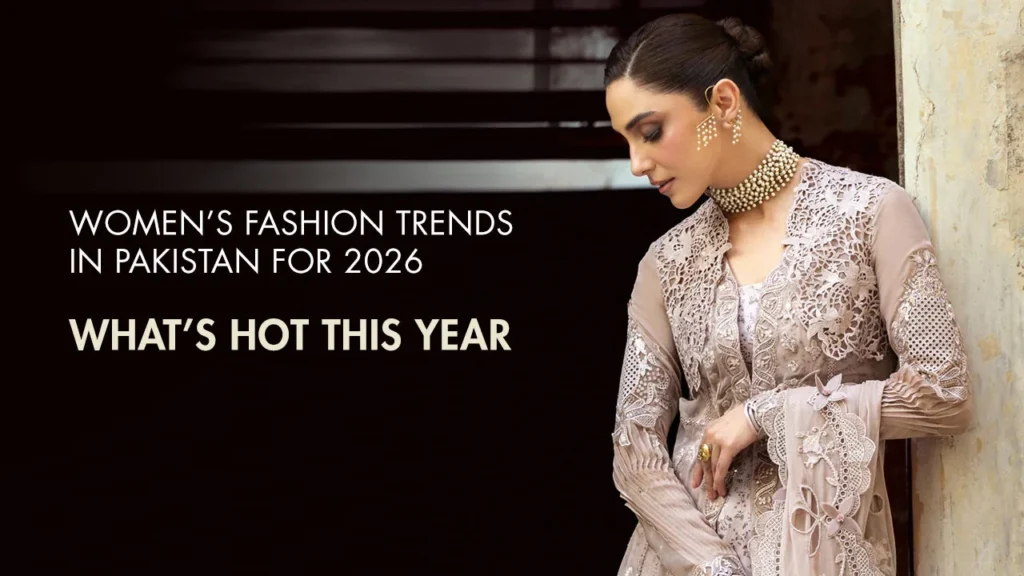
From Anarkali and sharara silhouettes to tonal embroidery, workwear minimalism, and modest luxury Eid dressing, see how 2026’s global runway trends, from Cloud Dancer white to soft power dressing, are reshaping Pakistani fashion, and where it’s now leading right back.
Introduction: Two Fashion Worlds, One Moment
For years, Pakistani fashion and global runway fashion moved on separate tracks one shaped by local weddings, fabric traditions, and festive seasons, the other by Paris, Milan, and New York fashion weeks. In 2026, that gap is closing faster than ever. Local designers are pulling directly from international color forecasts and silhouette trends, while Pakistani lawn and ready-to-wear labels are quietly building an international customer base of their own.
 This is a complete guide to Pakistani fashion trends 2026 not a single-look roundup. By the end, you’ll know:
- Which colors are dominating both Pakistani and global runways this year
- Which silhouettes Angrakha, sharara, Anarkali are actually worth buying into
- How Eid fashion trends 2026, everyday wear, and office style are each evolving differently
- Where Pakistani fashion trends are now shaping global trends instead of just following them
Let’s start with what’s happening on the global runway, then bring it home.
Part 1: What’s Trending Globally in 2026
Cloud Dancer White Leads the Palette
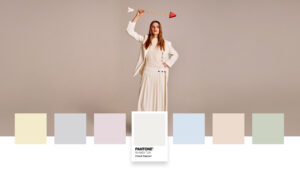
Pantone’s Color of the Year for 2026 is Cloud Dancer, a soft luminous white that feels calmer and more intentional than a stark optic white, and more modern than a creamy off-white. Fashion insiders are treating it as fashion’s “reset” shade a base layer for maximalist styling as much as a statement on its own, worn head-to-toe in sharp tailoring or sculptural dresses. Its dominance also signals a broader cultural mood: a clean slate paired with quiet, spa-like luxury running through global branding and design this year.
Bold Color Is Back, But With Intention
Interestingly, the story isn’t just about neutrals. Fashion forecasters note that 2026 favors specific, complementary color combinations rather than one dominant hue, reflecting how people today balance calm with chaos in their everyday style. One of the most talked-about shades of the year is Transformative Teal, a deep blue-green named color of the year by trend forecasters like WGSN and Coloro, symbolizing regeneration and a return to nature.
Other standout global runway colors for 2026 include:
- Canary yellow, rich teal, candy pink, vibrant violet, and chartreuse, which trend reports describe as the defining hues of the year
- Cobalt blue, which dominated both spring/summer and fall/winter 2026 runways
- Tomato red, seen consistently across spring and fall 2026 collections
- Orange, which became one of the most talked-about statement colors coming out of Milan Fashion Week for spring/summer 2026
Quiet Luxury’s Next Chapter: Soft Power Dressing
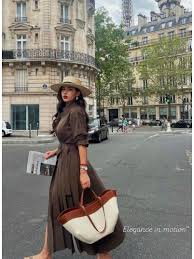
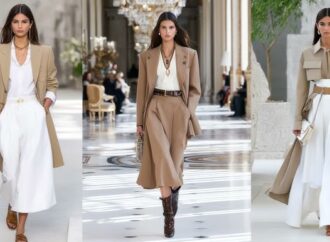
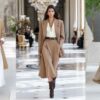
Quiet luxury hasn’t disappeared in 2026 it’s evolved. Fashion editors covering the global shows are now describing the direction as “soft power dressing“: monochrome outfits in camel, ivory, chocolate, or grey, built around one investment-quality piece a coat, a blazer, a structured bag finished with clean, minimal accessories. Where quiet luxury was defined by what it withheld (logos, loud color, obvious status signaling), soft power dressing is defined by what it communicates: restraint, authority, and confidence that doesn’t need to ask permission. It’s a subtle but important shift, and it’s the global trend Pakistani formalwear is echoing most closely this year.
Emotional Color and the Return of Earth Tones
A post-pandemic craving for comfort, pushback against AI-generated visual sameness, and better sustainable-dye technology are all driving this year’s palette. A soft dusty purple between lavender and mauve emerged as a genuine cross-market signal, appearing on both New York and London Fashion Week’s spring/summer reports an unusually strong sign of runway consensus. Alongside it, deep browns and espresso tones are gaining ground globally as the “next” quiet luxury neutral, a shift already showing up in Pakistani formalwear through camel, olive, and stone-beige.
Part 2: What’s Trending in Pakistan in 2026
Mint, Sage, and Earthy Tones Dominate Eid and Festive Wear
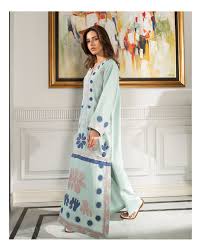
Mint and sage green have emerged as the most-searched fashion color in Pakistan this year, particularly for Eid, alongside powder blue and periwinkle for their calming, elegant feel on mehndi and morning Eid looks. Lavender and soft lilac are gaining strong traction with younger women, soft lemon yellow is emerging as the bold, cheerful pick for casual summer dressing, while deep emerald green remains the most reliably classic choice for Eid and formal wear.
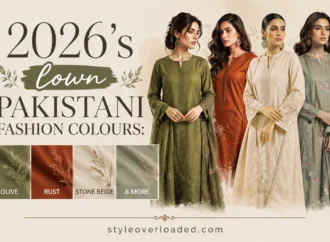
Running alongside the pastels is a second, equally strong color story: earthy and jewel tones. Terracotta, burnt orange, olive green, camel, and stone beige are showing up across festive and Eid collections as a warmer, more grounded counterpoint to soft pastels, while rich burgundy, plum, and royal navy blue are leading choices for evening and formal Eid events. Together, these two palettes soft pastel and warm earthy are what most 2026 Pakistani lawn and festive collections are built around.
Notice the overlap already forming with the global palette: soft lavender-adjacent tones, deep jewel greens, and quiet neutral browns are showing up on both Pakistani and global color lists this year a rare moment of genuine cross-market alignment rather than Pakistan simply following the West a season late.
Beyond color, this year’s Eid look is also being described in the industry as “modest luxury” sheer chiffon or georgette bases finished with silver zari embroidery and statement bell sleeves, designed to feel romantic and photo-ready while still keeping modest coverage. It’s specific enough as an aesthetic that it’s becoming its own search and styling category, distinct from general Eid fashion.
The Angrakha and Sharara Silhouettes Take Over
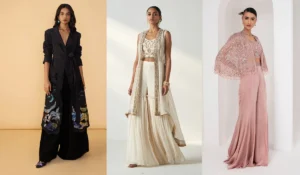
The wrap-front Angrakha kameez has become 2026’s most significant silhouette trend in Pakistani fashion, prized for the naturally flattering, draped look it creates across body types. It’s commonly paired with wide-leg trousers or a sharara base and works equally well for Eid morning, casual outings, and semi-formal events.
The sharara itself is having its biggest moment in years but a lighter one. Rather than the heavily structured shararas of past seasons, 2026 favors flowing chiffon or organza shararas in pastel tones for daytime and Eid morning looks, with richer silk or velvet versions reserved for evening events. Paired with a cropped or mid-length embroidered kurta, it’s one of the most photographed Eid silhouettes of the year.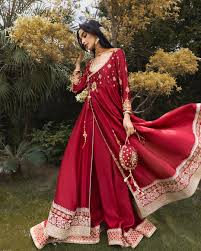
Alongside both, asymmetric hems have become a major clothing trend, especially in festive frocks designed for Eid formal wear and wedding-guest dressing, where a high-low or curved hemline adds visual interest without extra embellishment.
The layered Anarkali is also making a strong comeback for 2026, particularly for family gatherings and evening Eid events. Paired with a dupatta in a contrasting hue, it offers a more structured, formal alternative to the flowing Angrakha and sharara looks dominating daytime dressing proof that the classic Anarkali silhouette still has real staying power alongside 2026’s newer trends.
Tonal Embroidery and Minimalism Are Overtaking Heavy Embellishment
Perhaps the clearest local echo of the global “quiet luxury” mood: Pakistani designers are increasingly moving away from dense embroidery in favor of sparse, minimalist couture built on clean design, precise tailoring, and considered, subtle textures.
The specific technique driving this shift is tonal embroidery thread work in a color that matches or closely complements the base fabric now considered the single most significant embroidery trend in Pakistani clothing for 2026. It delivers the texture and craftsmanship Pakistani fashion is known for, without the visual weight of traditional all-over embellishment.
This mirrors the global shift toward Cloud Dancer white and soft power dressing almost exactly just filtered through a distinctly Pakistani silhouette and embroidery vocabulary.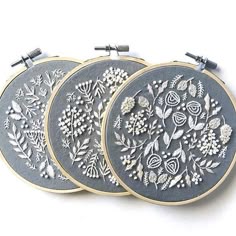
That said, minimalism hasn’t replaced tradition it’s split the wardrobe in two. Gota, mirror work, and tilla embroidery remain the expected techniques for bridal wear and heavy formal occasions, where richer embellishment is still very much the standard. The real 2026 shift is a clearer line between the two: tonal and minimal for Eid and everyday festive wear, traditional and ornate reserved specifically for weddings.
Pakistani Lawn, Comfort-First Fabrics, and Co-ord Culture
No conversation about Pakistani fashion trends is complete without lawn. Pakistani lawn suits lightweight cotton designed specifically for warm weather remain the backbone of the country’s spring and summer wardrobe, and 2026’s lawn collections lean into oversized florals, abstract patterns, and bigger, bolder artistic prints alongside the season’s core pastel and earth-tone palettes. Alongside lawn, chiffon, silk, linen, and organza continue to dominate as the season’s go-to fabrics for both everyday and festive wear.
Ease and purposeful simplicity have become the hallmark of Pakistani summer fashion in 2026, with matching men’s and women’s outfits, soft florals, and quality pre-stitched sets leading the way. Two-piece co-ord sets, in particular, have moved from passing trend to wardrobe staple, especially in solid pastel colors with delicate contrast stitching around the collar and sleeves a look designed to move seamlessly from office to evening dinner.
Fusion Wear, Workwear, and Street-Meets-Ethnic Style
Fusion wear remains a defining category in 2026, blending traditional Pakistani silhouettes with modern Western influence shalwar kameez cut with contemporary lines, or jeans paired with intricately embroidered pieces. It’s growing fastest among younger shoppers, and it shows up in two distinct ways.
In the office, it looks like smart minimalism: neutral palettes, wrinkle-resistant fabrics, and tailored three-piece suits with cigarette trousers, often finished with a printed scarf instead of a heavier traditional dupatta. On the street, it looks more casual straight-fit denim worn with long kurtas, waist-length jackets layered over plain kurtas, and sneakers paired with ethnic tops. Both are the same east-meets-west instinct, just dressed for different rooms.
Coordinated Family Looks (“Twinning”) for Eid
One of the most photogenic trends of Eid 2026 is coordinated not identical family dressing: a unified color palette or shared motif rather than matching outfits. A mother in lavender with silver embroidery might have a daughter in a lavender tulle frock with similar detailing, while a husband’s waistcoat picks up the same maroon tone as his wife’s dupatta.
Beyond the Runway: Sustainability, Gender-Fluid Design, and Digital Fashion
A few slower-moving shifts are reshaping the industry, even if they’re less visible in a single outfit photo: growing use of eco-friendly fabrics and ethical production, more unisex and gender-fluid silhouettes in ready-to-wear, and a move toward virtual consultations and digital fittings as standard rather than novel.
Men’s Eid Fashion 2026: Waistcoats and Modern Kurtas
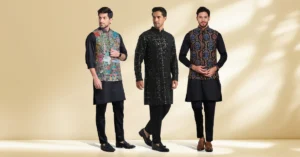
Men’s Eid style is having its own quiet evolution: shorter kurtas with mandarin collars and straight-cut trousers instead of a traditional pajama, for a more tailored silhouette. Waistcoats remain the easiest way to elevate a simple kurta pajama black, navy, maroon, and deep green lead the color list, with embroidered detailing and monochrome layering favored over anything too ornate, echoing the same minimalism running through women’s fashion.
Part 3: Where Pakistan Is Now Influencing Global Fashion
This is the most interesting shift of 2026 the direction of influence is no longer one-way.
Pakistani lawn dresses, matching sets, statement dupattas, and modern silhouettes are increasingly driving global interest in Pakistani clothing, as international shoppers look for pieces that feel premium and beautiful without demanding a luxury budget. The appeal lies in a balance many modern wardrobes are missing: comfort and elegance, tradition and modernity, function and fashion all in one outfit.
This matters for two reasons: Pakistani designers no longer need to choose between “local” and “global” aesthetics, and Pakistani fashion brands and content creators now have a real opening to speak to an international audience without diluting what makes the clothing distinct.
Part 4: The Overlap A Side-by-Side Colour and Style Comparison
| Trend Category | Global 2026 | Pakistan 2026 |
|---|---|---|
| Leading neutral | Cloud Dancer white | Ivory, off-white, stone beige |
| Statement color | Transformative Teal, Cobalt Blue | Deep emerald, sage/mint green |
| Soft/romantic tone | Dusty lavender-mauve | Lavender, soft lilac, powder blue |
| Earthy/grounded tone | Espresso, deep brown | Terracotta, olive, camel, burgundy |
| Design philosophy | Quiet luxury → soft power dressing | Minimalist couture, tonal embroidery |
| Silhouette direction | Relaxed tailoring, monochrome layering | Angrakha, sharara, Anarkali, asymmetric hems |
| Workwear/street style | Utility fashion, streetwear-luxury merges | Three-piece suits, cigarette trousers; denim + ethnic tops |
| Industry shifts | Sustainability, personalization, AI-driven design | Eco-fabrics, gender-fluid silhouettes, digital fittings |
| Cultural driver | Comfort, anti-AI sameness | Comfort, fusion of east/west |
The pattern is clear: whether it’s Paris or Karachi, 2026 Pakistani fashion is being driven by the same underlying instinct calm, considered, comfortable dressing with just enough color and texture to feel alive.
 How to Style These Trends: Practical Tips
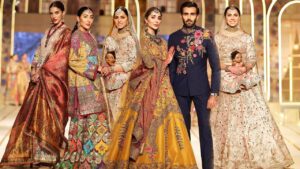 How to Style These Trends: Practical Tips
For Eid and festive wear: Lean into mint or sage green or, for a warmer alternative, terracotta or olive with an Angrakha-style kameez or a light chiffon sharara and minimal tonal embroidery. It hits both the local color trend and the global minimalism movement at once.
For everyday wear: A soft pastel co-ord set in lavender or powder blue works as a comfortable, elevated basic that photographs well and transitions from day to evening.
For weddings and formal events: Pair a deep emerald, burgundy, or navy outfit with clean, structured tailoring rather than heavy embellishment this is where soft power dressing and Pakistani formal wear are converging most clearly.
For men’s Eid styling: A shorter mandarin-collar kurta with straight-cut trousers and a monochrome waistcoat in navy or deep green delivers a modern, tailored look without overdoing the embellishment.
For a global-meets-local wardrobe: Try fusion pieces a well-tailored shalwar kameez in Cloud Dancer white, or jeans paired with a lightly embroidered, tonal-thread kurta for a look that reads as current on both runways.
Frequently Asked Questions
1. What is the most popular fashion color in Pakistan for 2026? Mint and sage green, especially for Eid, followed by powder blue, lavender, deep emerald green, and a strong secondary trend toward earthy tones like terracotta, olive, and camel.
2. What is Pantone’s Color of the Year for 2026? Cloud Dancer a soft luminous white reflecting a broader global mood of calm, minimalism, and quiet luxury.
3. What’s trending for Eid 2026 in Pakistan? Flowing chiffon shararas, Angrakha and Anarkali silhouettes, asymmetric hemlines, tonal embroidery over heavy embellishment, and a palette split between soft pastels and warm earth tones.
4. What is tonal embroidery? Thread work in a color that matches or closely complements the base fabric rather than contrasting with it the single most significant embroidery trend in Pakistani clothing for 2026.
5. Is Pakistani fashion becoming popular internationally? Yes, Pakistani lawn, ready-to-wear, and festive collections are gaining recognition internationally, driven by demand for clothing that balances comfort, elegance, and affordability.
6. What silhouette is trending in Pakistani fashion in 2026? The wrap-front Angrakha kameez and a lighter, more flowing sharara are the leading silhouette trends of 2026, often paired with wide-leg trousers, alongside asymmetric hemlines for formal and festive wear.
7. What is “soft power dressing“? The 2026 evolution of quiet luxury monochrome outfits built around one investment-quality piece in camel, ivory, chocolate, or grey, defined less by what it withholds and more by the quiet authority it projects.
8. Are Pakistani Pakistani fashion and global fashion trends aligning in 2026? Increasingly, yes both markets are moving toward minimalism, soft jewel and earth tones, and comfort-driven silhouettes, each expressed through its own cultural design language.
9. Is the Anarkali still trending in Pakistani fashion 2026? Yes, the layered Anarkali, paired with a contrasting-hue dupatta, is having a comeback for family gatherings and evening Eid events as a more structured alternative to the flowing Angrakha and sharara.
10. What’s trending in Pakistani workwear and office fashion in 2026? Smart minimalism neutral palettes, wrinkle-resistant fabrics, tailored three piece suits with cigarette trousers, and a printed scarf standing in for a heavier traditional dupatta.
11. Is Pakistani fashion becoming more sustainable and gender-fluid? Yes, more eco-friendly fabrics and ethical production, more unisex and gender-fluid silhouettes in ready-to-wear, and growing use of digital fittings and virtual consultations.
12. What is the “twinning” trend for Eid 2026? Coordinated, not identical, family dressing matching tones or motifs across a mother and daughter or a husband and wife, rather than everyone in the exact same outfit.
Final Thoughts
2026 marks a genuine turning point where Pakistani fashion and global runway trends aren’t just running in parallel they’re actively informing each other. From the shared love of soft, considered minimalism and tonal embroidery to overlapping color stories in green, lavender, and earthy neutrals, the line between “local” and “global” style is thinner than it’s been in years. For anyone building a wardrobe this year, the smartest approach isn’t choosing a side it’s finding the pieces, whether Pakistani lawn or a Cloud Dancer white coat, that speak both languages at once.
Trends move fast this guide will be updated as new runway and local fashion week data comes in throughout the year.
Read more:
- Best Salons & Beauty Parlours in Karachi (2026 Guide): Top 10 Reviewed
- Mehndi Designs for Pakistani Bride 2026 | The Complete Bridal Henna Guide
- Best Shampoo for Hair Fall in Pakistan 2026 | Complete Guide With Real Results
- Best Beauty Products for Pakistani Women 2026 | Skincare, Makeup & K-Beauty Trends




Leave a Comment
Your email address will not be published. Required fields are marked with *