

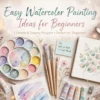
Easy Watercolor Painting Ideas for Beginners Watercolor painting is a wonderful way to explore creativity, experiment with colors, and create beautiful artwork without needing advanced drawing skills. You do not have to be a professional artist to enjoy it. A few basic supplies, some watercolor paper, and a little patience are enough to get started.
Easy Watercolor Painting Ideas for Beginners
Watercolor painting is a wonderful way to explore creativity, experiment with colors, and create beautiful artwork without needing advanced drawing skills. You do not have to be a professional artist to enjoy it. A few basic supplies, some watercolor paper, and a little patience are enough to get started.
If you are new to painting, choosing your first subject can sometimes feel more difficult than actually picking up a brush. The good news is that many beautiful watercolor paintings begin with simple shapes, gentle color combinations, and a few thoughtful brushstrokes.
These easy watercolor painting ideas are designed for beginners who want to practice at home, develop their painting skills, or simply enjoy a relaxing creative activity. You will find ideas inspired by nature, flowers, landscapes, cute animals, food, and abstract art.
Each idea includes simple instructions, suggested colors, and a practical tip to help you complete your painting. You can follow the steps as written or change the colors and details to create something that reflects your personal style.
Essential Watercolor Supplies for Beginners
 Before starting your first painting, gather a few basic supplies. You do not need an expensive professional art kit. A small collection of reliable materials is enough to learn the fundamentals.
1. Watercolor Paints
Watercolor paints are available in pans, tubes, and liquid formats. Pan sets are convenient for beginners because they are compact, easy to store, and require little preparation.
Start with a small set containing basic colors such as red, yellow, blue, green, and brown. You can mix these to create many additional shades.
2. Watercolor Paper
Regular printer paper is not designed to handle repeated applications of water. It can wrinkle, tear, and make painting difficult.
Choose paper specifically made for watercolor. A good starting point is 140 lb (approximately 300 gsm) cold-pressed paper. Its slightly textured surface works well for different painting styles.
3. Paintbrushes
You do not need a large brush collection.
Start with:
- One medium round brush for general painting.
- One small round brush for details.
- One larger brush for backgrounds and washes.
A pointed round brush is particularly useful because you can make both broad marks and fine lines with it.
4. Water and Palette
Keep two small containers of water nearby if possible. Use one for the first rinse and the other for cleaning your brush before mixing a fresh color.
A plastic palette, ceramic plate, or mixing tray can help you prepare different shades.
5. Paper Towels
Paper towels are useful for removing excess water from brushes, correcting small mistakes, and creating interesting textures. Keep a few pieces beside your painting area.
Budget-friendly advice: If you have limited money, prioritize suitable watercolor paper and a decent round brush. A basic student-grade paint set is perfectly acceptable for learning. It is better to practice with a few reliable supplies than to purchase a large collection you do not need.
Basic Watercolor Techniques Beginners Should Know
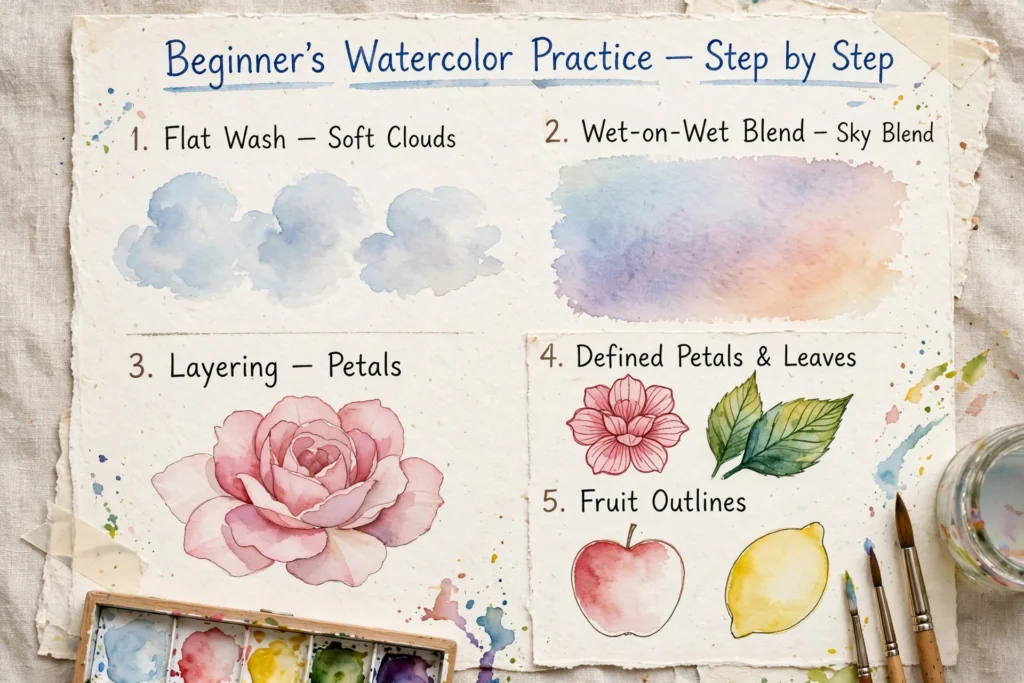 Understanding a few simple techniques will make your first paintings easier. Practice these methods on scrap watercolor paper before using them in a complete artwork.
Wet-on-Wet
This technique involves applying watercolor paint to paper that has already been dampened with clean water.
The pigment spreads naturally, producing soft edges and gentle color transitions. It is useful for painting clouds, distant mountains, flower backgrounds, and atmospheric skies.
Wet-on-Dry
Wet-on-dry means applying wet paint directly to dry paper.
It produces more defined shapes and gives you better control over where the paint goes. Use this method for flower petals, leaves, fruit outlines, and small decorative details.
Color Blending
Color blending involves combining two or more colors while they are still wet.
For example, you can blend yellow into orange to create a warm sunset or combine blue and green to paint a tropical sea.
Work while the colors are still damp if you want a smooth transition.
Simple Washes
A wash is a relatively even application of diluted watercolor across an area.
You can create a light blue wash for a sky, a pale green wash for a background, or a warm pink wash for a decorative painting.
Add more water for lighter shades and more pigment for stronger colors.
Layering
Layering means applying another transparent coat of paint after the previous layer has dried.
This technique helps build darker areas, shadows, and depth without making the entire painting too dark at once.
For best results, allow each layer to dry before adding another.
25 Easy Watercolor Painting Ideas for Beginners
Here are 25 creative watercolor projects to help you get started. They range from simple exercises to small decorative paintings that you can display or give as gifts.
1. Simple Watercolor Daisy Flowers
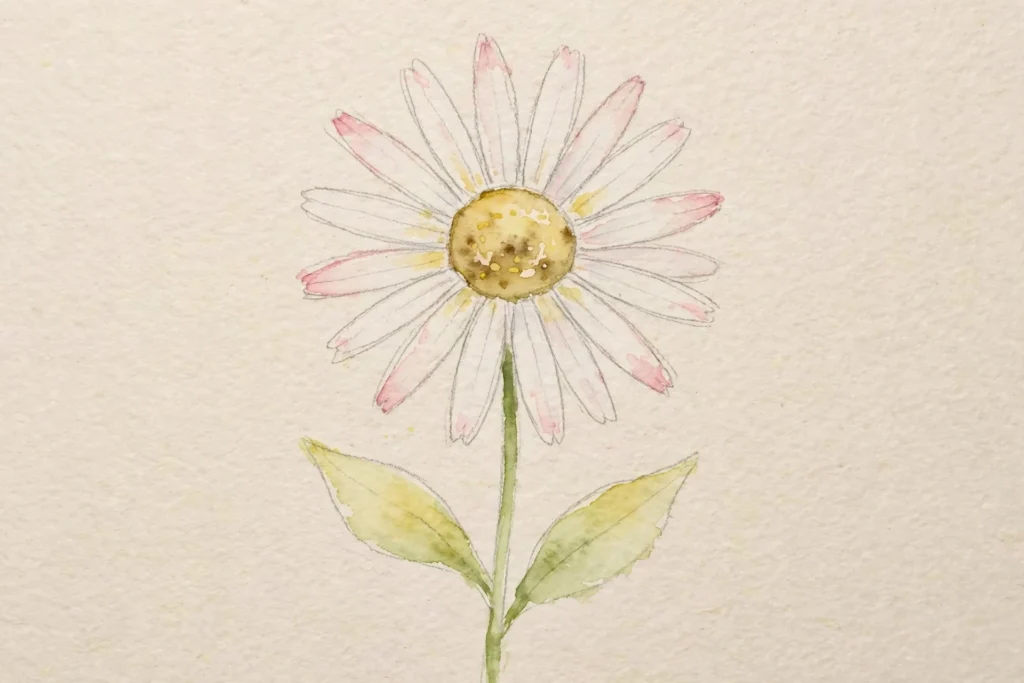 Daisies are an excellent first subject because their petals are easy to create with individual brushstrokes.
How to paint:
- Draw a small circle in the middle of your paper.
- Paint narrow white petals around the center, leaving the paper unpainted if you want natural white petals.
- Add a few pale yellow or light pink details to selected petals.
- Paint the center using yellow and a little brown.
- Add a thin green stem and two simple leaves.
Suggested colors: Yellow, green, brown, and optional pale pink.
Beginner tip: Use a light pencil sketch to arrange the petals before painting.
Why it is beginner-friendly: You can build the flower from separate, uncomplicated shapes without worrying about perfect proportions.
2. Colorful Watercolor Sunset
A sunset is a beautiful way to practice blending colors across a large area.
How to paint:
- Lightly mark the horizon near the bottom of your paper.
- Apply a thin layer of clean water to the sky area.
- Add yellow near the horizon.
- Blend orange, pink, and purple above it.
- Once dry, paint a dark silhouette of distant hills or trees.
Suggested colors: Yellow, orange, pink, purple, and dark blue.
Beginner tip: Keep the yellow area relatively light so the sunset maintains a warm glow.
Why it is beginner-friendly: The main subject is a color transition rather than a complicated drawing.
3. Misty Watercolor Mountains
Mountain landscapes are ideal for practicing simple shapes and creating a sense of distance.
How to paint:
- Draw two or three overlapping mountain peaks.
- Paint the farthest mountains with a very light blue wash.
- Allow them to dry.
- Add darker blue or purple to the closer mountains.
- Leave a few white areas near the peaks to suggest snow.
Suggested colors: Sky blue, ultramarine, violet, and grey.
Beginner tip: Use lighter colors for distant mountains and stronger shades for the foreground.
Why it is beginner-friendly: Mountains can be represented with basic triangular and irregular shapes.
4. Soft Watercolor Clouds
 Cloud paintings are a simple exercise in understanding light, soft edges, and negative space.
How to paint:
- Lightly wet the background with clean water.
- Apply a pale blue wash around the areas where you want clouds.
- Leave irregular white spaces for the clouds.
- Add a little diluted grey or violet beneath selected cloud shapes.
- Let everything dry naturally.
Suggested colors: Sky blue, pale grey, violet, and white paper.
Beginner tip: Avoid painting every part of the cloud. Leaving white paper creates a natural sense of brightness.
Why it is beginner-friendly: You do not need to draw exact outlines or symmetrical shapes.
5. Watercolor Green Leaves
Leaves are useful for practicing brush control and creating natural-looking details.
How to paint:
- Draw a thin curved line for the central stem.
- Use the pointed end of your brush to create small leaf shapes.
- Vary the size and direction of the leaves.
- Add darker green near the central veins.
- Paint a few thin branches to complete the composition.
Suggested colors: Light green, sap green, olive green, and brown.
Beginner tip: Mix different shades of green instead of using the same color for every leaf.
Why it is beginner-friendly: Individual leaves are small, simple shapes that can be painted separately.
6. Watercolor Strawberry Painting
 Strawberries are colorful subjects that look attractive even with minimal detail.
How to paint:
- Draw a small heart-like shape with a rounded top.
- Apply a light red wash inside the shape.
- Add a darker red layer along one side after the first layer dries.
- Paint tiny yellow-brown seed marks.
- Finish with a few pointed green leaves at the top.
Suggested colors: Red, crimson, yellow, green, and a little brown.
Beginner tip: Do not outline every seed. Small, irregular marks look more natural.
Why it is beginner-friendly: The fruit has a recognizable shape and requires only a few colors.
7. Cute Watercolor Cat
A simple cat illustration is a fun project for anyone who enjoys painting animals.
How to paint:
- Sketch a rounded head and small triangular ears.
- Paint the head and body with a light grey, brown, or orange wash.
- Let the first layer dry.
- Add darker patches, ears, and a curved tail.
- Draw the eyes, nose, whiskers, and mouth with a fine brush.
Suggested colors: Grey, orange, brown, black, and pink.
Beginner tip: Start with a sitting cat silhouette rather than attempting a detailed realistic portrait.
Why it is beginner-friendly: Simple rounded shapes make it possible to create an expressive animal without complicated anatomy.
8. Simple Beach Watercolor Scene
 A beach painting allows you to combine water, sand, and sky in one small composition.
How to paint:
- Divide the paper into sky, sea, and sand sections.
- Paint a pale blue wash for the sky.
- Add turquoise and blue horizontal strokes for the sea.
- Use diluted yellow and beige for the sand.
- Add a few tiny footprints, shells, or distant birds.
Suggested colors: Turquoise, blue, sandy yellow, beige, and brown.
Beginner tip: Leave a narrow white area where the water meets the shore to suggest sea foam.
Why it is beginner-friendly: The composition uses simple horizontal sections and loose brushstrokes.
9. Watercolor Butterfly
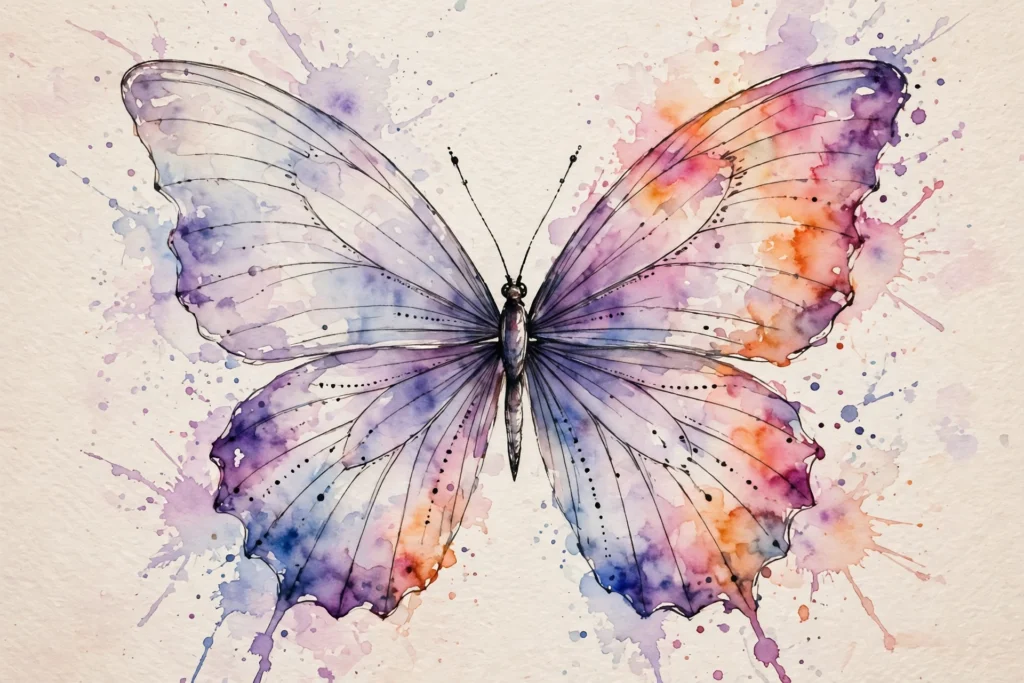 Butterflies offer an opportunity to experiment with colorful patterns and symmetry.
How to paint:
- Draw a small body and four broad wing shapes.
- Paint one wing at a time using diluted colors.
- Add a second color near the edges while the first is still slightly damp.
- Let the wings dry.
- Add thin dark lines, small dots, and two antennae.
Suggested colors: Purple, pink, orange, blue, and black.
Beginner tip: Paint both sides with similar colors, but do not worry about making every marking identical.
Why it is beginner-friendly: The basic outline is easy to draw, and the wing patterns allow plenty of creative freedom.
10. Watercolor Rainbow
A rainbow is one of the simplest colorful paintings to create.
How to paint:
- Lightly sketch several curved lines.
- Paint the outer arc using red.
- Add orange, yellow, green, blue, and violet in separate curved bands.
- Leave small white gaps between colors if necessary.
- Add two soft clouds at the bottom.
Suggested colors: Red, orange, yellow, green, blue, and violet.
Beginner tip: Use a small round brush and turn your paper if necessary to make the curved strokes easier.
Why it is beginner-friendly: It uses repeated curved shapes and a familiar color sequence.
11. Watercolor Potted Cactus
 A small cactus painting is perfect for a decorative desk or wall print.
How to paint:
- Draw a simple rounded or tall cactus shape.
- Paint the main body with light green.
- Add darker green sections to create depth.
- Use tiny short strokes for the cactus spines.
- Paint a terracotta pot beneath it.
Suggested colors: Light green, dark green, yellow-green, terracotta, and brown.
Beginner tip: Use short, delicate brush marks instead of drawing every individual spine.
Why it is beginner-friendly: The subject consists of a few basic shapes and does not require realistic botanical details.
12. A Cup of Coffee or Tea
 A warm drink is a charming still-life subject and a good opportunity to practice painting everyday objects.
How to paint:
- Sketch an oval rim and a rounded cup shape.
- Paint the cup using a pale color.
- Add a darker shade along one side to suggest depth.
- Paint brown liquid inside the cup.
- Add a handle, a small saucer, and a few steam lines.
Suggested colors: Brown, cream, beige, grey, and muted pink.
Beginner tip: Keep the cup design simple and use a slightly darker shade to suggest its curved surface.
Why it is beginner-friendly: A cup has a recognizable structure and can be painted using basic geometric shapes.
13. Watercolor Cherry Pair
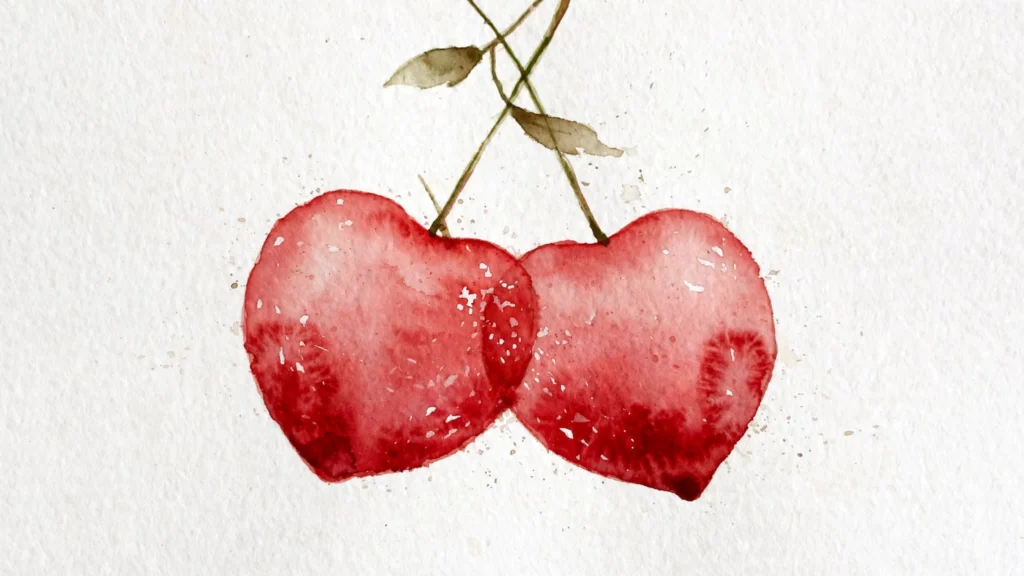 Two cherries make a small, colorful painting that is suitable for a beginner’s sketchbook.
How to paint:
- Draw two overlapping circles with slightly pointed bottoms.
- Paint each cherry with a light red wash.
- Add deeper crimson along the lower edges.
- Paint two thin green-brown stems.
- Add tiny highlights by leaving small areas of paper white.
Suggested colors: Red, crimson, green, and brown.
Beginner tip: Leave a little white paper untouched to create a natural glossy appearance.
Why it is beginner-friendly: You only need to paint two rounded objects and a few thin lines.
14. Watercolor Night Sky with Stars
 A night sky is an excellent subject for experimenting with darker colors and simple decorative details.
How to paint:
- Cover the paper with a dark blue or purple wash.
- Add a little pink or violet to create color variation.
- Allow the background to dry completely.
- Use a small brush to paint tiny stars.
- Add a crescent moon and a few larger star shapes.
Suggested colors: Navy blue, violet, purple, and pale yellow.
Beginner tip: Use a very small brush for the stars so they remain delicate.
Why it is beginner-friendly: The background can be expressive and loose, while the stars require only simple dots and shapes.
15. Watercolor Autumn Tree
 An autumn tree is a lovely seasonal painting that helps beginners explore warm color combinations.
How to paint:
- Paint a brown tree trunk with a few branching lines.
- Allow the trunk to dry.
- Dab orange, yellow, and red paint around the branches.
- Use different brush pressures to create large and small leaf marks.
- Add a few fallen leaves beneath the tree.
Suggested colors: Yellow, orange, burnt sienna, red, and brown.
Beginner tip: Use the tip of your brush to make irregular leaf marks rather than painting one large solid shape.
Why it is beginner-friendly: The foliage can be created with simple dabs instead of individually detailed leaves.
16. Watercolor Simple Ocean Waves
 Ocean waves are a great exercise for creating movement with horizontal brushstrokes.
How to paint:
- Paint a light blue background.
- Add several uneven horizontal strokes in turquoise.
- Use darker blue beneath selected wave shapes.
- Leave thin white gaps to represent foam.
- Add a few small curved marks near the foreground.
Suggested colors: Turquoise, cerulean blue, ultramarine, and white paper.
Beginner tip: Avoid making every wave line perfectly straight. Slightly irregular strokes create a more natural appearance.
Why it is beginner-friendly: The painting focuses on horizontal marks rather than complicated objects.
17. Watercolor Mushroom Illustration
 Mushrooms make attractive subjects for whimsical illustrations and nature-themed artwork.
How to paint:
- Draw a rounded mushroom cap and a simple stem.
- Paint the cap with a light red or brown wash.
- Add a darker shade near the lower edge.
- Paint the stem using cream or beige.
- Add small spots, grass, and tiny plants around the base.
Suggested colors: Red, brown, beige, cream, and green.
Beginner tip: Paint the cap and stem separately to maintain their shapes.
Why it is beginner-friendly: Mushrooms have simple outlines and can be decorated with small patterns.
18. Watercolor Simple House
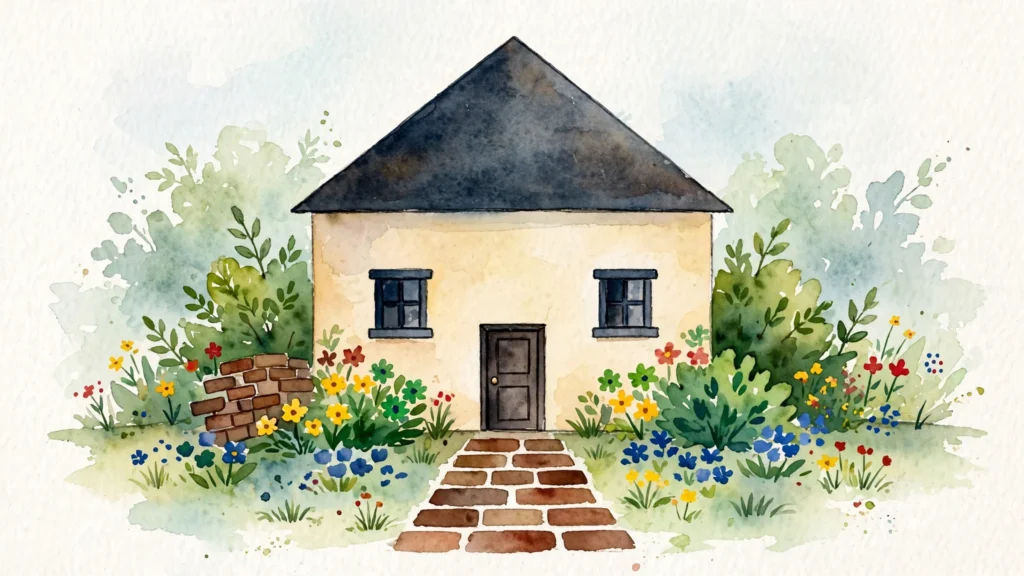 A small cottage painting is a lovely way to practice straight lines, geometric shapes, and basic composition.
How to paint:
- Draw a square or rectangular house.
- Add a triangular roof and a small door.
- Paint the walls with a light warm color.
- Add a darker roof and window frames.
- Paint a few green bushes or flowers around the house.
Suggested colors: Brown, brick red, yellow, green, and blue.
Beginner tip: Use a ruler for the initial sketch if you find straight lines difficult.
Why it is beginner-friendly: The house is built from simple shapes, and you can decide how much detail to include.
19. Watercolor Lavender Field
 Lavender fields create a peaceful painting with repeated vertical flower shapes.
How to paint:
- Paint a light blue or pale violet sky.
- Create a green foreground using a loose wash.
- Use a thin brush to paint several upright flower stems.
- Add small purple dabs along the upper parts of the stems.
- Paint a few distant green bushes.
Suggested colors: Lavender, violet, green, blue, and light grey.
Beginner tip: Vary the height and spacing of the flower stems to avoid a repetitive appearance.
Why it is beginner-friendly: Repeating simple brush marks creates the impression of a large field without requiring detailed flowers.
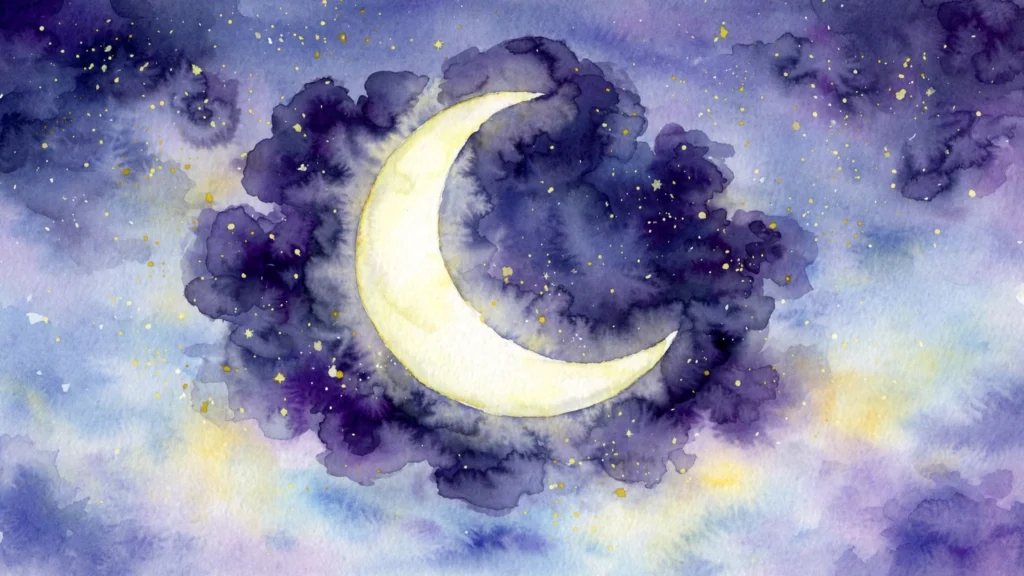
20. Watercolor Moon and Stars
 A moon painting is a beautiful small artwork that can be created with very few details.
How to paint:
- Draw a large crescent moon lightly.
- Paint a pale blue or purple background around it.
- Keep the moon area mostly white or pale yellow.
- Add small stars using a fine brush.
- Include a few darker clouds for extra atmosphere.
Suggested colors: Indigo, violet, pale yellow, and blue.
Beginner tip: Protect the moon shape by carefully painting around it instead of trying to cover it with white paint later.
Why it is beginner-friendly: The composition has one main subject and a simple background.
21. Watercolor Pomegranate Still Life
 A pomegranate offers a slightly different fruit-painting challenge because of its rounded shape and distinctive red interior.
How to paint:
- Draw one whole pomegranate and one half with visible seeds.
- Paint the whole fruit using a light red wash.
- Add crimson shading around the sides.
- Paint the exposed interior with deeper red tones.
- Add small individual seed shapes and a few green leaves.
Suggested colors: Crimson, red, pink, dark green, and brown.
Beginner tip: Paint the whole fruit first, then add the cut section as a separate shape.
Why it is beginner-friendly: It introduces simple shading and small details without requiring a complicated composition.
22. Watercolor Hot Air Balloon
 A hot air balloon is a fun subject for practicing curved sections and colorful patterns.
How to paint:
- Draw a large rounded balloon shape.
- Divide it into several vertical sections.
- Paint alternating sections with different colors.
- Add thin brown lines beneath the balloon.
- Paint a small basket and a simple pale sky.
Suggested colors: Red, yellow, blue, orange, and brown.
Beginner tip: Allow neighboring sections to dry before painting the next one if you want clean color boundaries.
Why it is beginner-friendly: The subject uses a simple outline and repeated sections that are easy to fill.
23. Abstract Watercolor Colorful Shapes
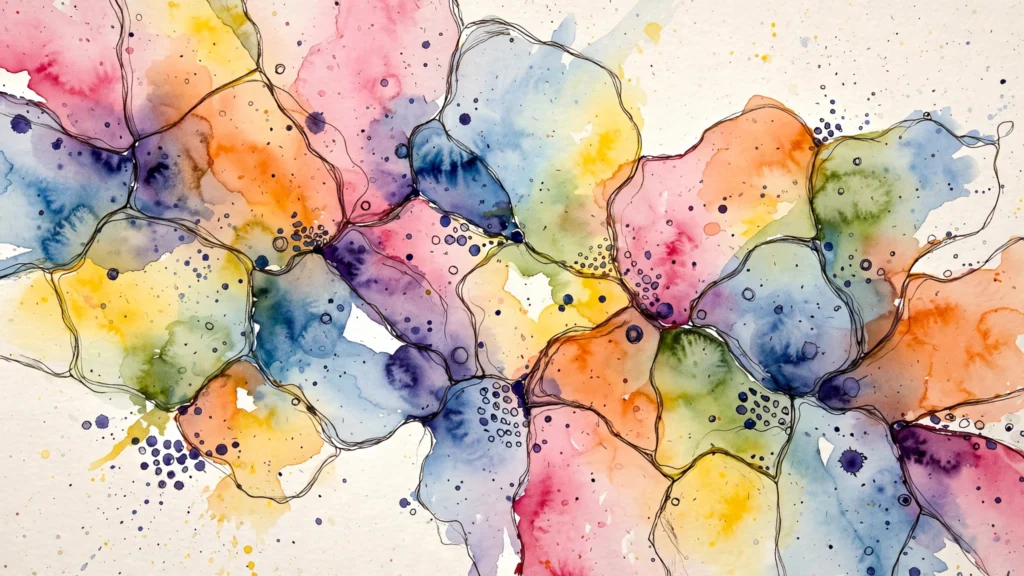 Abstract watercolor painting is ideal for beginners who want to experiment without worrying about realistic drawing.
How to paint:
- Divide your paper into several irregular sections.
- Paint each section with a different diluted color.
- Allow selected colors to touch and blend.
- Add a few darker lines or small circles after the background dries.
- Leave some white spaces to balance the composition.
Suggested colors: Pink, orange, blue, yellow, violet, and green.
Beginner tip: Choose three or four main colors and repeat them throughout the painting to create visual harmony.
Why it is beginner-friendly: There is no single correct result, so you can focus on experimenting with color and brush movement.
24. Watercolor Christmas Ornaments
 Christmas ornaments are a lovely seasonal project for making greeting cards or small handmade decorations.
How to paint:
- Draw three or four circular or oval ornaments.
- Paint each ornament using a different color.
- Add darker shades along the edges for dimension.
- Paint small decorative patterns, dots, or stripes.
- Add thin hanging strings and decorative caps.
Suggested colors: Red, green, gold, blue, and purple.
Beginner tip: Paint one ornament at a time and allow it to dry before adding the decorative patterns.
Why it is beginner-friendly: The shapes are simple, and the patterns can be as basic or elaborate as you like.
25. Watercolor Tiny Houseplants in Pots
 Small potted plants make charming decorative paintings and are particularly suitable for miniature artwork.
How to paint:
- Draw three small pots in different shapes.
- Paint each pot using a different earthy color.
- Add simple plant shapes, such as upright leaves, round leaves, or trailing vines.
- Use darker green for selected leaf details.
- Add small shadows beneath the pots.
Suggested colors: Olive green, sage green, terracotta, beige, and brown.
Beginner tip: Give each plant a different silhouette so the three pots look like a small collection rather than identical copies.
Why it is beginner-friendly: You can combine simple pot shapes with easy leaf patterns and complete the entire painting on a small sheet of paper.
How to Make Watercolor Paintings Look Better
You do not need advanced artistic skills to improve your watercolor paintings. Paying attention to a few small details can make a noticeable difference.
Control the Amount of Water
Water control is one of the most important parts of watercolor painting.
Too much water can cause pigment to spread beyond the intended area. Too little water can make brushstrokes look dry and uneven.
Before applying paint to your artwork, test your brush on a spare sheet. Learn how much water it holds and how easily the pigment flows.
Choose Suitable Paper
Good watercolor paper makes painting easier because it is designed to absorb water.
Cold-pressed paper is a versatile choice for beginners because it has a moderate texture suitable for washes, loose illustrations, and detailed brushwork.
If your paper repeatedly wrinkles or tears, consider moving to a heavier watercolor paper.
Mix Colors Before Painting
Prepare enough paint on your palette before starting a large section.
This helps maintain consistent colors and prevents you from having to recreate the same shade repeatedly.
Keep a small color chart of your favorite combinations so you can use them in future projects.
Avoid Muddy Colors
Muddy colors often appear when too many pigments are mixed together or when wet colors are repeatedly brushed into one another.
To avoid this problem:
- Start with a limited color palette.
- Clean your brush before picking up another color.
- Allow neighboring sections to dry when you want clear boundaries.
- Avoid repeatedly scrubbing the same area.
- Test color combinations before applying them to your final painting.
Work from Light to Dark
Watercolor is generally easier to manage when you begin with lighter washes and gradually build darker areas.
This approach gives you more control over shadows and depth. It also helps preserve the lighter parts of your composition.
Common Watercolor Mistakes Beginners Should Avoid
Making mistakes is part of learning to paint. However, understanding common problems can help you avoid frustration.
1. Using Regular Printer Paper
Ordinary paper is not designed for watercolor washes. It can buckle, absorb paint unevenly, and become damaged.
Solution: Use watercolor paper, even if you start with a small practice pad.
2. Adding Too Many Details
Beginners sometimes try to paint every small feature of a subject. This can make a simple painting look crowded.
Solution: Focus on the main shape first. Add only the details that help communicate the subject.
3. Painting Over Wet Areas Too Often
Repeatedly brushing over an area that is already drying can disturb the pigment and create uneven marks.
Solution: Leave the area alone until it has dried. Add another layer later if needed.
4. Using Dirty Water
Water gradually becomes filled with pigment as you rinse your brush.
Solution: Change your water when it becomes noticeably cloudy. Keeping two containers nearby can also help.
5. Pressing Too Hard with the Brush
Applying too much pressure can create unwanted marks and make it harder to produce delicate details.
Solution: Practice using the brush tip for fine lines and the side of the brush for broader marks.
6. Expecting Every Painting to Be Perfect
A first attempt may not look exactly like the picture in your imagination. This is normal.
Solution: Keep your early paintings as practice exercises. Compare your progress over several weeks instead of judging individual attempts.
How to Practice Watercolor Painting as a Beginner
The best way to improve is to practice regularly without turning painting into a stressful activity.
You do not need to spend several hours every day or purchase expensive materials. Even short, focused practice sessions can help you become more familiar with your brushes, colors, and paper.
Here is a simple weekly routine you can follow.
A Simple Seven-Day Watercolor Practice Plan
| Day | Practice activity |
|---|---|
| Monday | Paint simple lines, circles, leaves, and basic shapes. |
| Tuesday | Experiment with color mixing and create a small color chart. |
| Wednesday | Paint a simple flower or fruit. |
| Thursday | Practice painting skies, clouds, and color gradients. |
| Friday | Try a small animal or decorative illustration. |
| Saturday | Create one complete painting using your favorite technique. |
| Sunday | Review your work and try improving one detail. |
You can repeat this routine with different subjects each week.
Keep a Small Watercolor Sketchbook
A sketchbook gives you a place to experiment without worrying about creating finished artwork.
Use it to test color combinations, practice brushstrokes, and record ideas for future paintings.
Try Painting from Real Objects
Look at flowers, fruit, plants, cups, and other everyday objects around you. Observing real subjects can help you understand their shapes, colors, and shadows.
You do not have to reproduce everything perfectly. Use what you see as inspiration.
Save Your Favorite Paintings
Keep photographs of your finished work. Looking back at older paintings can help you notice improvements in color selection, brush control, and composition.
Most importantly, enjoy the process. Watercolor painting should give you room to explore and develop your own creative style.
Frequently Asked Questions
1. Is watercolor painting easy for beginners?
Yes. Watercolor painting is accessible to beginners because you can start with simple subjects, basic supplies, and a few easy techniques. Learning to control water and pigment takes practice, but you do not need previous drawing experience to create attractive paintings.
2. What is the easiest thing to paint with watercolors?
Simple flowers, leaves, clouds, rainbows, fruit, and abstract shapes are excellent starting points. These subjects use basic shapes and do not require detailed drawing skills.
3. Can beginners use cheap watercolor paints?
Yes. Student-grade watercolor paints are suitable for learning basic techniques and experimenting with colors. More expensive paints may offer different pigment qualities, but beginners can develop their skills with an affordable set.
4. What paper is best for watercolor painting?
A good starting choice is 140 lb (approximately 300 gsm) cold-pressed watercolor paper. It offers a useful balance of texture, thickness, and versatility for beginners. Heavier paper may be helpful if you use particularly wet techniques.
5. How can beginners prevent watercolor paintings from looking muddy?
Use a limited color palette, rinse your brush regularly, and avoid mixing too many pigments together. Allow painted sections to dry before adding new colors when you want clean, defined shapes.
6. How long does it take for watercolor paintings to dry?
Drying time depends on the amount of water and paint used, paper thickness, room temperature, and humidity. Thin washes may dry relatively quickly, while heavier applications can take considerably longer. Always check that the paper is dry before applying another layer.
Conclusion
Watercolor painting does not have to be complicated to be enjoyable. With a few basic supplies and some simple techniques, you can create beautiful artwork inspired by everyday objects, nature, animals, landscapes, and colorful abstract designs.
These easy watercolor painting ideas give you plenty of options to explore, whether you want to decorate your room, make handmade greeting cards, fill a sketchbook, or develop a new creative hobby.
If you are just starting, choose one subject that catches your attention. A simple daisy, a colorful sunset, or a tiny potted plant is a great first project.
Do not worry about getting every brushstroke right. Experiment with colors, learn from small mistakes, and enjoy watching your skills develop with practice. Your next favorite painting might begin with just a few drops of watercolor.
Canson – Basic Concepts for Painting with Watercolors: Explains washes, wet-on-wet, wet-on-dry, and glazing.
Georgia O’Keeffe Museum – Exploring Watercolor with Different Techniques: Offers a practical educational activity for experimenting with watercolor effects.
Daniel Smith – Watercolor for Beginners: Provides guidance on basic watercolor supplies and materials.
Winsor & Newton – What Paper Should I Use for Watercolour?: Explains watercolor paper surfaces and their different uses.




















Leave a Comment
Your email address will not be published. Required fields are marked with *