
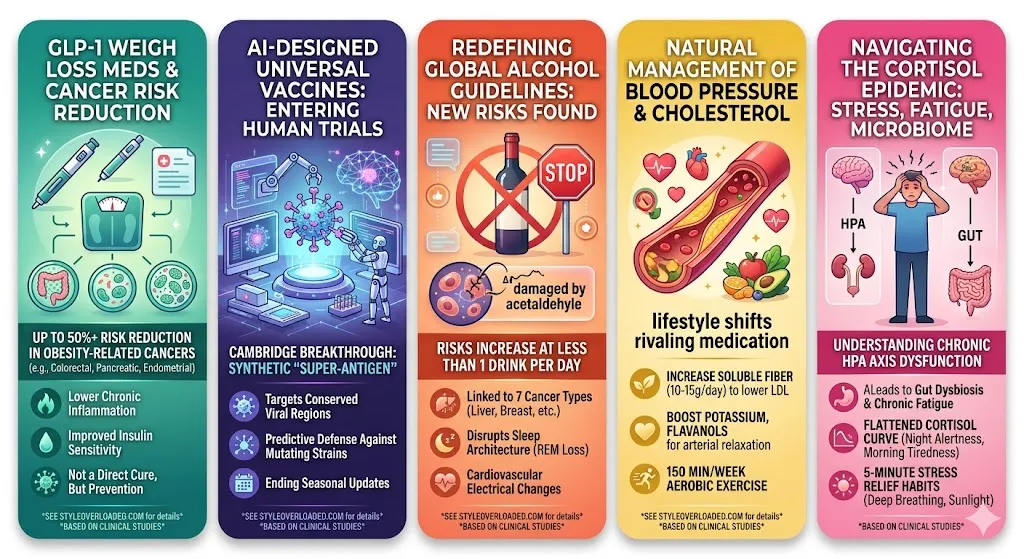
The Ultimate 2026 Health Guide: Explaining the Top 5 Medical Breakthroughs and Evergreen Trends The landscape of health and wellness is shifting at a rapid pace. Between groundbreaking clinical trials, shifts in government guidelines, and a deeper public focus on preventative care, staying informed is essential. Understanding these changes empowers you to make smarter, data-backed
The Ultimate 2026 Health Guide: Explaining the Top 5 Medical Breakthroughs and Evergreen Trends
The landscape of health and wellness is shifting at a rapid pace. Between groundbreaking clinical trials, shifts in government guidelines, and a deeper public focus on preventative care, staying informed is essential. Understanding these changes empowers you to make smarter, data-backed decisions for your body and long-term well-being.
This comprehensive guide breaks down the top five most impactful health topics dominating medical research and public interest today. By diving into real clinical data and actionable strategies, you will discover how these updates directly affect your daily habits.
1. The Cancer Prevention Potential of GLP-1 Weight Loss Medications
Glucagon-like peptide-1 (GLP-1) receptor agonists, such as semaglutide and tirzepatide, have completely transformed how modern medicine approaches chronic weight management and type 2 diabetes. However, recent clinical data presents a massive paradigm shift, revealing that these medications offer profound health benefits far beyond weight loss.
The Clinical Data Behind Reduced Cancer Incidence
Large-scale retrospective cohort studies have uncovered a powerful correlation between GLP-1 therapy and a reduced risk of developing several major types of cancer. Research presented at the American Society of Clinical Oncology (ASCO) indicated that female patients using GLP-1 medications experienced a 30% to 35% reduction in breast cancer incidence compared to matched control groups.
Even more striking data shows that for individuals dealing with obesity, these medications slash the risk of developing specific obesity-related malignancies including endometrial, pancreatic, and colorectal cancers by up to 50% or more.
Understanding the Metabolic Mechanisms
The biological pathways driving this protective effect are deeply tied to systemic health. While sustained weight loss plays a massive role in lowering overall cancer risk, researchers point to additional direct mechanisms:
Reduced Chronic Inflammation: Low-grade, systemic inflammation is a known catalyst for tumor development. GLP-1 therapies significantly lower inflammatory biomarkers throughout the body.
Improved Insulin Sensitivity: High circulating insulin and blood sugar levels create an environment where mutated cells can thrive. By stabilizing glucose and lowering insulin levels, these medications alter the cellular environment.
While further randomized controlled trials are underway to confirm direct causation, the sheer scale of real-world data demonstrates that these therapies are altering the landscape of preventative oncology. For deeper insights on styleoverloaded.com.
Frequently Asked Questions about GLP-1 and Cancer Risk
Do these medications directly kill cancer cells? No, they are not cancer treatments. Instead, they optimize metabolic health, improve insulin levels, and drastically reduce chronic inflammation, which creates a less favorable environment for tumor development.
Are these benefits solely caused by losing weight? Weight loss is a major component, but clinical data suggests the direct anti-inflammatory and glucose-stabilizing properties of the drugs provide distinct protective benefits independently of fat loss.
2. A New Era in Pandemics: AI-Designed Universal Vaccines Enter Human Trials
Traditional vaccine development has historically been a reactive science. Researchers typically isolate a specific circulating viral strain, study its structure, and build a targeted defense. However, when a virus mutates rapidly, these formulas require constant updates. In a monumental leap forward, artificial intelligence has officially shifted vaccine research from reactive to predictive.
The Cambridge AI “Super-Antigen” Breakthrough
Led by computational biology teams at the University of Cambridge, scientists have successfully advanced the world’s first completely AI-designed vaccine component into human clinical trials. Rather than mapping a single known variant of a virus, researchers utilized machine learning models to analyze millions of distinct genetic sequences across entire viral families, such as coronaviruses and influenza.
The AI identified highly conserved biological regions—structural parts of the virus that remain identical across various strains and are highly unlikely to mutate. Using this computational blueprint, the AI engineered a completely synthetic “super-antigen” capable of training the human immune system to recognize and attack an entire family of pathogens simultaneously.
The Future of Viral Defense and Trial Outcomes
Initial Phase I human trials focusing on safety successfully demonstrated that the synthetic vaccine is well-tolerated in humans and produces a reliable immune response. The implications of this predictive technology are immense:
Ending the Seasonal Update Cycle: This technology could entirely eliminate the need for annual modifications to seasonal flu shots by providing a single, universal vaccine that lasts for years.
Preemptive Strike Capability: AI allows scientists to generate protective vaccine frameworks for animal-borne strains before they ever make the jump to humans, effectively stopping potential outbreaks in their tracks.
3. Beyond the Baseline: Redefining Global Alcohol and Health Guidelines
For decades, public health recommendations regarding alcohol consumption followed a familiar, moderate baseline: up to two drinks per day for men, and one drink per day for women. However, massive global epidemiological analyses have pushed regulatory bodies to abandon these older metrics in favor of a much clearer message: consume less alcohol for better systemic health.
The Cellular Impact and Omitted Health Hazards
The driving force behind this regulatory shift is an undeniable mountain of data linking even low-level alcohol intake to cellular damage. Acetaldehyde, the primary toxic byproduct formed when your liver metabolizes alcohol, directly damages DNA and prevents cells from repairing themselves properly.
The U.S. Surgeon General has issued explicit advisories highlighting that regular alcohol consumption directly raises the risk for at least seven distinct types of cancer, including liver, colon, and breast cancer. Surprisingly, newer dietary guidelines have softened the direct mentions of this link due to political and industry pressures, leaving a massive gap in public awareness. Despite this omission in certain reports, independent medical associations maintain that the risks accumulate rapidly even at less than one drink per day.
Downstream Effects and Daily Vulnerabilities
For adults, particularly those over the age of 65, the immediate downstream side effects of regular low-level alcohol consumption pose distinct daily hazards:
Furthermore, clinical studies show that alcohol consumption actively alters brain chemistry to increase cravings for ultra-processed, calorie-dense foods while simultaneously undermining gut barrier integrity. Choosing to step away from daily drinking is one of the fastest ways to revitalize your energy and metabolic health.
Frequently Asked Questions about Modern Alcohol Risk
Doesn’t red wine protect the cardiovascular system? Modern epidemiological adjustments have shown that the purported heart benefits of moderate drinking were largely due to confounding lifestyle factors. The narrow potential cardiovascular benefits are statistically overwhelmed by the increased risks of cancer and liver disease.
How does low-level drinking disrupt sleep if it makes me drowsy? While alcohol acts as a sedative initially, it drastically fragments your sleep architecture as your liver metabolizes it throughout the night, completely blocking deep, restorative REM cycles.
4. The Science of Cardiovascular Longevity: Natural Management of Blood Pressure and Cholesterol
Cardiovascular diseases remain the leading cause of mortality globally, making “how to lower blood pressure naturally” and “how to reduce LDL cholesterol” two of the most consistently searched health topics on the internet. While prescription medications are vital tools for high-risk patients, clinical trials continue to validate that specific, aggressive lifestyle modifications can yield results that rival standard pharmaceutical interventions.
Advanced Dietary Strategies for Lipid Control
To effectively lower Low-Density Lipoprotein (LDL) cholesterol—the substance responsible for arterial plaque buildup—you must actively change the composition of your daily fat and fiber intake. Clinical studies from institutions like the Mayo Clinic outline a multi-pronged dietary strategy:
[Reduce Saturated & Trans Fats] ──> Lowers Total Circulating LDL Production
[Increase Soluble Fiber Intake] ──> Binds Cholesterol in Gut, Preventing Absorption
[Integrate Plant Stanols/Sterols] ──> Actively Blocks Cholesterol Receptors in Intestines
Consuming 10 to 15 grams of soluble fiber daily (found in abundance in steel-cut oats, Brussels sprouts, and legumes) actively traps cholesterol particles in the digestive system, dragging them out of the body before they can enter the bloodstream. Supplementing this with plant sterols can further reduce LDL levels by up to 10%.
Endothelial Function and Natural Blood Pressure Reduction
Your blood vessels are lined with a delicate layer of cells called the endothelium, which regulates vascular tension. Natural blood pressure management relies entirely on improving endothelial elasticity and boosting nitric oxide production, which signals blood vessels to relax and widen.
Flavanols and Polyphenols: Clinical trials show that consuming flavanol-rich foods, such as pure dark chocolate or green tea, significantly drops systolic blood pressure by improving arterial compliance.
The Potassium-Sodium Balance: Excess sodium forces your body to retain fluid, placing extreme mechanical stress on your artery walls. Increasing your dietary potassium intake via avocados, leafy greens, and wild-caught salmon forces the kidneys to excrete excess sodium, dropping blood pressure naturally.
By pairing these nutritional shifts with 150 minutes of moderate aerobic exercise per week, you can significantly alter your lipid profiles and protect your heart without relying solely on medication.
5. The Cortisol Epidemic: Navigating Chronic Stress, Fatigue, and Microbiome Disruption
In our fast-paced world, chronic fatigue has evolved from an occasional complaint into a pervasive lifestyle crisis. Millions of individuals report feeling constantly exhausted despite getting adequate hours of sleep. Medical researchers have traced this phenomenon directly to the systemic impact of sustained, elevated cortisol levels.
The HPA Axis and Adrenal Fatigue Explained
When you encounter a stressor, your Hypothalamic-Pituitary-Adrenal (HPA) axis initiates a sequence that releases cortisol—your primary stress hormone. This mechanism is perfectly evolved for short-term survival, but modern life triggers constant micro-stressors, keeping the HPA axis permanently activated.
[Chronic Mental Stress] ──> [Constant HPA Axis Stimulation] ──> [Sustained Cortisol Spikes] ──> [Sleep & Gut Breakdown]
While true “adrenal fatigue” is not an official medical diagnosis, adrenal insufficiency and HPA axis dysfunction are very real. Over time, sustained cortisol exposure wreaks havoc on your internal systems:
Gut Microbiome Dysbiosis: High cortisol levels increase intestinal permeability (often referred to as leaky gut) and alter the delicate balance of beneficial gut bacteria, leading to systemic inflammation and poor nutrient absorption.
Disrupted Circadian Rhythm: Cortisol should naturally spike in the early morning to wake you up and drop to its lowest point at night to allow melatonin release. Constant stress flattens this curve, leading to nighttime alertness and severe morning exhaustion.
Actionable Habits to Reset Your Stress Response
Combating this fatigue epidemic requires intentional lifestyle shifts that actively signal safety to your nervous system. Clinical data shows that integrating brief, structured stress-relief habits can significantly lower circulating cortisol levels.
Practicing deep diaphragmatic breathing or spending just ten minutes in natural sunlight each morning helps regulate the autonomic nervous system, shifting your body out of a sympathetic “fight-or-flight” state and into a parasympathetic healing state. Prioritizing these micro-habits is a fundamental step toward restoring your daily energy levels and long-term health.
Frequently Asked Questions about Cortisol and Fatigue
Can a blood test accurately measure my stress levels? A single random cortisol blood test is often inaccurate because cortisol levels fluctuate dramatically throughout the day. A 4-point waking-to-bedtime salivary or urinary panel offers a much more accurate map of your true circadian cortisol rhythm.
How long does it take to recover from chronic burnout and HPA axis dysfunction? Depending on the severity of the systemic exhaustion and lifestyle habits, resetting your biological clock and lowering chronic inflammation typically takes anywhere from three months to a full year of consistent care.
To review a deeper, highly authoritative synthesis of how these various chronic conditions develop and affect global populations, you can reference the comprehensive global health tracking data curated within the World Health Organization Global Health Estimates.






















Leave a Comment
Your email address will not be published. Required fields are marked with *