
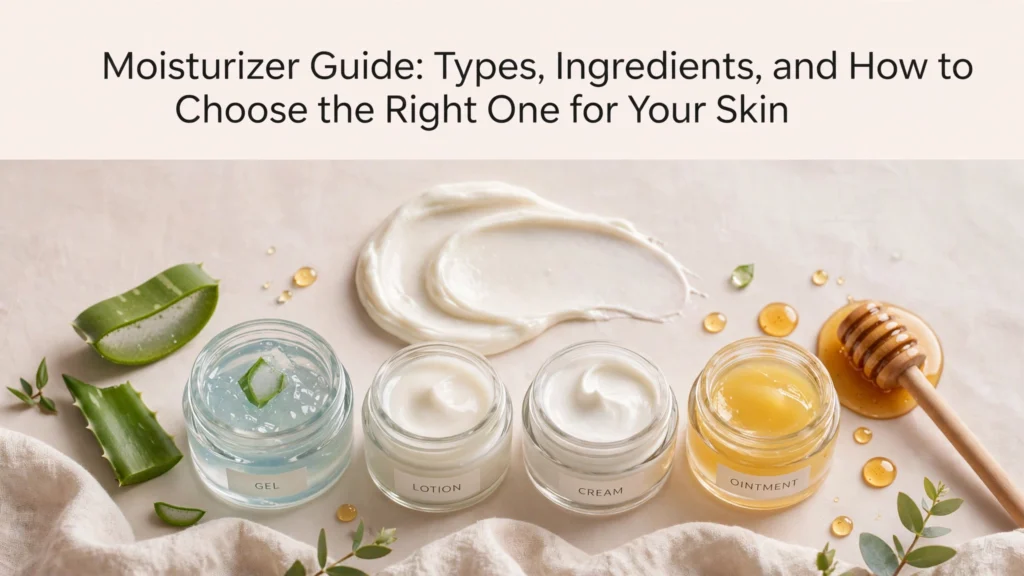
Moisturizer guide essentials start with understanding how your skin barrier holds onto hydration. Whether you are dealing with midday shine in humid weather, dry flakiness during colder months, or persistent sensitivity, choosing the right daily moisturizer is one of the most important steps in any skincare routine. Healthy, glowing skin requires much more than simply
Moisturizer guide essentials start with understanding how your skin barrier holds onto hydration. Whether you are dealing with midday shine in humid weather, dry flakiness during colder months, or persistent sensitivity, choosing the right daily moisturizer is one of the most important steps in any skincare routine.
Healthy, glowing skin requires much more than simply washing your face and hoping for the best. Whether you are dealing with midday shine in humid summer weather, dry flakiness during winter, or stubborn breakouts that refuse to clear up, selecting the correct moisturizer is the single most important step in your daily skincare routine.
Yet, walking down a beauty aisle or browsing online stores can feel overwhelming. Jars and bottles promise miracles with words like non-comedogenic, ceramides, hyaluronic acid, and emollients. Many of us buy skincare because our skin feels tight or dry, or because advertising convinces us we need an elaborate ten-step regimen. Understanding your skin type and learning how to read ingredient labels can save you time, money, and skin irritation.
Whether you live in a humid coastal city or a dry inland region, this comprehensive guide will help you understand moisturizer types, active ingredients, and how to pick the ideal formula for your unique skin needs.
Table of Contents
Why Your Skin Needs a Moisturizer
 Your skin features a natural outermost shield known as the skin barrier or stratum corneum. This barrier acts like a brick wall: skin cells are the bricks, and natural lipids (fats, ceramides, and cholesterol) act as the mortar holding everything together. When this barrier is intact, it locks in essential moisture and blocks pollution, bacteria, and irritants.
However, harsh cleansers, hot water, air conditioning, pollution, and UV exposure strip away these natural lipids. When the barrier weakens, moisture escapes, leading to dehydration, redness, irritation, and even overproduction of oil as the skin panics to compensate.
According to the American Academy of Dermatology, applying a moisturizer immediately after washing your face traps residual water in your skin and helps repair this vital protective barrier.
The Three Main Pillars of Moisturization
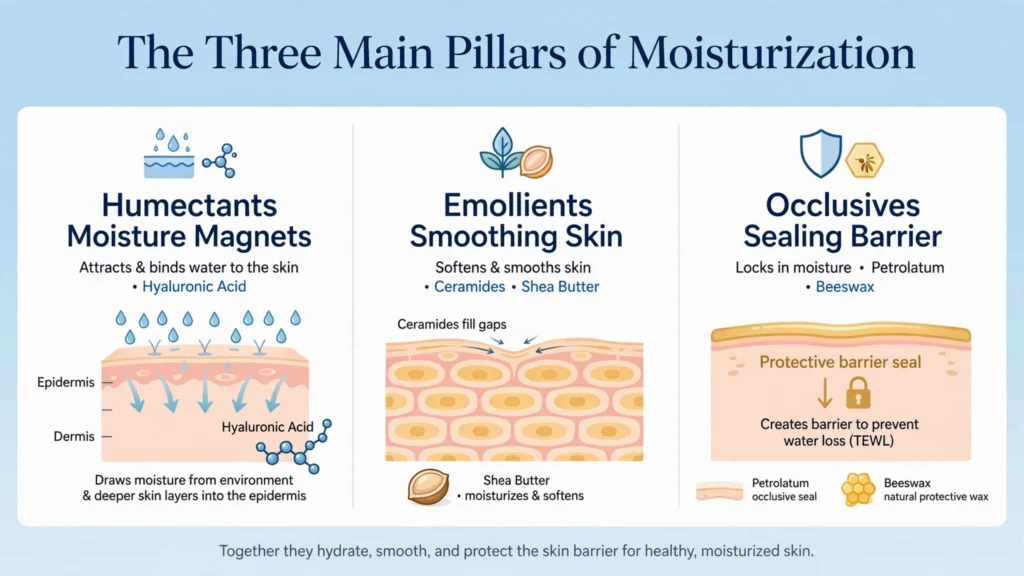 Every effective moisturizer functions through a combination of three primary categories of ingredients. Understanding how they work helps you decode product labels easily.
Humectants
Humectants act like tiny moisture magnets. They draw water molecules from the deeper layers of your skin (the dermis) up to the surface (epidermis), and from humid air into your skin.
Popular examples: Hyaluronic acid, glycerin, urea, aloe vera, and alpha hydroxy acids (AHAs).
Best for: All skin types, especially dehydrated skin. Note: In extremely dry climates, humectants should always be sealed with an occlusive so they don’t pull moisture out of your skin instead.
Emollients
Emollients fill in the microscopic spaces between skin cells where lipids have been lost, smoothing out rough patches and softening the skin’s texture.
Popular examples: Ceramides, squalane, shea butter, jojoba oil, and caprylic/capric triglyceride.
Best for: Rough, dry, or compromised skin barriers needing tactile smoothness.
Occlusives
Occlusives create a physical, hydrophobic (water-resistant) seal over the skin’s surface, preventing transepidermal water loss (TEWL) and locking hydration in place overnight or throughout the day.
Popular examples: Petrolatum (petroleum jelly), dimethicone, beeswax, mineral oil, and lanolin.
Best for: Very dry, cracked, or eczema-prone skin. Those with oily or acne-prone skin should use heavier occlusives sparingly.
Types of Moisturizers Explained
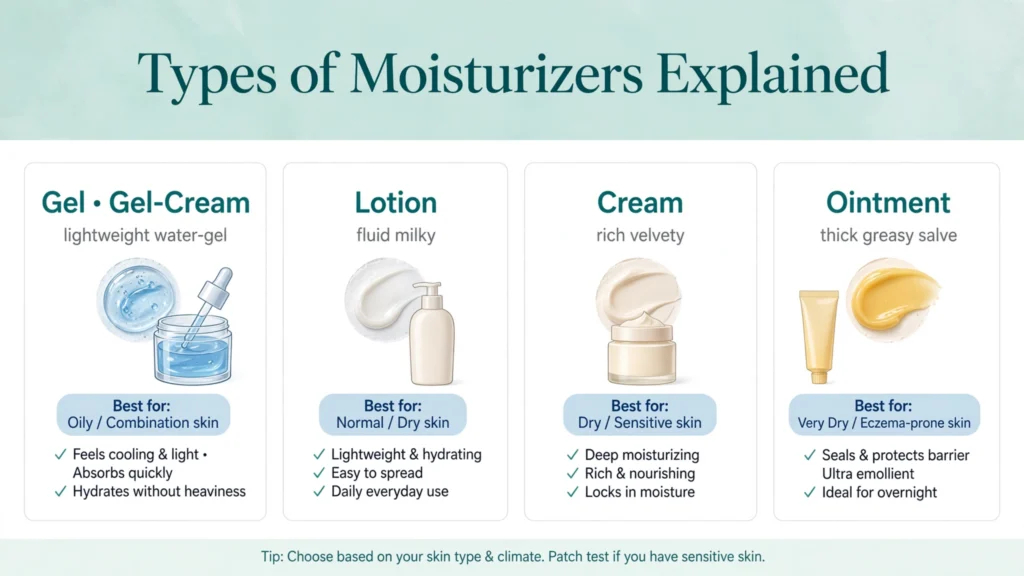 Moisturizers come in various textures and formulations depending on the ratio of water, oils, and active ingredients.
| Type | Texture | Water-to-Oil Ratio | Best Suited For |
| Gel / Gel-Cream | Lightweight, bouncy water-gel | High water content, minimal oil | Oily, acne-prone, and humid weather |
| Lotion | Fluid, milky emulsion | Balanced water and light oils | Normal to combination skin |
| Cream | Rich, velvety emulsion | Higher proportion of oils and butters | Dry to very dry skin |
| Ointment | Thick, greasy, salve-like | Mostly oils and occlusives, little to no water | Severely chapped, cracked, or compromised skin |
Key Ingredients to Look For
When shopping for a moisturizer, look past flashy marketing claims and scan the ingredient deck for these powerhouse components:
Ceramides: Essential lipid molecules that restore and reinforce a damaged skin barrier.
Hyaluronic Acid: A potent humectant capable of holding up to 1,000 times its weight in water.
Niacinamide (Vitamin B3): Calms inflammation, regulates sebum production, and brightens overall complexion.
Squalane: A lightweight, non-comedogenic oil that mimics human sebum to hydrate without clogging pores.
Centella Asiatica (Cica): A soothing botanical extract ideal for irritated, reactive, or acne-prone skin.
How to Choose a Moisturizer for Your Skin Type
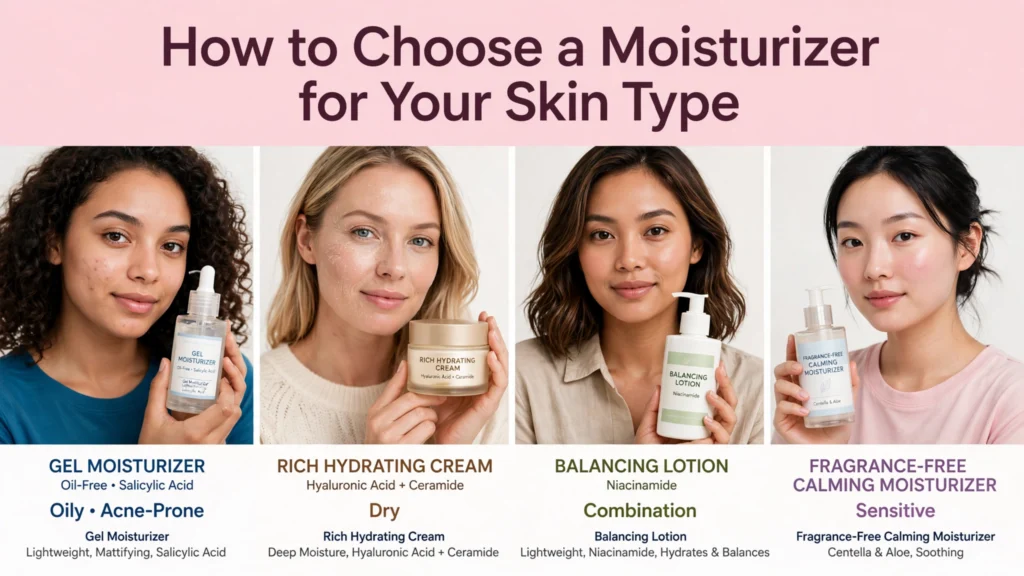 Selecting the right formula depends entirely on understanding your skin’s unique behavior throughout the day.
Oily and Acne-Prone Skin
Many people with oily skin skip moisturizer out of fear of breakouts—a common mistake. When oily skin lacks hydration, oil glands produce even more sebum. Choose oil-free, non-comedogenic gel moisturizers packed with humectants like glycerin and hyaluronic acid, combined with soothing niacinamide.
Dry Skin
Dry skin lacks adequate oil and water retention. Reach for rich, nourishing creams containing ceramides, shea butter, and squalane. Applying cream to slightly damp skin locks in maximum hydration.
Combination Skin
If your T-zone (forehead, nose, and chin) gets shiny while your cheeks stay dry, lightweight lotions or balancing gel-creams work wonders. You can also multi-moisturize by using a richer cream on dry areas and a lighter gel on the T-zone.
Sensitive Skin
Sensitive skin reacts easily to fragrance, alcohol, and harsh additives. Look for minimal, fragrance-free, hypoallergenic formulas labeled for sensitive skin, featuring calming ingredients like colloidal oatmeal, allantoin, and ceramides.
Common Moisturizer Mistakes to Avoid
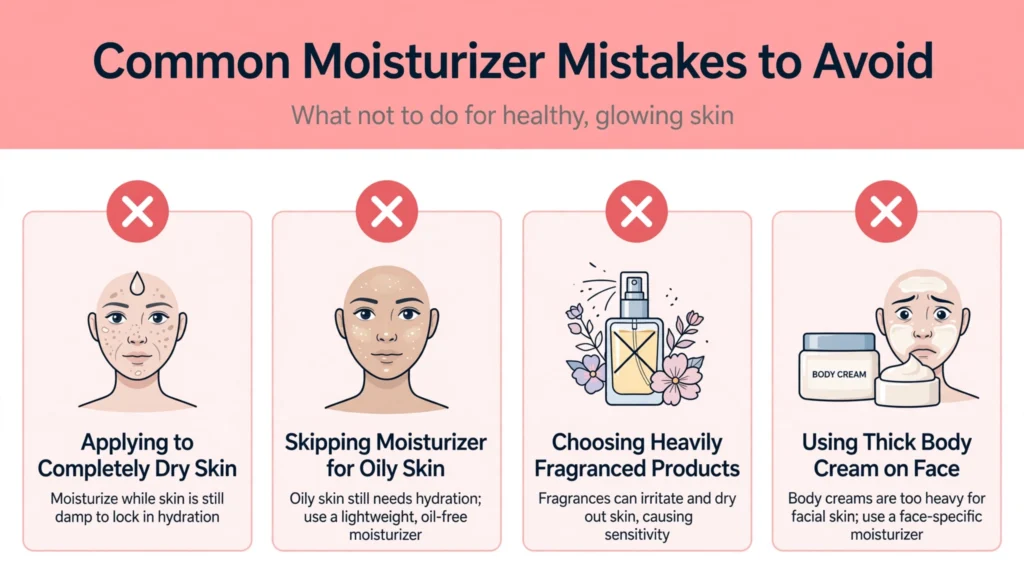
 Applying moisturizer to completely dry skin: Apply your moisturizer within sixty seconds of cleansing while your face is still slightly damp to lock in hydration.
Skipping moisturizer because of oily skin: Skipping hydration triggers excess sebum production and aggravates blemishes.
Choosing heavily fragranced products: Artificial fragrances are a leading cause of contact dermatitis and skin sensitivity.
Using thick body creams on the face: Body formulations often contain heavier waxes and fragrances that clog facial pores and cause breakouts.
 Applying moisturizer to completely dry skin: Apply your moisturizer within sixty seconds of cleansing while your face is still slightly damp to lock in hydration.
FAQs
1. Can I use the same moisturizer day and night?
Yes, many lightweight lotions and gel-creams work well day and night. However, your daytime moisturizer should always be layered under a broad-spectrum sunscreen (SPF 30 or higher), while your nighttime moisturizer can be slightly richer to support overnight skin repair.
2. Is hyaluronic acid a moisturizer on its own?
No. Hyaluronic acid is a humectant that draws moisture. If applied to dry skin in a dry climate without a sealing cream or lotion over it, it can actually pull water out of your skin, leaving it drier than before.
3. What does “non-comedogenic” mean?
Non-comedogenic means the product is specifically formulated and tested not to clog your pores. If you have acne-prone or congested skin, always look for this label.
4. Why does my skin sting when I apply moisturizer?
Stinging usually indicates that your skin barrier is severely compromised or irritated—often from over-exfoliation, harsh acne treatments, or retinoids. Switch to a gentle, fragrance-free barrier-repair cream until your skin heals.
5. Do I need a moisturizer if my sunscreen is already hydrating?
Most dermatologists recommend using a dedicated moisturizer underneath your sunscreen unless your sunscreen is specifically formulated as a rich, multi-step skincare product and applied in adequate amounts.
6. Should I apply moisturizer before or after serum?
Always apply skincare products from the thinnest consistency to the thickest. Apply water-based serums first, let them absorb for a minute, and follow with your moisturizer to seal everything in.

















Leave a Comment
Your email address will not be published. Required fields are marked with *