
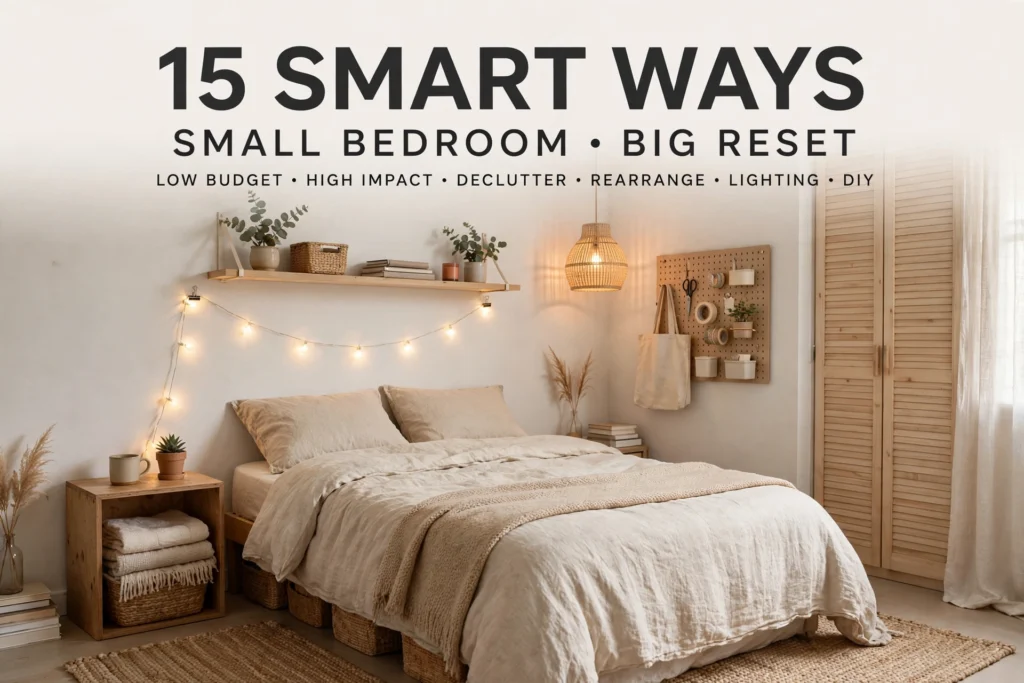
Interior Design Ideas for Small Bedroom in Low Budget: 15 Smart Ways to Transform Your Space A small bedroom does not have to feel cramped, boring, or uncomfortable. Even if you have limited space and a tight decorating budget, you can create a room that feels welcoming, organized, and stylish. The secret is not buying
Interior Design Ideas for Small Bedroom in Low Budget: 15 Smart Ways to Transform Your Space
A small bedroom does not have to feel cramped, boring, or uncomfortable. Even if you have limited space and a tight decorating budget, you can create a room that feels welcoming, organized, and stylish. The secret is not buying more decorations or expensive furniture. It is making thoughtful decisions about the things you already own and choosing affordable improvements that serve a purpose.
Finding the right interior design ideas for small bedroom in low budget can be challenging. You may want a beautiful bed, attractive walls, comfortable lighting, and enough storage, but fitting everything into a small room requires careful planning. Expensive furniture is not always practical, especially when a simple rearrangement or DIY project can solve the same problem.
The good news is that a bedroom makeover does not need to happen all at once. You can start by decluttering, changing the furniture arrangement, improving the lighting, or adding a few carefully selected decorations. Small improvements can make a noticeable difference without putting pressure on your budget.
In this guide, you will discover practical ways to decorate a small bedroom affordably, organize your belongings, use available space wisely, and create a coordinated interior. Whether you live in a rented apartment, a shared home, a dormitory, or a small house, these ideas can help you make better use of your bedroom.
1. How to Plan a Low-Budget Small Bedroom Makeover
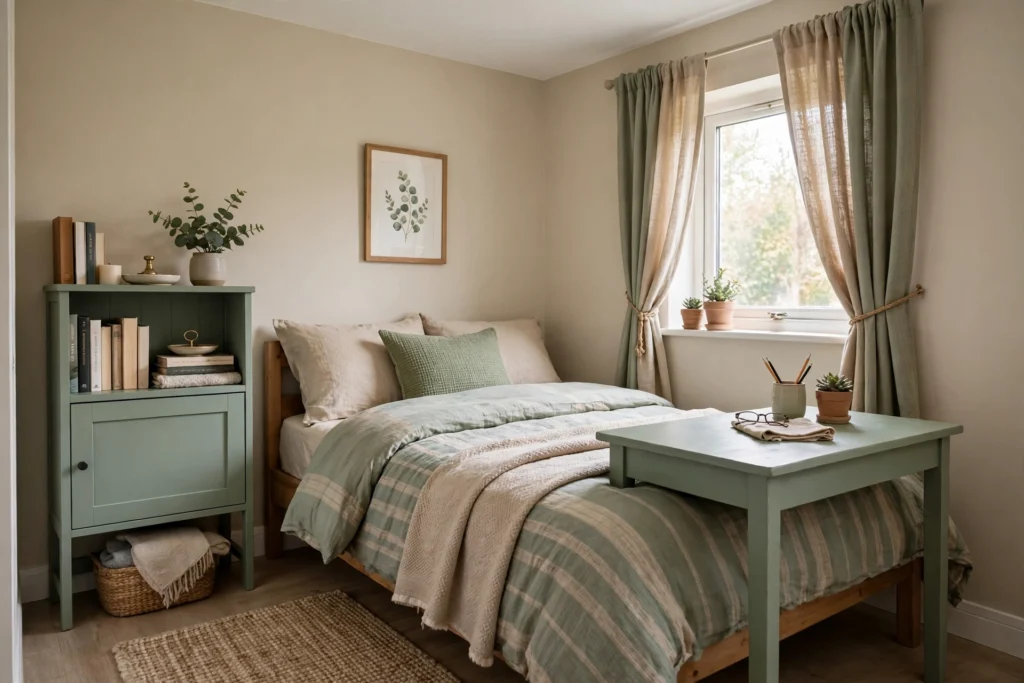 Before purchasing anything, take time to understand your room. A little planning can prevent unnecessary spending and help you avoid furniture that does not fit.
Measure Your Bedroom and Identify Problem Areas
Start by measuring the length and width of your bedroom. Note the positions of doors, windows, wardrobes, electrical outlets, and other permanent features.
Then identify what makes the room difficult to use. For example:
Is the bed taking up too much floor space?
Is there enough room to open wardrobe doors?
Are clothes, shoes, and personal belongings scattered around?
Does the room feel dark even during the daytime?
Is your study table blocking a walkway?
These observations will help you decide which improvements deserve attention first.
You can draw a simple floor plan on paper. Mark your existing furniture and experiment with different arrangements before moving heavy items.
Set a Realistic Decorating Budget
You do not need to purchase everything at once. Divide your budget into three categories:
Essential improvements: Storage boxes, basic repairs, better lighting, or fresh bedding.
Decorative improvements: Wall art, cushions, curtains, and small accessories.
Optional upgrades: A new bedside table, compact desk, or replacement furniture.
Prioritize improvements that solve practical problems. If your wardrobe already provides enough storage, buying another cabinet may not be the best use of your money.
Decide What to Keep, Reuse, and Replace
Look at every major item in your bedroom before deciding to replace it.
A wooden table might look completely different after cleaning and repainting. An old bedside cabinet could become a small bookshelf. Even existing curtains and bedding may work well if you coordinate them with a new color scheme.
A useful rule: Replace something only when it is damaged, unsuitable, or preventing you from using the room comfortably.
2. 15 Interior Design Ideas for Small Bedrooms on a Low Budget
The following ideas combine practical space planning, affordable decorating, and simple DIY improvements. You can choose the ones that suit your room rather than trying to complete all 15 projects.
1. Rearrange Your Furniture to Create More Open Space
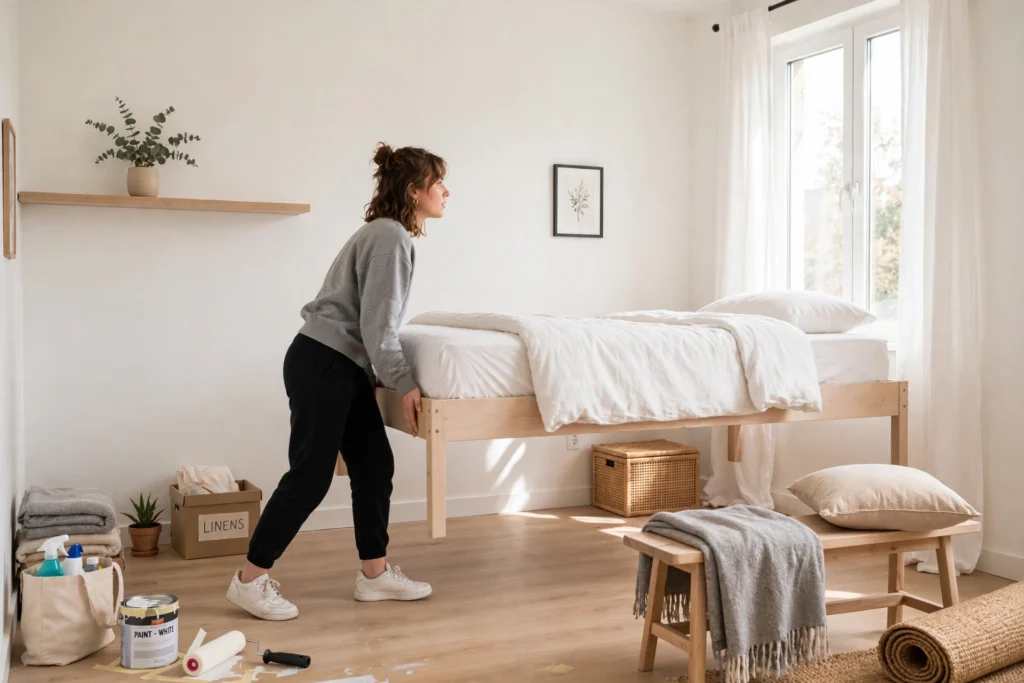
One of the easiest small bedroom decorating ideas on a budget is to rearrange the furniture you already own.
A poorly positioned bed, oversized chair, or unnecessary table can make a bedroom feel crowded. Moving these items may improve the room without costing anything.
Try placing the bed against the longest suitable wall or positioning it where it does not obstruct the entrance. If the room is particularly narrow, placing one side of the bed against a wall may free up useful floor space.
Keep frequently used items within easy reach and avoid blocking windows or doorways.
Budget tip: Before moving furniture, take a photograph of the existing arrangement. Try two or three alternatives and compare how much usable floor space each one provides.
2. Choose Light and Coordinated Wall Colors
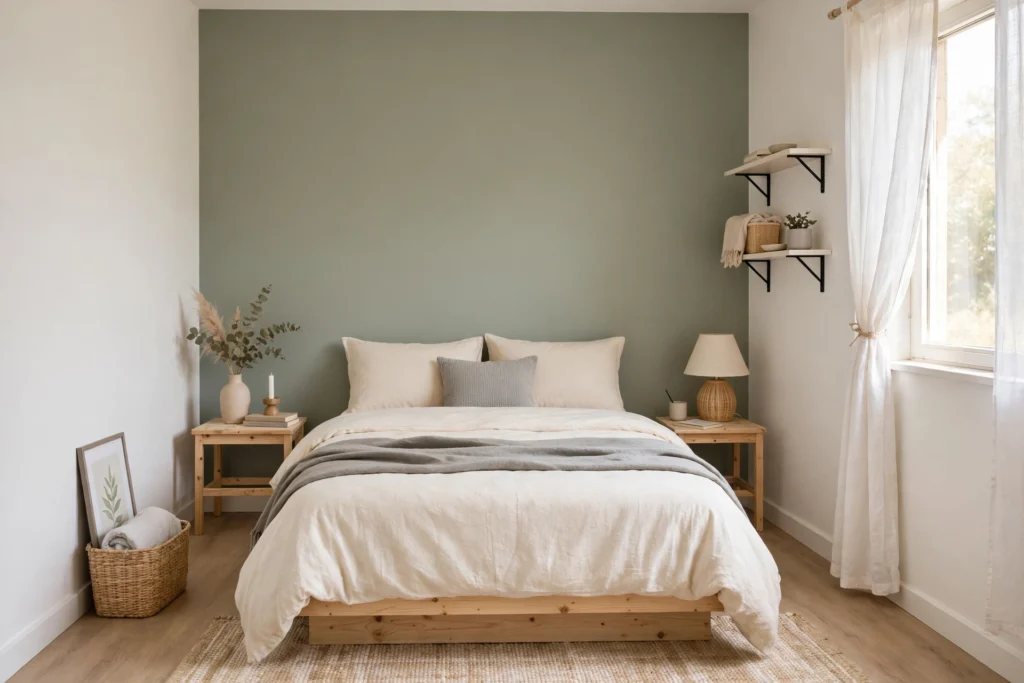
Wall color has a strong influence on the overall appearance of a bedroom. Light shades such as warm white, cream, pale beige, soft gray, and muted pastels can create a bright and calm atmosphere.
For a low-budget bedroom makeover, you do not necessarily need to repaint every wall. If the existing paint is in good condition, clean the walls and use decorations to introduce your preferred colors.
If repainting is necessary, consider a single neutral shade for the main walls. You can introduce personality through colorful cushions, artwork, or bedding.
A darker accent wall can also work in a small bedroom. For example, a muted sage green or dusty blue wall behind the bed can create a focal point without requiring several different colors throughout the room.
Why it works: A coordinated color palette makes different elements feel connected instead of visually competing for attention.
3. Use Mirrors to Reflect Light and Add Visual Depth
Mirrors are useful decorative accessories, particularly when a bedroom has limited natural light.
A full-length mirror can reflect a window or another bright area, helping the room feel more open. A smaller mirror above a dressing table can also serve a practical purpose.
You do not need an expensive decorative mirror. Look for a simple secondhand option, reuse a mirror you already own, or choose an affordable frame that matches your furniture.
Consider these placements:
On a wall opposite or at an angle to a window, where it can reflect natural light.
Beside a wardrobe for convenient dressing.
Above a compact dressing table.
On the back of a suitable door, provided it can be secured safely.
Avoid placing mirrors where they create uncomfortable glare or reflect unnecessary clutter.
4. Make Better Use of the Space Under Your Bed
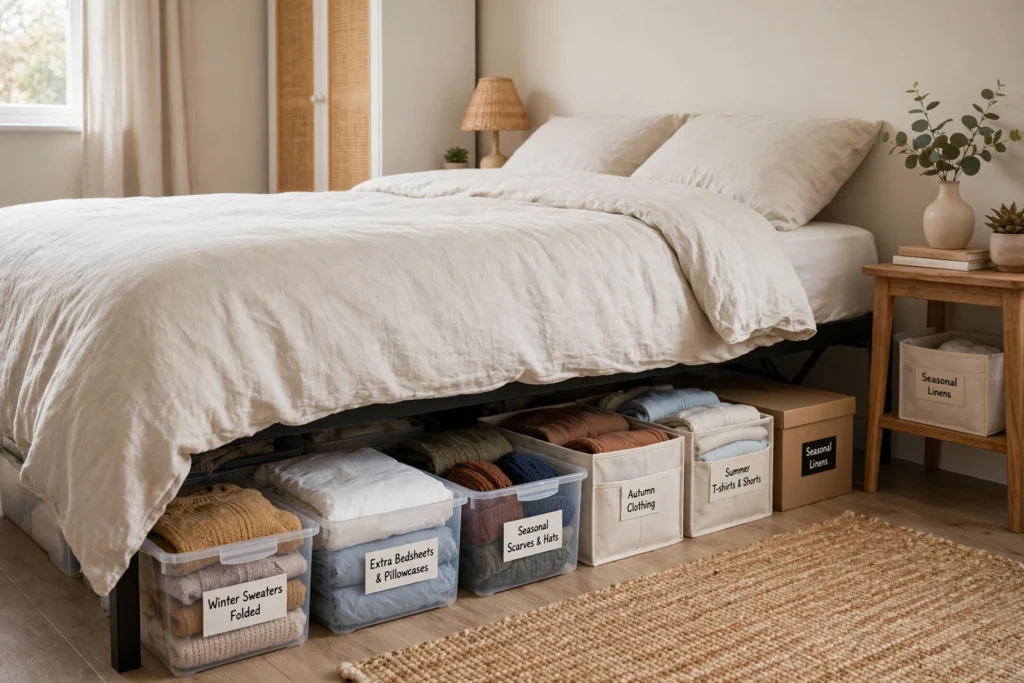
The space beneath a bed is often overlooked. Instead of allowing it to collect dust, use it for organized storage.
You can store:
Extra bedsheets and pillowcases.
Seasonal clothing.
Spare blankets.
Shoes that are not used daily.
Bags and travel accessories.
Affordable storage alternatives include shallow plastic containers, fabric organizers, and sturdy boxes.
If your bed has enough clearance, choose containers that slide easily underneath. Label them so you can find things without opening every box.
For a cleaner appearance, use matching storage containers or cover suitable open spaces with a neat bed skirt.
Important: Keep stored items dry, avoid blocking ventilation around the mattress, and do not overload containers beyond their safe capacity.
5. Replace Bulky Bedside Tables With Compact Alternatives
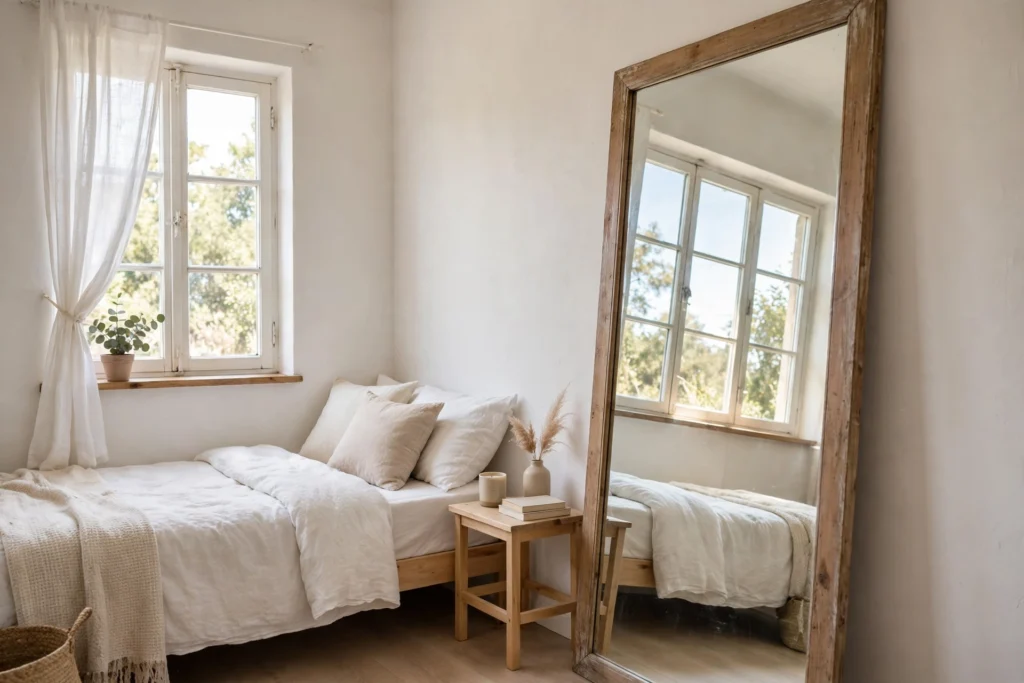
Traditional bedside tables can occupy valuable floor space. In a small bedroom, a compact alternative may be more practical.
Consider using:
A narrow wall-mounted shelf.
A small wooden stool.
A compact side table.
A floating drawer.
A sturdy existing shelf positioned beside the bed.
A wall-mounted shelf is especially useful because it keeps the floor underneath clear.
Use it for essentials such as a phone, glasses, reading material, and a small lamp. Avoid filling it with decorative objects that you rarely use.
If you rent your home, check whether drilling is permitted. A lightweight freestanding stool or narrow table may be a better choice.
6. Decorate the Wall Behind Your Bed
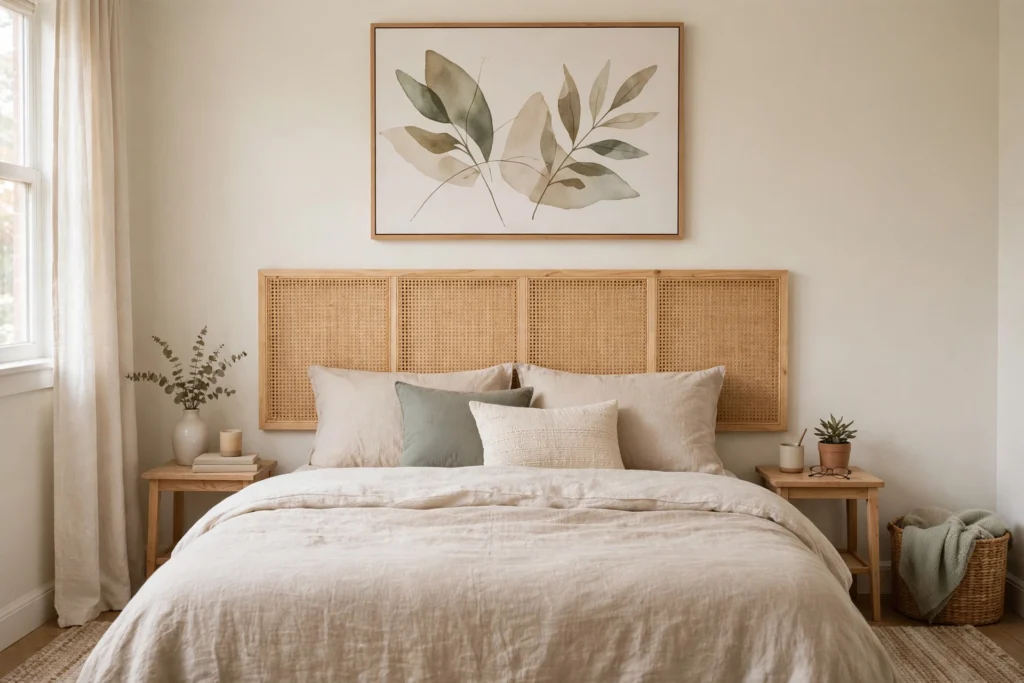
The wall behind the bed is a natural place to create a focal point. Decorating this area can make your bedroom look more finished without adding furniture.
Here are some affordable options:
Hang two or three coordinated picture frames.
Display a favorite photograph or print.
Create a simple DIY fabric wall hanging.
Use a removable wall decal.
Make a decorative headboard using a suitable lightweight material.
For a balanced appearance, consider the width of your bed when choosing artwork. One large piece or a small group of coordinated frames often looks more intentional than many unrelated decorations.
If you are renting, removable adhesive picture strips may be useful, but always check their weight limits and whether they are suitable for your wall finish.
7. Use Wall Shelves Instead of Additional Floor Furniture
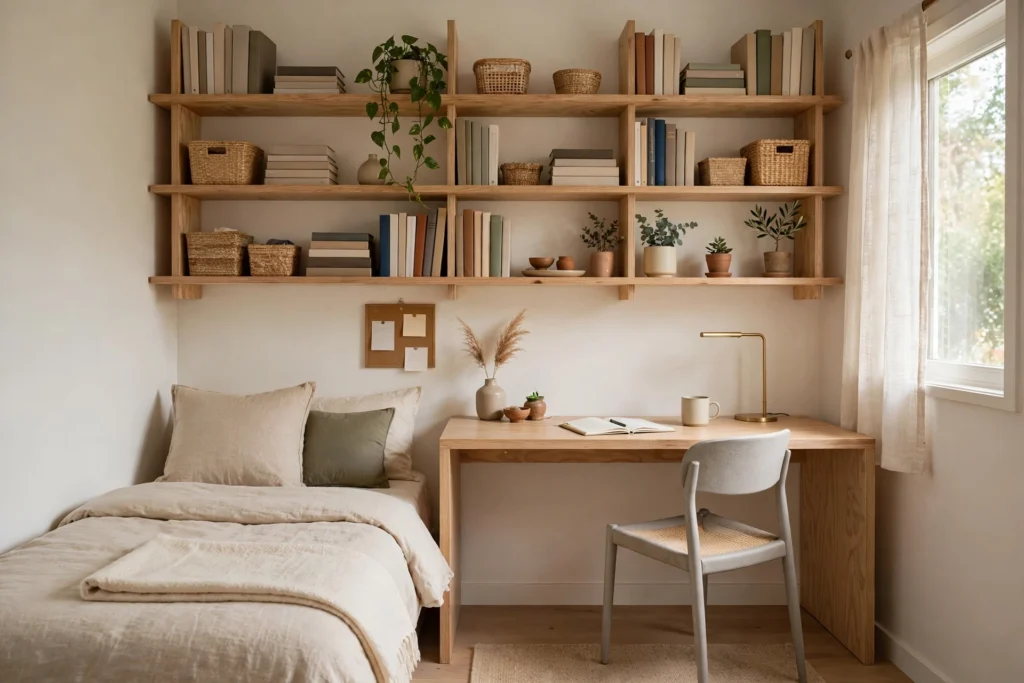
When floor space is limited, look upward. Wall shelves can provide additional storage without occupying the same floor area as a cabinet or bookshelf.
Install suitable shelves above a desk, beside a wardrobe, or on an otherwise unused wall.
They can hold:
Books and notebooks.
Small storage baskets.
Lightweight decorative objects.
A few indoor plants.
Everyday accessories.
Do not overcrowd the shelves. Too many objects can make a small room look visually busy.
Use appropriate wall fixings for the wall material and the weight being supported. Keep heavy objects securely mounted and away from areas where they could fall onto the bed.
8. Choose Curtains That Make the Window Feel Less Crowded
Curtains contribute to the bedroom’s overall appearance, but thick or poorly positioned window treatments can make a small room feel heavier.
If privacy allows, consider lightweight curtains in cream, white, pale gray, or another shade that complements your walls.
You can also hang the curtain rod slightly higher than the window frame, if the wall and window arrangement allow it. This can create the impression of greater height.
For rooms that require privacy or darkness, combine a suitable blackout blind with lighter curtains rather than sacrificing functionality.
Budget alternative: Wash and iron your existing curtains before purchasing new ones. Sometimes a simple cleaning makes them look much better.
9. Improve the Bedroom With Layered Lighting
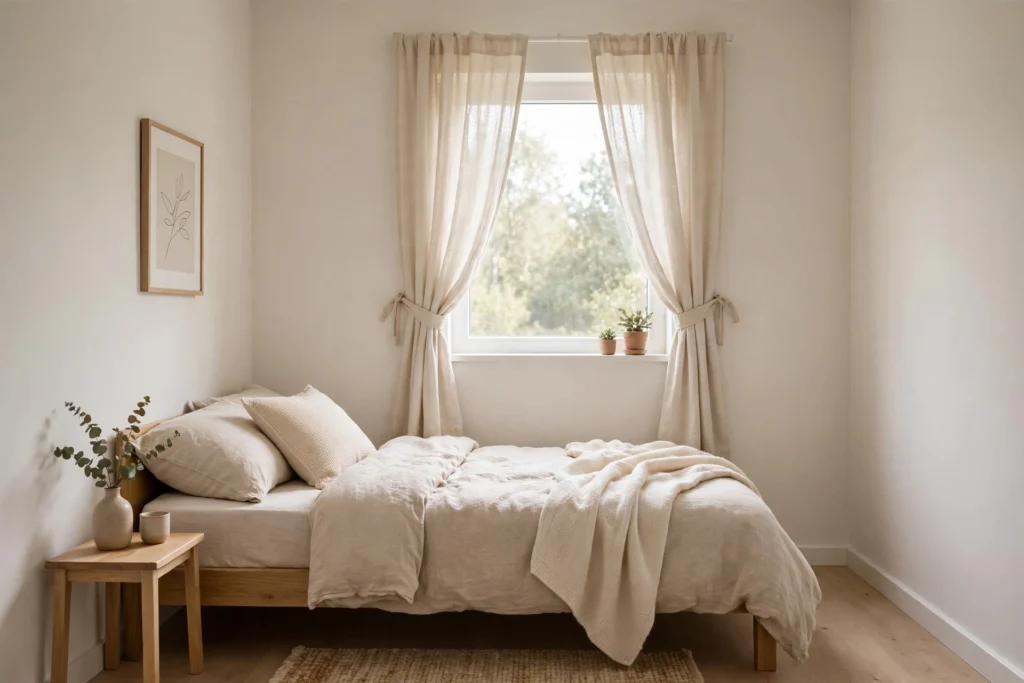
A single bright ceiling light may not provide the most comfortable atmosphere for every bedroom activity.
Try combining different types of lighting:
Ambient lighting: General illumination from a ceiling light.
Task lighting: A bedside lamp or reading light.
Accent lighting: A small light highlighting artwork or a decorative corner.
You do not need three expensive fixtures. A basic ceiling light and an affordable bedside lamp may be enough to create more flexibility.
Choose bulbs that provide comfortable illumination for their intended purpose. Warm-toned lighting can create a relaxed atmosphere in the evening, while brighter task lighting is useful for reading, studying, or getting dressed.
The Natural Resources Canada home lighting guide explains the principles of layered lighting and choosing lighting according to people’s activities.
Natural Resources Canada
10. Create a Small Workspace Without Crowding the Room
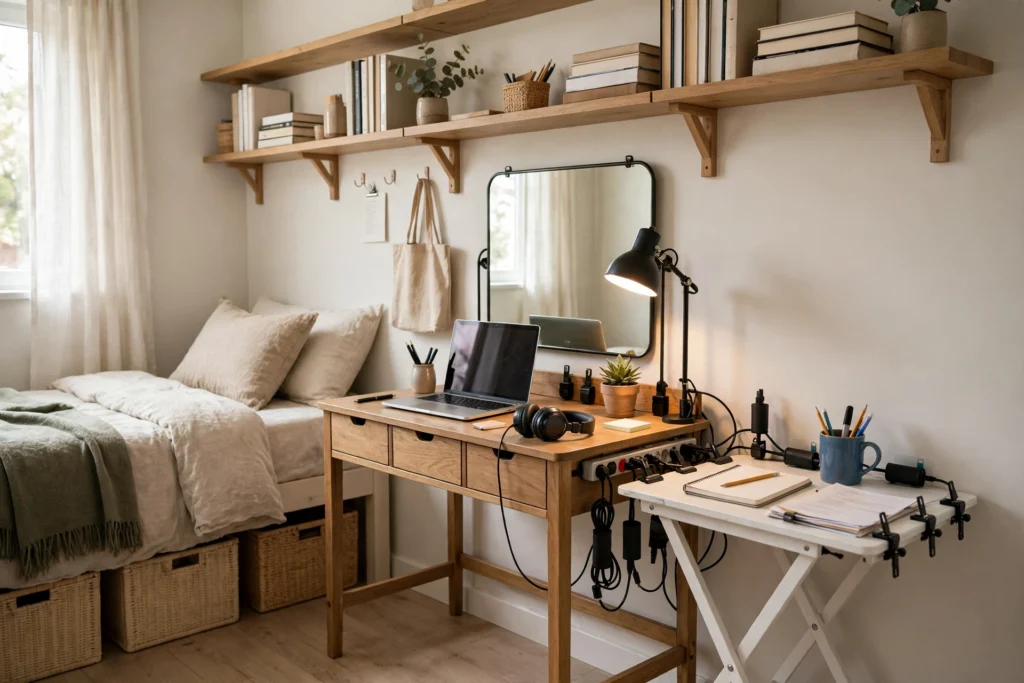
If you study or work from your bedroom, you may need a small workspace. However, adding a large office desk can make the room difficult to navigate.
Consider a narrow desk, folding table, or wall-mounted work surface.
You can also use an existing dressing table as a workspace if its height and design are suitable.
Keep the setup simple:
Use a compact chair that fits underneath the desk.
Store stationery in a small organizer.
Use a wall shelf for books.
Keep cables organized.
Put away work materials when they are no longer needed.
A small, dedicated working area can make your bedroom more functional without turning the entire room into an office.
11. Refresh Old Furniture Instead of Buying New Pieces
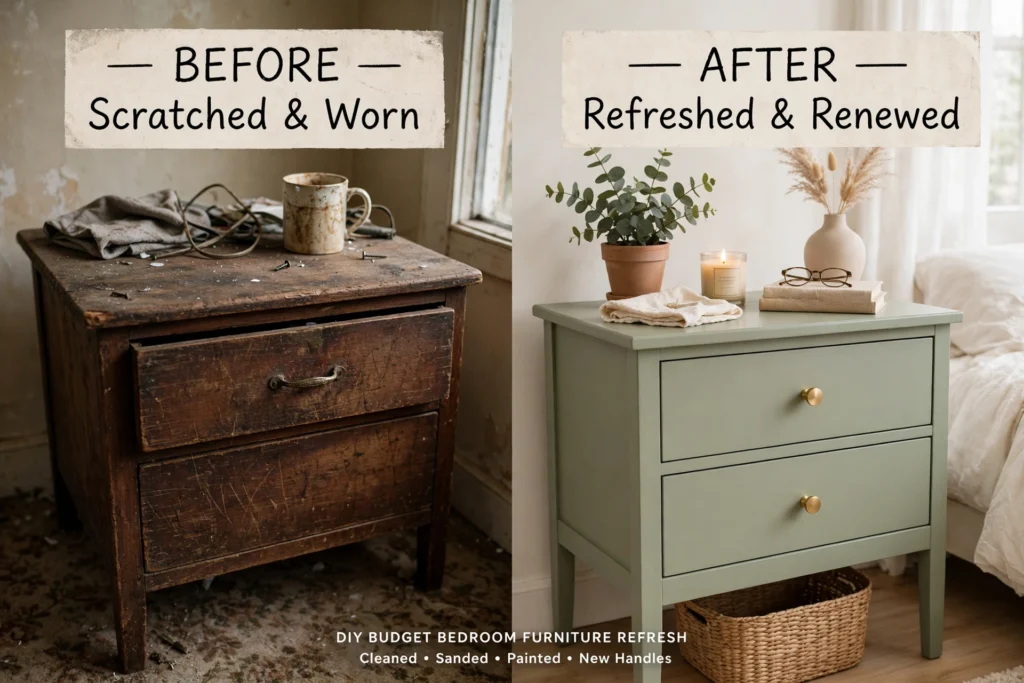
Old furniture can often be improved with basic cleaning, repairs, or a new finish.
For example, an old wooden bedside table might look more attractive after being cleaned and painted. A scratched drawer unit could benefit from replacement handles. A plain wardrobe may look more coordinated with matching hardware.
Before starting a project:
Check whether the furniture is structurally sound.
Clean the surface properly.
Repair loose handles or joints.
Choose a finish suitable for the material.
Follow the product instructions and allow the finish to dry completely.
Painting is not suitable for every surface, so check product compatibility first.
If you are working with old furniture that may contain lead-based paint, do not sand or disturb the coating casually. Older painted furniture can require specialist safety precautions.
For indoor painting, choose appropriate low-emission products where available and maintain ventilation. The US Environmental Protection Agency recommends ventilation during and after activities such as painting that may release indoor pollutants.
US EPA+1
12. Add a Small Rug to Define the Bedroom
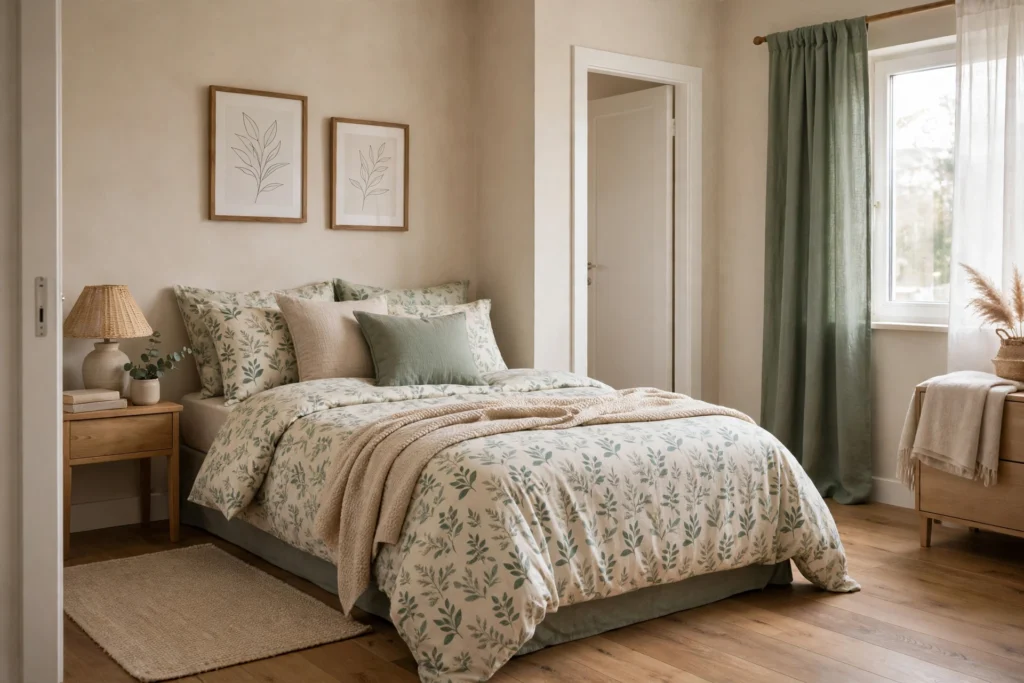
A rug can make a bedroom feel more comfortable and visually complete.
You do not need a large expensive carpet. A modest area rug beside the bed or partially underneath it may be enough.
Choose a size that does not interfere with doors or walking paths. If your bedroom is already filled with patterned bedding and colorful furniture, a plain rug may create a better balance.
For a coordinated appearance, repeat one or two colors from your curtains, cushions, or bedding.
Before buying, measure the available floor area. A rug that is too large may make furniture placement difficult, while a very small one can look disconnected from the rest of the room.
13. Introduce Greenery With Small Indoor Plants
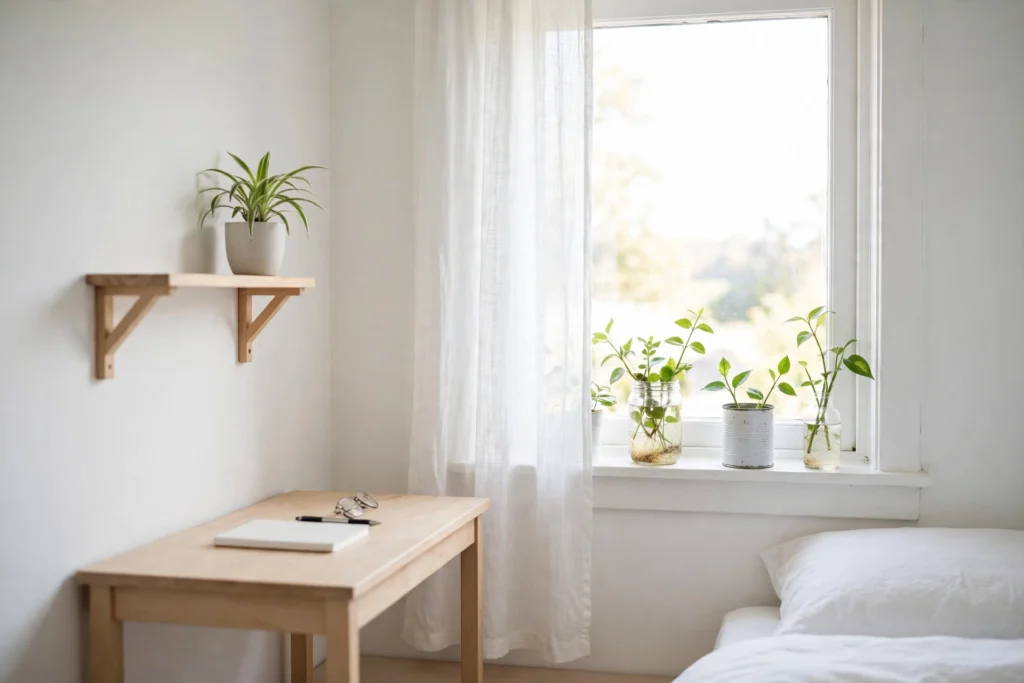
Plants can introduce color and a natural element into a bedroom.
If you have a suitable bright window, consider a small indoor plant that matches the available light and your ability to care for it.
Affordable options may include growing plants from cuttings or reusing clean containers as decorative pots.
You could place one plant on a shelf, a desk, or a windowsill. Avoid using too many pots in a small bedroom, particularly if they reduce useful surface space.
Choose non-toxic plants if pets or young children can reach them, and make sure the plant’s watering needs suit your room.
If natural plants are impractical because of lighting or maintenance, a simple artificial plant can provide a similar decorative touch.
14. Coordinate Your Bedding for an Instant Visual Refresh
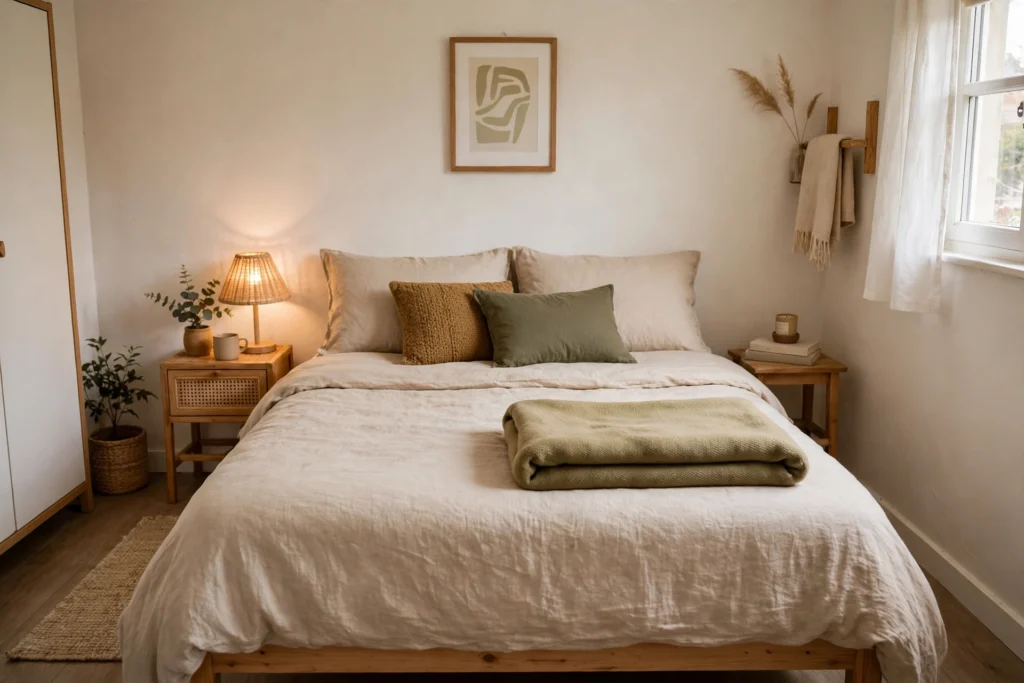
Your bed is usually the largest visual element in a bedroom. That makes bedding one of the easiest ways to change the room’s overall appearance.
Instead of purchasing a complete new bedding set, work with what you already have.
Try these simple combinations:
White sheets with a beige blanket.
Cream bedding with muted green cushions.
Light gray bedding with dusty blue accents.
Plain white bedding with one patterned cushion.
You can also fold an existing blanket neatly at the foot of the bed to create a more finished appearance.
Avoid using too many decorative cushions if they have nowhere to go at night. A few comfortable, coordinated pieces are generally more practical than a large collection.
15. Use the Back of Doors and Other Unused Areas
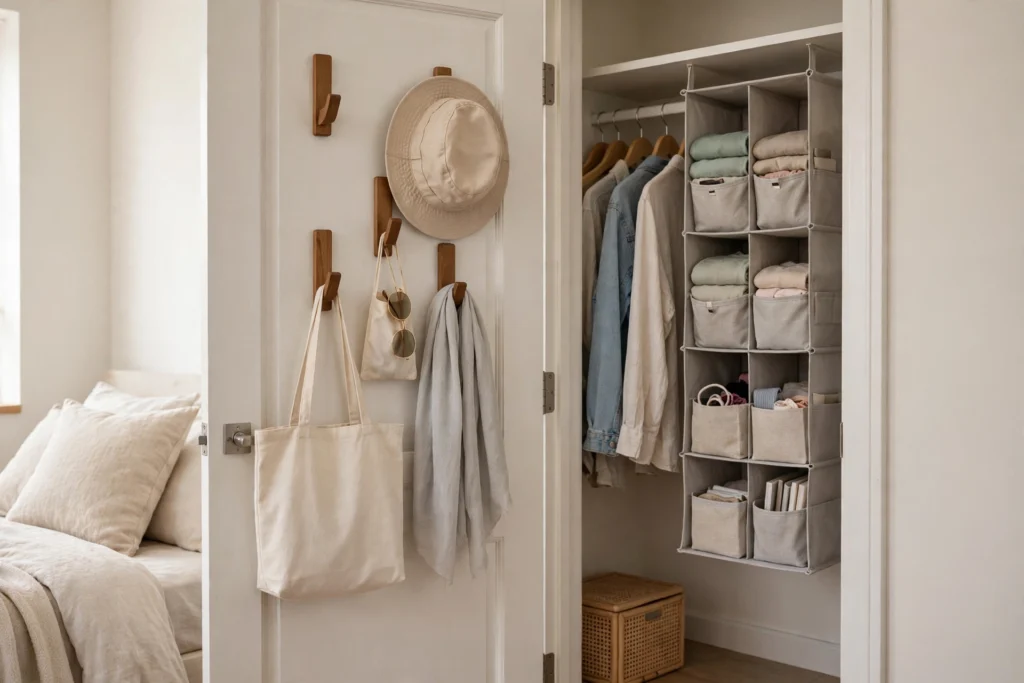
Small unused areas can provide valuable storage opportunities.
The back of a bedroom door, for example, may accommodate suitable hooks or an over-door organizer.
Use these spaces for:
Bags and lightweight accessories.
Scarves and belts.
Everyday clothing.
Caps and hats.
Small personal items.
You can also consider narrow storage beside a wardrobe or a compact organizer inside a closet.
However, check that the door can still open and close properly. Avoid hanging heavy items from hooks that are not designed to support them.
3. Affordable Furniture and Space-Saving Solutions
Furniture selection is particularly important in a small bedroom. A room does not necessarily need fewer pieces; it needs pieces that fit the available space and serve useful purposes.
Choose Furniture With More Than One Function
Multifunctional furniture can reduce the number of separate items you need.
Examples include:
A bed with built-in drawers.
A storage ottoman that provides seating.
A desk that also works as a dressing table.
A bedside cabinet with drawers.
A folding table that can be stored when not in use.
If you cannot afford multifunctional furniture, think creatively about existing pieces. A sturdy storage box can double as an organizer, while a small stool can serve as a bedside table and occasional seat.
Avoid Oversized Furniture
Before purchasing a wardrobe, bed, or desk, measure the available area.
A large wardrobe may offer more storage but leave insufficient room for movement. Similarly, an oversized bed can make it difficult to access other furniture.
Compare the dimensions of potential purchases with your room measurements. Remember to account for drawers, doors, and the space needed to move around furniture.
Consider Secondhand Furniture
Secondhand furniture can be an affordable alternative to buying new items.
Look at local furniture resale shops, community marketplaces, charity shops, and family or neighborhood groups.
Before purchasing, check:
Structural stability.
Signs of dampness or mold.
Pest damage.
Drawer and door operation.
Whether the item can fit through your entrance.
Whether it will fit in your bedroom.
Avoid bringing furniture with visible pest infestations into your home.
4. DIY Bedroom Decoration Ideas That Cost Less
DIY decorating is useful when you want to add personality without purchasing expensive accessories.
Make Your Own Wall Art
You can create simple wall decorations using printed photographs, your own artwork, fabric scraps, or affordable frames.
Choose a consistent color theme to make the display look coordinated.
For example, three black-and-white photographs in matching frames can create an attractive arrangement above a bed or desk.
Repurpose Wooden Boxes
A clean, sturdy wooden crate can become a small bookshelf or storage unit.
Sand and finish it appropriately if needed, check for splinters, and make sure it is stable. If you stack boxes, secure them properly rather than relying on an unstable pile.
Decorate Plain Storage Containers
Instead of buying decorative storage baskets, improve suitable boxes you already own.
You can cover them with fabric, decorate them with paper, or add simple labels. Keep the finished containers neat and consistent.
Create a Simple Cushion Cover
If you have basic sewing skills, an old piece of suitable fabric can become a cushion cover.
Choose washable material and make sure the cover fits the cushion insert properly.
DIY projects do not need to look complicated. Simple, well-finished decorations often work better than numerous unfinished crafts.
5. Smart Storage and Organization for a Small Bedroom
A beautiful bedroom can quickly become uncomfortable if everyday belongings have nowhere to go. Good storage is therefore just as important as decoration.
Divide Your Wardrobe Into Sections
Organize your wardrobe according to how you use your belongings.
For example, keep everyday clothing within easy reach and store seasonal items on higher shelves.
Use smaller organizers for socks, accessories, and undergarments. If you have limited hanging space, fold suitable clothing instead of hanging every item.
Use Vertical Storage
Wall-mounted shelves, tall narrow cabinets, and suitable hanging organizers can make better use of vertical space.
However, do not install shelves simply because a wall is empty. Place them where you can reach them comfortably and where they do not interfere with doors, windows, or your movement.
Keep Frequently Used Items Accessible
Store everyday essentials in convenient places.
For instance, keep your phone charger near your bed, frequently worn clothes in an accessible wardrobe section, and study materials near your desk.
Less frequently used belongings can go into labeled containers under the bed or on higher shelves.
Follow a Simple Daily Reset Routine
Spend a few minutes each day returning items to their proper places.
Make the bed, put away clothes, clear unnecessary objects from the desk, and return accessories to their organizers.
This small routine helps maintain the appearance of the bedroom without requiring a major cleaning session every day.
6. Best Color Combinations for a Small Bedroom on a Budget
Choosing a limited color palette is an affordable way to make a small bedroom look coordinated.
Here are five combinations worth considering.
1. Warm White and Beige
A comfortable, neutral combination that works with wooden furniture, cream curtains, and simple bedding.
2. Sage Green and Cream
A soft, nature-inspired palette that works well with white bedding and natural wood.
3. Dusty Blue and White
A clean-looking combination suitable for simple, contemporary bedrooms.
4. Blush Pink and Ivory
A gentle palette that adds warmth without requiring bright or heavily contrasting colors.
5. Light Gray and Natural Wood
A balanced combination that gives a bedroom a modern appearance while retaining warmth.
You do not need to follow these combinations exactly. Use them as starting points and adapt them to your existing furniture, flooring, and personal preferences.
A practical approach is to choose one main wall color, one secondary color, and one or two accent shades. This makes it easier to coordinate decorations without buying everything from the same collection.
7. Common Small Bedroom Decorating Mistakes to Avoid
Even attractive decorating ideas can become impractical when they are not suited to the available space.
Avoid these common mistakes when planning your makeover.
Buying Furniture Before Measuring
A beautiful wardrobe or bed is not useful if it blocks the door or leaves no walking space.
Measure the room and check the dimensions of furniture before purchasing anything.
Filling Every Empty Corner
Empty space is not necessarily wasted space. Some areas should remain clear so that you can move comfortably.
Do not add a chair, table, plant, or storage box simply because a corner looks empty.
Using Too Many Colors and Patterns
Several unrelated colors, patterned curtains, bright bedding, and decorative accessories can make a small bedroom feel visually busy.
Choose a coordinated palette and introduce variety through a few carefully selected details.
Ignoring Natural Light
Blocking windows with bulky furniture or heavy curtains can make a bedroom feel darker.
Keep windows as unobstructed as practical and choose window coverings that provide the privacy you need without unnecessarily reducing daylight.
Overdecorating Walls and Shelves
Displaying every photograph, souvenir, and decorative item can make a small room feel cluttered.
Choose a few meaningful pieces and rotate decorations occasionally instead of displaying everything at once.
Sacrificing Comfort for Appearance
A bedroom should remain comfortable and functional.
Do not remove necessary furniture, choose unsuitable lighting, or compromise mattress support simply to achieve a particular decorative style.
8. How to Refresh Your Small Bedroom Without Buying Expensive Furniture
Sometimes the best bedroom makeover starts with what you already have. If your budget is extremely limited, focus on cleaning, rearranging, and improving the appearance of existing items.
Here are seven ways to refresh your bedroom without purchasing major furniture.
Deep-clean the room: Clean windows, wash curtains, dust furniture, and remove unnecessary belongings. A clean room immediately feels more organized.
Change the furniture arrangement: Try moving your bed, desk, or chair to create a more practical layout.
Reorganize your wardrobe: Fold clothes neatly, remove items you no longer use, and group similar belongings together.
Restyle your existing bedding: Combine your current sheets, blankets, and cushions in a more coordinated way.
Rearrange decorations: Move photographs, artwork, and small accessories to create a more balanced display.
Hide unnecessary clutter: Use existing boxes, baskets, and drawers to organize everyday belongings.
Improve natural light: Open curtains during the day, clean the windows, and avoid placing large objects in front of them.
You can also change small details, such as swapping furniture handles, repositioning a lamp, or folding a throw blanket differently.
The important thing is to avoid treating every decorating problem as a shopping problem. A well-organized bedroom with older furniture can look more attractive than an expensive room filled with unnecessary items.
9. A Simple 3-Day Low-Budget Bedroom Makeover Plan
If you are unsure where to begin, follow this simple schedule. You can adjust it depending on your available time and the size of your bedroom.
Day 1: Declutter and Rearrange
Remove unnecessary belongings.
Clean the bedroom and windows.
Sort your wardrobe.
Try a different furniture arrangement.
Identify storage problems.
Day 2: Improve the Appearance
Choose a coordinated color scheme.
Rearrange existing bedding.
Create a simple wall display.
Clean and restyle old furniture.
Organize shelves and surfaces.
Day 3: Add Practical Details
Organize under-bed storage.
Improve bedside lighting.
Add a small plant if suitable.
Introduce a rug or cushion if needed.
Check that walking areas remain clear.
You do not have to finish every task within three days. Treat this as a flexible plan rather than a deadline.
If your budget does not allow additional purchases, complete the no-cost improvements first. You can gradually introduce affordable accessories when they become necessary.
10. Frequently Asked Questions About Low-Budget Small Bedroom Design
1. How can I decorate a small bedroom with a low budget?
Start by decluttering and rearranging your existing furniture. Use coordinated bedding, affordable wall decorations, compact storage, and suitable lighting. Reuse old furniture instead of replacing it, and introduce new accessories gradually.
2. Which color is best for a small bedroom?
Warm white, cream, light beige, pale gray, and soft pastel shades are popular choices for small bedrooms. They can create a bright, calm appearance, particularly when combined with suitable natural and artificial lighting. However, the best color depends on your preferences, existing furniture, and available daylight.
3. How can I make my small bedroom look bigger?
Keep unnecessary objects off the floor, use appropriately sized furniture, maintain clear walking paths, and avoid overcrowding walls and shelves. Mirrors can also reflect light and create a greater sense of visual depth.
4. How do I arrange furniture in a very small bedroom?
Begin with the bed because it is usually the largest furniture item. Position it where it allows convenient access and does not block the entrance or windows. Use compact bedside furniture, consider vertical storage, and leave enough room to open doors and drawers.
5. What furniture is best for a small bedroom?
Compact and multifunctional furniture is generally useful. Consider beds with storage, narrow bedside tables, folding desks, wall-mounted shelves, and wardrobes with practical internal organization. Always measure your room before purchasing furniture.
6. How can I decorate my bedroom without painting the walls?
Use removable wall decorations where suitable, framed photographs, fabric wall hangings, coordinated bedding, curtains, cushions, and small decorative accessories. Rearranging existing furniture and improving lighting can also change the overall appearance.
7. How can I create more storage in a small bedroom?
Use under-bed containers, wardrobe organizers, wall shelves, over-door hooks, and compact storage boxes. Organize items according to how frequently you use them, keeping everyday belongings accessible and seasonal items in less accessible spaces.
8. How can I make a small bedroom look luxurious without spending much?
Choose coordinated colors, keep surfaces uncluttered, make the bed neatly, and use comfortable lighting. A few well-chosen decorative details, such as matching cushion covers, simple artwork, and clean curtains, can create a more polished appearance.
9. Are mirrors useful in small bedrooms?
Yes. Mirrors can reflect natural or artificial light and add visual depth. A full-length mirror is particularly practical because it also serves as a dressing accessory. Position it where it reflects a pleasant view rather than clutter.
10. What are the best DIY decorations for a small bedroom?
Affordable DIY options include handmade wall art, decorated storage boxes, repainted bedside tables, fabric cushion covers, simple wall hangings, and repurposed wooden crates. Choose projects that provide a practical or decorative benefit without creating additional clutter.
11. How can I decorate a rented bedroom on a budget?
Focus on removable and reusable decorations. Use freestanding furniture, temporary wall art, suitable adhesive hooks, rugs, cushions, and lightweight shelves that do not require permanent alterations. Check your rental agreement before drilling holes or painting.
12. Can I design a stylish small bedroom without buying a new bed?
Absolutely. Keep your existing bed if it is comfortable and in good condition. Refresh its appearance with clean bedding, coordinated cushions, a suitable throw blanket, and a simple headboard decoration. You can also improve the surrounding space through better furniture arrangement and storage.
Conclusion: Create a Beautiful Small Bedroom Without Overspending
Designing an attractive bedroom does not require a large room or an expensive decorating budget. What matters most is choosing improvements that make your space more comfortable, organized, and suitable for your daily routine.
The best interior design ideas for small bedroom in low budget are often the simplest ones. Rearranging furniture, using under-bed storage, choosing coordinated colors, improving lighting, decorating empty walls, and refreshing existing furniture can all help transform the appearance of a bedroom.
Start with the changes that cost nothing. Then, if your budget allows, gradually add useful accessories or practical furniture that solves a genuine problem.
Remember that a beautiful bedroom should reflect your personality, not simply follow a decorating trend. Keep the design comfortable, make good use of available space, and avoid purchasing things you do not need.
With thoughtful planning and a little creativity, even a small bedroom can become a welcoming place to relax, sleep, study, and enjoy your everyday life.
11. Suggested Images and SEO-Friendly Alt Text
Use original photographs, properly licensed stock images, or custom-generated images. Avoid using multiple nearly identical photographs. Each image should demonstrate the idea discussed in its section.
Here are suggested image placements for StyleOverloaded.com:
| Placement | Suggested image | Image alt text |
|---|---|---|
| Featured image | Beautiful small bedroom with neutral decor | Interior design ideas for small bedroom in low budget |
| After introduction | Small bedroom before and after makeover | Small bedroom makeover on a budget |
| Furniture arrangement | Bed positioned to maximize floor space | Small bedroom furniture arrangement ideas |
| Wall colors | Cream and beige bedroom interior | Light color combinations for small bedrooms |
| Mirror decoration | Full-length mirror reflecting daylight | Mirror decoration ideas for small bedrooms |
| Under-bed storage | Organized storage boxes under a bed | Under-bed storage ideas for small bedrooms |
| Wall decoration | Simple DIY artwork above the bed | Budget-friendly bedroom wall decoration |
| Lighting | Cozy bedroom with bedside lighting | Affordable lighting ideas for small bedrooms |
| DIY furniture | Repainted old bedside table | DIY furniture makeover for a small bedroom |
| Bedding | Coordinated neutral bedding and cushions | Affordable small bedroom bedding ideas |
| Storage | Wall shelves and organized wardrobe | Space-saving storage ideas for small bedrooms |
| Final makeover | Complete cozy small bedroom interior | Beautiful small bedroom design on a low budget |
Featured image recommendation: Use a horizontal 16:9 photograph showing a stylish but realistic small bedroom with cream walls, a neatly arranged bed, a compact bedside table, a mirror, and natural daylight. The room should look affordable rather than like an expensive luxury apartment.
12. Reliable External Sources Used for Research
The following sources support the practical recommendations and safety information included in the article.
1. Natural Resources Canada – Home Lighting Design Guide
Home Lighting Design Guide Pocket Book
Useful for understanding layered lighting, lighting arrangements, and selecting lighting according to everyday activities.
2. U.S. Environmental Protection Agency – Indoor Air Quality
Care for Your Air: A Guide to Indoor Air Quality
Provides guidance on ventilation and reducing indoor air pollution.
3. U.S. Environmental Protection Agency – Painting and Remodeling
Addressing Indoor Environmental Concerns During Remodeling
Supports the recommendations about ventilation when painting and using finishing products indoors.
4. IKEA – Small Bedroom Organization
Your Small, Calm and Organized Bedroom
Provides practical examples of compact furniture, under-bed storage, mirrors, and bedroom organization.
5. IKEA – Minimalist Bedroom Storage
Sleek Storage Ideas for a Minimalist Bedroom Look
Offers additional inspiration for concealed storage, vertical organization, and making use of otherwise unused bedroom areas.





















Leave a Comment
Your email address will not be published. Required fields are marked with *