

How to Make Your Makeup Last Longer Without Setting Spray Have you ever finished your makeup in the morning, only to notice that your foundation has faded around your nose, your concealer has settled into fine lines, or your blush has almost disappeared by lunchtime? It can be frustrating when your makeup looks fresh at
How to Make Your Makeup Last Longer Without Setting Spray
Have you ever finished your makeup in the morning, only to notice that your foundation has faded around your nose, your concealer has settled into fine lines, or your blush has almost disappeared by lunchtime? It can be frustrating when your makeup looks fresh at first but becomes uneven after a few hours.
Setting spray is one way to help makeup last longer, but it is not essential for everyone. You can improve makeup longevity by preparing your skin properly, choosing compatible products, applying thin layers, and using setting powder where needed.
Whether you have oily, dry, or combination skin, small adjustments to your routine can make a noticeable difference in how your makeup looks throughout the day. You do not need an expensive collection of products or a complicated beauty routine to get started.
In this guide, you will learn how to make your makeup last longer without setting spray, how to deal with common problems such as creasing and patchiness, and how to refresh your makeup without creating a heavy, cakey finish.
1. Understand Why Makeup Fades During the Day
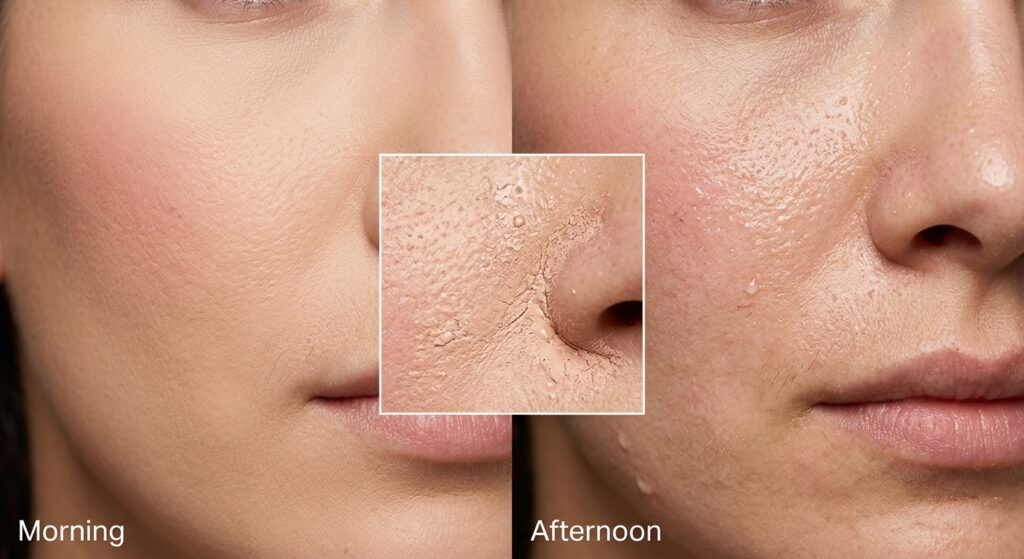 Before changing your makeup routine, it helps to understand why your foundation, concealer, blush, or eyeliner may not last as long as you expect.
Several factors can affect makeup throughout the day, including natural skin oils, sweat, facial movement, environmental conditions, and friction.
Natural skin oils can affect foundation
Your skin produces sebum, a natural oil that helps protect and moisturize its surface. As the day progresses, sebum can mix with makeup and change how foundation looks or feels.
This is particularly noticeable around the forehead, nose, and chin, where many people experience more shine. Makeup may appear uneven in these areas, especially when several thick layers have been applied.
If your skin becomes oily quickly, using suitable skincare and applying a small amount of setting powder may help manage shine.
Sweat and humidity can affect makeup
Sweat and humid weather may cause some makeup products to move, fade, or transfer more easily. This can be especially noticeable during warm weather, outdoor activities, or long days spent commuting.
Products designed for longer wear or water resistance may help in these situations, although no formula is completely resistant to every condition.
Touching your face can remove makeup
Rubbing your eyes, resting your hands against your cheeks, or repeatedly wiping your forehead can disturb makeup. Friction from clothing, tissues, and face coverings may also contribute to fading.
Being gentle with your face throughout the day can help preserve your makeup without adding more products.
Image placement: Insert a realistic close-up photograph illustrating makeup application and natural skin texture.
Suggested alt text: Close-up of foundation applied evenly to natural skin.
2. Start With Clean Skin
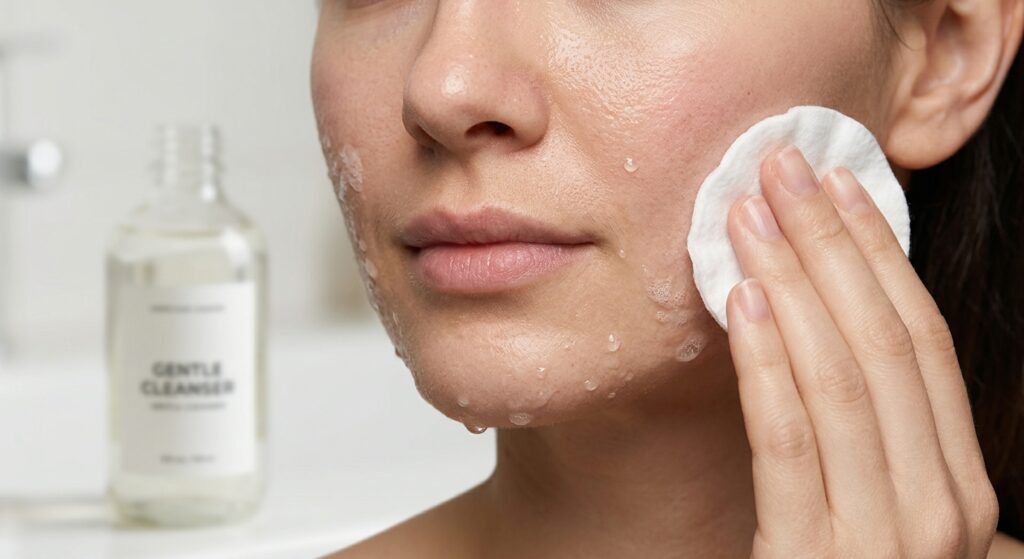 A clean face provides a good starting point for makeup application. Dirt, excess oil, and leftover makeup can interfere with how skincare and cosmetics sit on your skin.
However, cleaning your face more aggressively will not necessarily make makeup last longer. Harsh cleansing and excessive scrubbing can irritate the skin and leave it feeling dry or uncomfortable.
Choose a gentle cleanser
Use a gentle, non-abrasive cleanser that suits your skin type. Wet your face with lukewarm water, apply the cleanser using your fingertips, and rinse thoroughly.
Pat your face dry with a clean, soft towel instead of rubbing it vigorously.
You do not need to use a strong cleanser simply because your skin is oily. The goal is to remove excess oil and impurities without unnecessarily irritating your skin.
Avoid over-cleansing
Washing repeatedly throughout the day or using harsh products can damage the skin’s protective barrier. This may leave your face feeling tight, dry, or irritated.
For most people, cleansing in the morning and evening, along with washing after heavy sweating when appropriate, is a reasonable starting point.
If your skin feels uncomfortable after cleansing, consider whether your cleanser is too harsh or whether you need a more suitable moisturizer.
Image placement: Add a realistic beauty photograph of a person gently cleansing their face with a mild cleanser.
Suggested alt text: Woman gently cleansing her face before applying makeup.
3. Apply Moisturizer Before Makeup
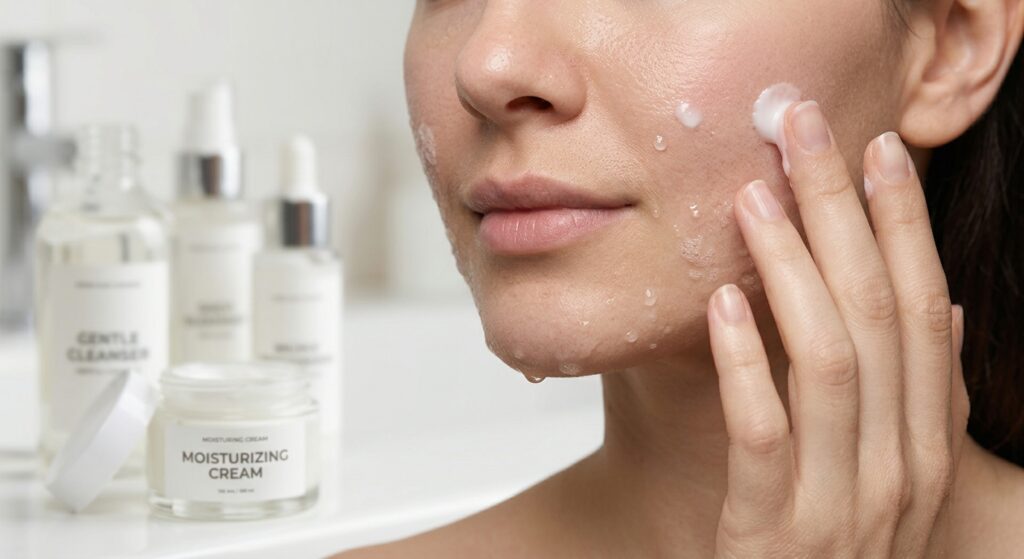 Moisturizer is an important part of skin preparation, even if your skin naturally produces plenty of oil. It helps maintain skin hydration and can improve the appearance of makeup on dry or flaky areas.
Skipping moisturizer may leave some skin types feeling uncomfortable, while applying too much of a rich product immediately before foundation can make the surface feel slippery.
Choose a moisturizer for your skin type
For oily skin: Consider a lightweight, oil-free moisturizer if richer products feel too heavy. Look for a formula that feels comfortable and does not leave excessive residue.
For dry skin: A cream moisturizer may help reduce the appearance of dry patches and improve foundation application.
For combination skin: You may prefer a lighter moisturizer across the face and additional hydration on areas that feel dry.
For sensitive skin: Choose a gentle formula with ingredients you already tolerate. Avoid introducing several new products immediately before an important event.
No single ingredient or moisturizer works best for everyone. Your choice should depend on how your skin responds to the product.
Give skincare time to settle
After applying moisturizer, allow it to absorb before moving on to makeup. The exact waiting time depends on the product and how much you use.
If your face still feels very slippery or has visible product sitting on its surface, wait a little longer before applying foundation.
If you wear sunscreen during the day, apply it as directed and allow it to settle before makeup. Do not skip sunscreen simply to make your foundation last longer.
Image placement: Add a realistic photograph showing moisturizer being gently applied to the face.
Suggested alt text: Applying facial moisturizer before foundation.
4. Choose a Primer That Suits Your Skin
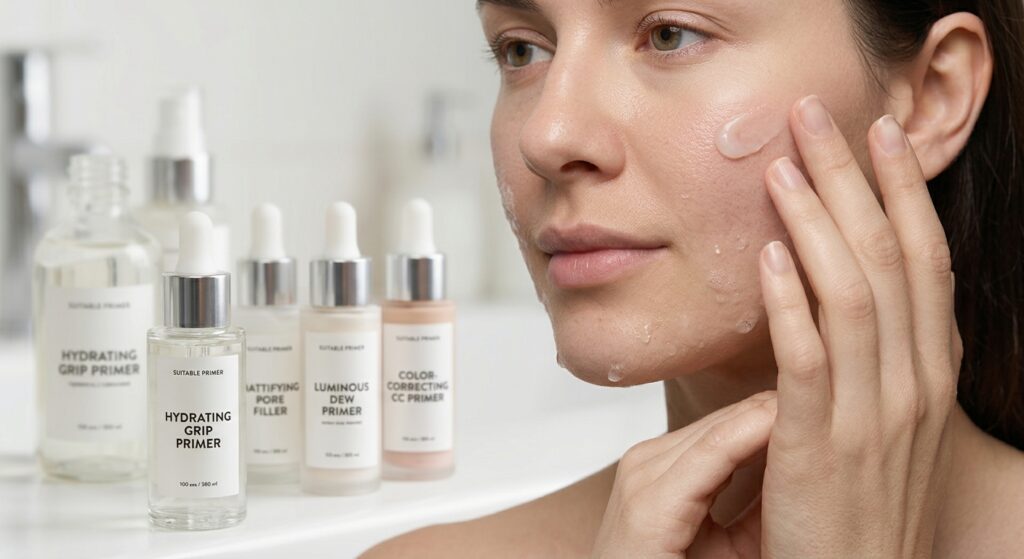 Primer is optional, but it can be useful if your makeup frequently fades, becomes shiny, or emphasizes the appearance of pores.
Different primers are designed for different purposes. Some focus on reducing visible shine, while others help smooth the appearance of skin texture or provide a slightly tacky surface for foundation.
Use mattifying primer where needed
If your forehead, nose, and chin become shiny quickly, a mattifying primer may help improve the appearance of makeup in those areas.
Apply a small amount rather than covering your face with a thick layer. Follow the product instructions and give it time to settle.
Consider a smoothing or gripping primer
A smoothing primer may help foundation appear more even over areas where pores are visible. A gripping primer may provide a tackier surface that helps certain foundation formulas stay in place.
Neither type is automatically necessary. If your foundation already wears well without primer, adding another product may not improve the result.
Check how your products work together
There is no universal rule that water-based products must always be paired with water-based products or silicone-based products with silicone-based products.
The full formulation matters, and products with different bases can sometimes work together successfully.
Instead of relying only on the label, test your moisturizer, primer, and foundation together. If they repeatedly pill, separate, or look patchy, try changing one product at a time.
Image placement: Show a close-up of a small amount of primer being applied before foundation.
Suggested alt text: Applying face primer before foundation for a smoother makeup base.
5. Apply Foundation in Thin Layers
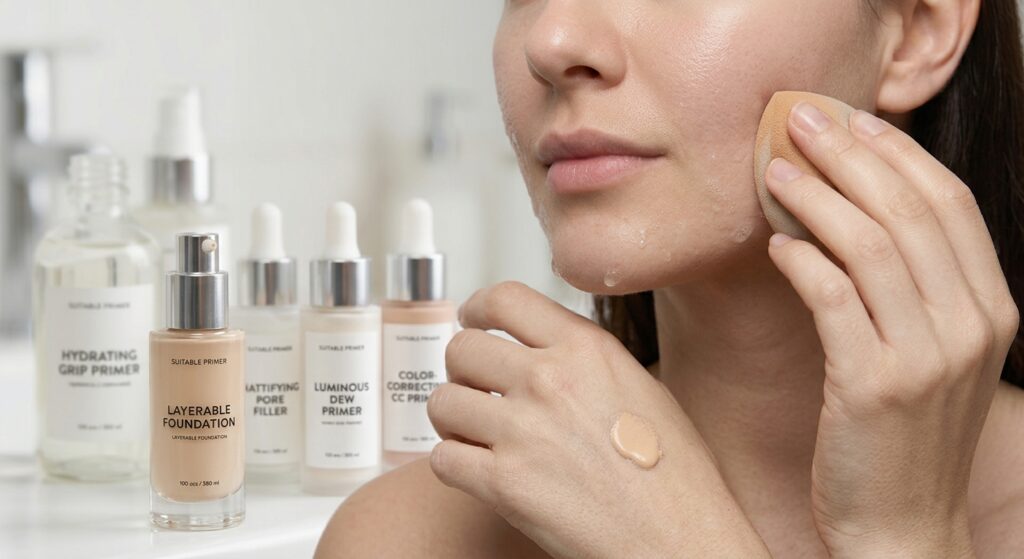 One of the most practical ways to improve makeup longevity is to avoid applying more foundation than you need.
Thick layers can look heavy and may become uneven as your face moves or your skin produces oil. Thin layers allow you to build coverage gradually while keeping the finish more natural.
Start with a small amount
Dispense a small amount of foundation onto a clean makeup palette or the back of your clean hand. Apply it with a clean brush or sponge, concentrating on the areas where you want coverage.
A brush can help distribute product, while a sponge can help blend the edges. Choose whichever tool gives you the most even result.
Build coverage gradually
Begin with one thin layer. If you still want additional coverage over redness or blemishes, apply a little more to those areas rather than adding another thick layer across your entire face.
Allow the first layer to settle before deciding whether you need more.
Avoid rubbing the foundation around
Use gentle, controlled movements while blending. Excessive rubbing can disturb the skincare or primer underneath and make application less even.
You do not need to press foundation forcefully into your pores. A light hand and careful blending are usually sufficient.
Image placement: Include a close-up photograph of foundation being blended with a clean makeup sponge.
Suggested alt text: Blending a thin layer of foundation with a makeup sponge.
6. Use Concealer Strategically
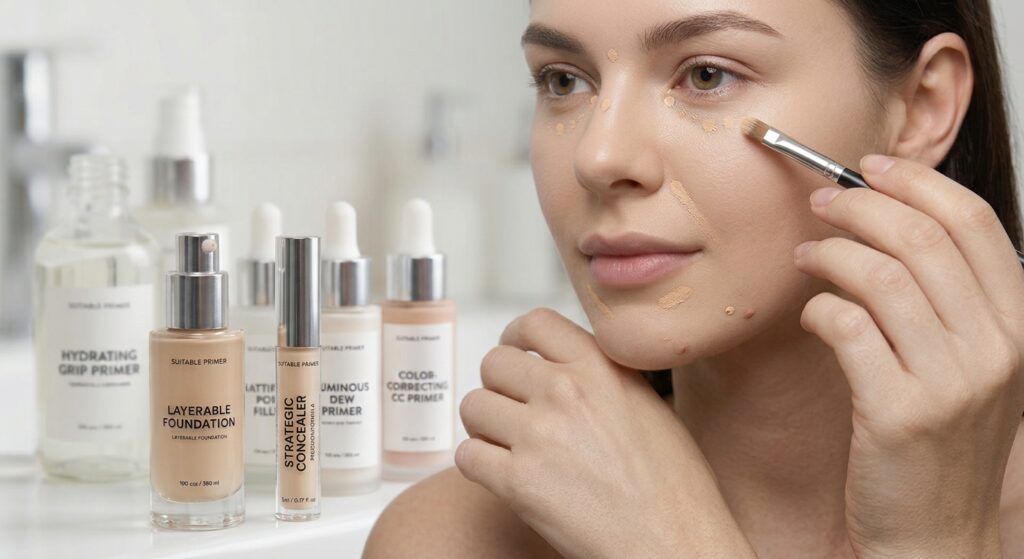 Concealer often contains more pigment than foundation, so applying too much can make certain areas look heavy or emphasize fine lines.
The aim is to use enough product to provide the coverage you want without creating unnecessary layers.
Apply concealer only where needed
For under-eye coverage, start with a small amount around the areas where darkness is most noticeable. Blend gently without pulling the delicate skin.
For blemishes, apply a small amount directly to the area and soften the edges.
You do not have to cover your entire under-eye area with a thick layer of concealer. Start with less and build coverage only if necessary.
Allow the product to settle
Give your concealer a moment to settle before blending or applying powder. If it moves into fine lines, gently blend the excess rather than adding more product.
A lightweight formula may work better for some people, while others may prefer a more pigmented concealer. The best choice depends on your skin and desired finish.
Use powder carefully under the eyes
If your concealer tends to crease, try a small amount of finely milled setting powder. Excessive powder may emphasize dryness or texture, so begin with very little.
Some creasing is normal because the skin around your eyes moves whenever you blink or smile.
Image placement: Add a close-up photograph showing a small amount of concealer being blended under the eyes.
Suggested alt text: Blending a small amount of concealer under the eyes.
7. Set Makeup With Powder Instead of Setting Spray
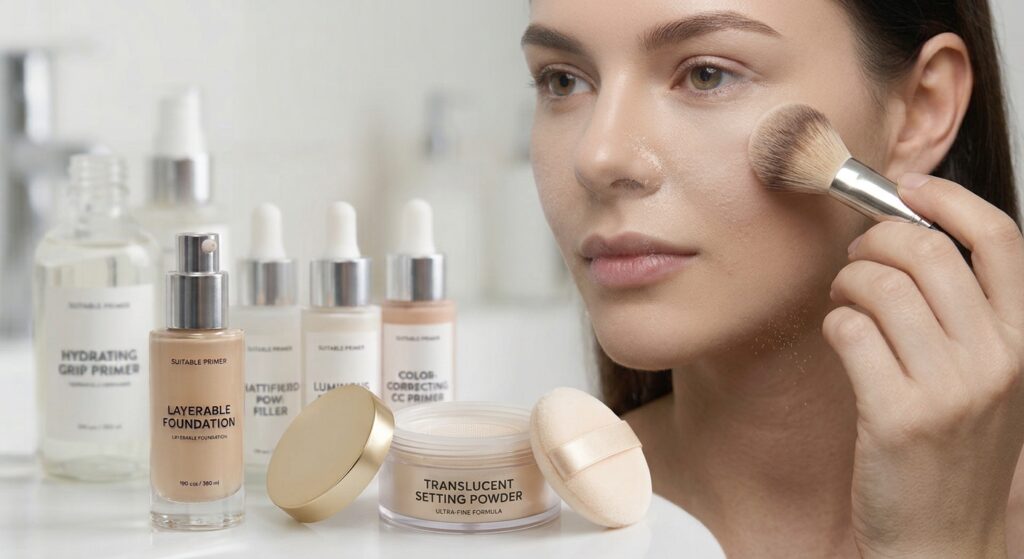 Setting powder is one of the most useful alternatives to setting spray. It can help reduce shine and improve the wear of certain liquid or cream makeup products.
However, powder does not perform exactly the same function as setting spray, and you do not necessarily need to use it heavily over your entire face.
Choose the right powder
Loose setting powder is often useful for lightly setting foundation and concealer. Pressed powder can be convenient for quick touch-ups throughout the day.
A translucent powder may suit a range of makeup looks, but the finish and appearance can vary depending on the formula and your skin tone.
Choose a product that blends into your makeup without leaving an unwanted cast or emphasizing dry patches.
Apply powder with a light hand
Use a clean brush or powder puff to pick up a small amount. Tap off excess powder before applying it.
Gently press or sweep the powder over areas where makeup tends to become shiny or crease. Avoid rubbing the tool across wet foundation, as this can disturb the underlying product.
If your skin is oily, you may prefer to set the T-zone more thoroughly. If your skin is dry, you may find that a small amount on selected areas is enough.
Avoid excessive baking
Baking involves applying a heavier layer of powder and allowing it to sit before brushing away the excess. It is not necessary for everyday makeup, and it may emphasize dryness or texture on some skin types.
You can achieve a neat finish with much less powder.
Image placement: Show a powder puff and translucent setting powder beside a person applying powder to the T-zone.
Suggested alt text: Applying translucent setting powder to help reduce facial shine.
8. Choose Makeup Products Designed for Longer Wear
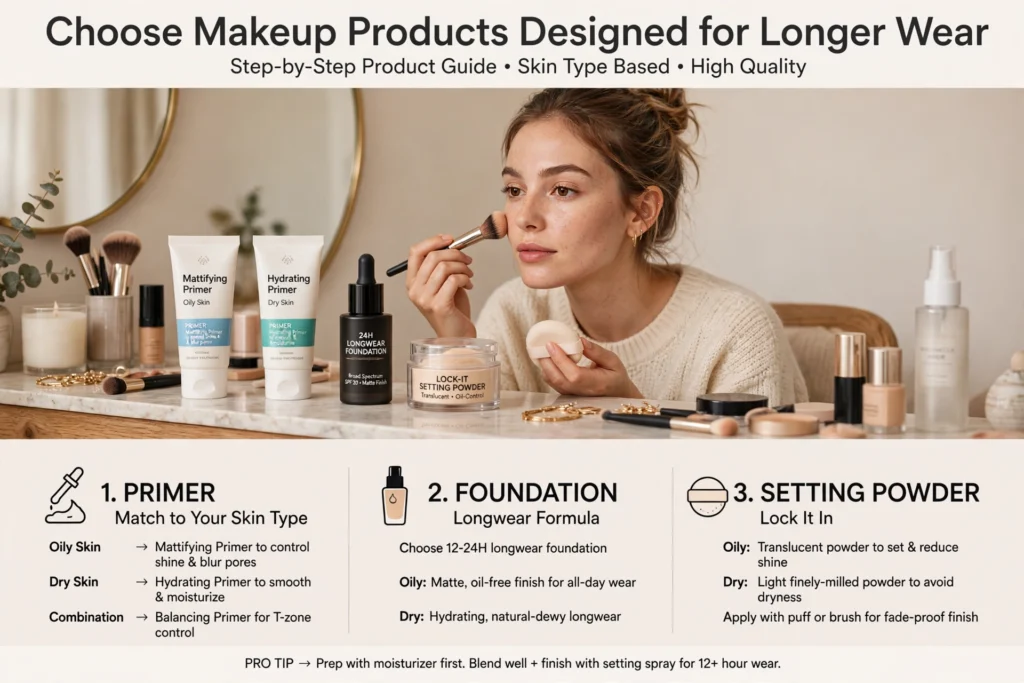 Some products are formulated to resist fading, smudging, or transfer better than others. If your makeup consistently disappears after a few hours, switching one product may be more helpful than adding several new steps.
Look for suitable foundation formulas
Long-wear or transfer-resistant foundations may be useful for busy days, warm weather, or occasions when you want to reduce touch-ups.
However, the label alone cannot guarantee that a foundation will last equally well on everyone. Skin type, application, weather, and other products all affect performance.
Consider waterproof eye makeup when appropriate
Water-resistant or waterproof mascara and eyeliner may help reduce smudging caused by moisture.
These products can be more difficult to remove, so use a suitable makeup remover and avoid rubbing your eyes.
Select lipstick according to your needs
Long-wearing lipsticks may last longer than some creamy formulas, but eating, drinking, and wiping your mouth can still affect the finish.
A comfortable formula that you can reapply easily may be preferable to a product that feels excessively dry.
You do not need to replace your whole makeup collection. Start with the product that fades most quickly and test a suitable alternative.
Image placement: Include a neat arrangement of long-wearing foundation, mascara, lipstick, and makeup brushes.
Suggested alt text: Makeup products selected for a longer-wearing beauty routine.
9. Let Each Layer Set Before Applying the Next
Applying several products immediately one after another may sometimes cause pilling, patchiness, or uneven blending.
Giving products time to settle can help you identify whether a layer is ready for the next step.
Keep your routine simple
A basic routine might include cleansing, moisturizing, sunscreen during the day, primer if needed, foundation, concealer, and setting powder where appropriate.
You do not have to use every product in this sequence if some steps do not suit your skin or makeup preferences.
Watch for pilling
Pilling occurs when small rolls or flakes of product form on the skin. It can happen because of product interactions, excessive layering, or the way products are applied.
If pilling occurs repeatedly, reduce the amount of skincare you use immediately before makeup or change one product at a time to identify the cause.
Avoid rubbing harder to remove the pills, as that can disturb the makeup underneath.
Image placement: Show skincare and makeup products arranged in the order they are applied.
Suggested alt text: Skincare and makeup products prepared for a simple beauty routine.
10. Adjust Your Makeup for Hot and Humid Weather
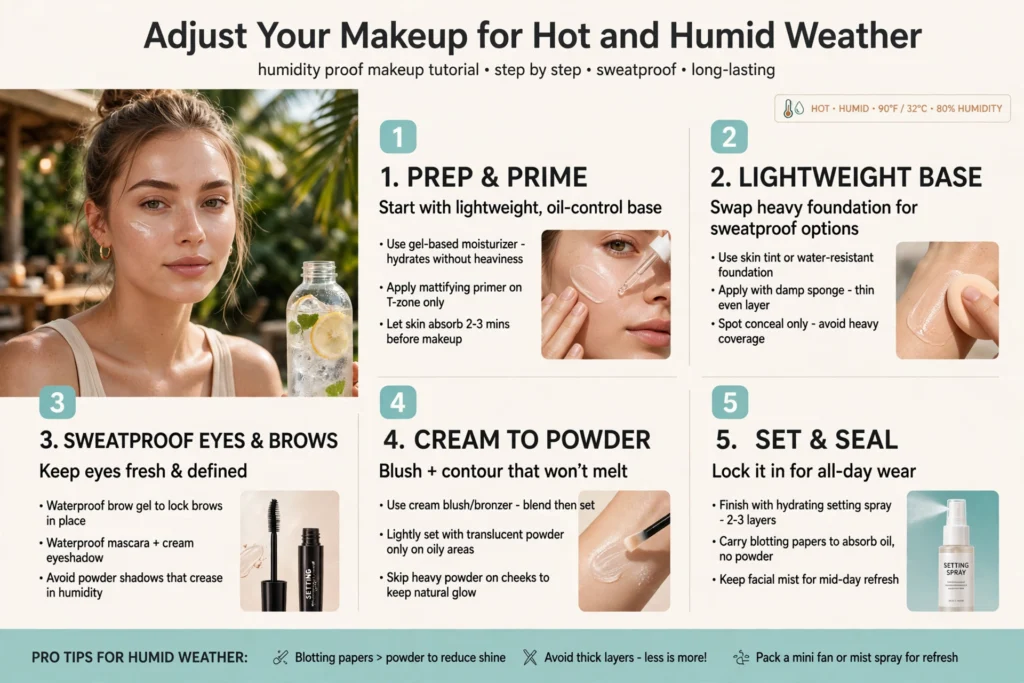 Heat and humidity can make makeup feel less comfortable and may contribute to shine, sweat, or fading.
You cannot completely control how your makeup behaves in every environment, but you can adjust your routine to suit the conditions.
Use lightweight layers
During warm weather, a lighter layer of moisturizer and foundation may feel more comfortable than several thick products.
Choose formulas that work well with your skin and do not leave an excessively slippery finish.
Manage sweat gently
If you sweat, gently blot the area with a clean tissue rather than rubbing your face.
Repeated rubbing can remove makeup and irritate your skin. If you are outdoors for long periods, remember that sunscreen needs to be reapplied according to its directions, even if you are wearing makeup.
Make realistic expectations
No makeup routine is completely resistant to heat, humidity, or sweat. Some fading and touch-ups are normal, particularly during outdoor activities.
Choose a routine that is comfortable and practical rather than trying to keep every part of your makeup perfectly unchanged all day.
Image placement: Add a realistic beauty photograph showing a person gently blotting sweat in warm weather.
Suggested alt text: Gently blotting facial moisture in warm weather.
11. Prevent Makeup From Transferring
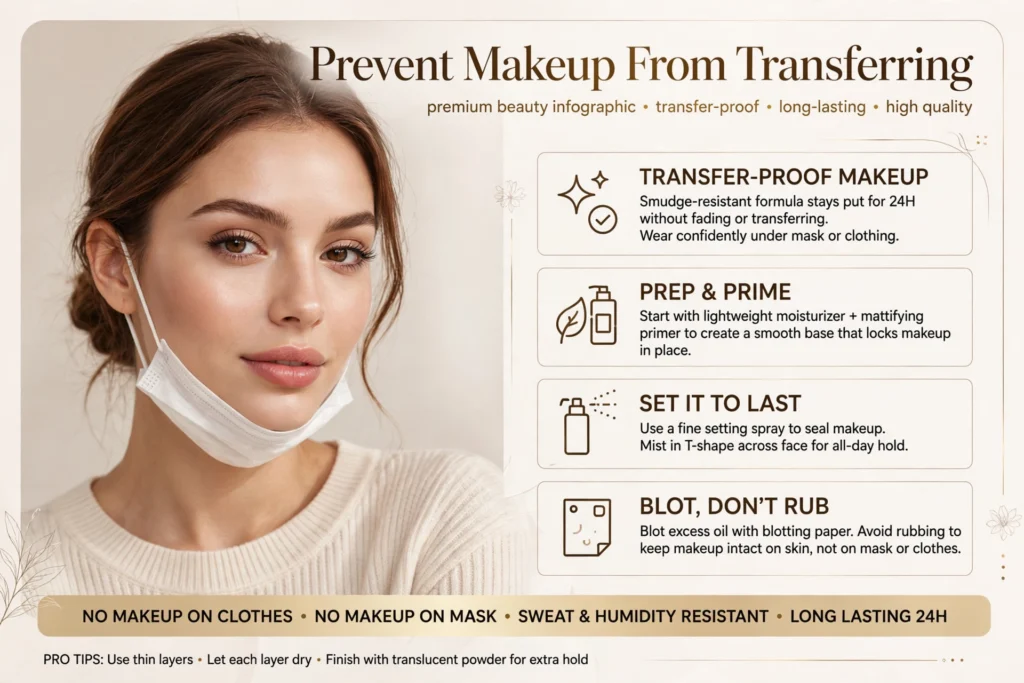 Makeup may transfer onto clothing, tissues, phones, or face coverings when these surfaces come into contact with your face.
Although transfer cannot always be prevented, a few habits may help reduce it.
Allow makeup to settle
Avoid immediately pressing clothing or other objects against freshly applied foundation. Give your products time to settle before getting dressed or handling items that may touch your face.
Avoid unnecessary contact
Try not to rest your face against your hands or rub your cheeks throughout the day.
If you wear a face covering, some transfer may still occur because of friction and moisture. Apply makeup sparingly in areas where repeated contact is unavoidable.
Choose products carefully
Transfer-resistant formulas may reduce the amount of makeup that moves onto other surfaces, although results vary.
Test new products before an important occasion so you can see how they perform on your skin.
Image placement: Show a person carefully finishing their makeup before heading out.
Suggested alt text: Finishing a natural makeup look before leaving home.
12. Refresh Makeup Without Adding Too Many Layers
You do not need to start your makeup routine again when your face becomes shiny or a small area begins to crease.
A few targeted touch-ups can often improve the appearance of makeup without making it feel heavy.
Blot excess oil first
If your forehead or nose becomes shiny, use clean blotting paper or a clean tissue.
Press it gently against the area and lift it away. Avoid rubbing it across your skin.
The American Academy of Dermatology recommends gently pressing blotting paper against oily areas rather than rubbing it across the face.
Smooth creased makeup
If concealer settles into fine lines, gently tap the area with a clean fingertip or suitable makeup sponge to redistribute the product.
If needed, use a very small amount of powder afterward.
Adding more concealer directly over a crease may make the area look heavier.
Apply powder only where necessary
After removing excess oil, use a small amount of powder if the area still looks shiny.
You may not need to touch up every part of your face. Focus on the areas where makeup has actually changed.
Image placement: Show blotting paper being gently pressed against the nose to absorb excess oil.
Suggested alt text: Pressing blotting paper against the nose to absorb excess oil.
13. Keep Makeup Brushes and Sponges Clean
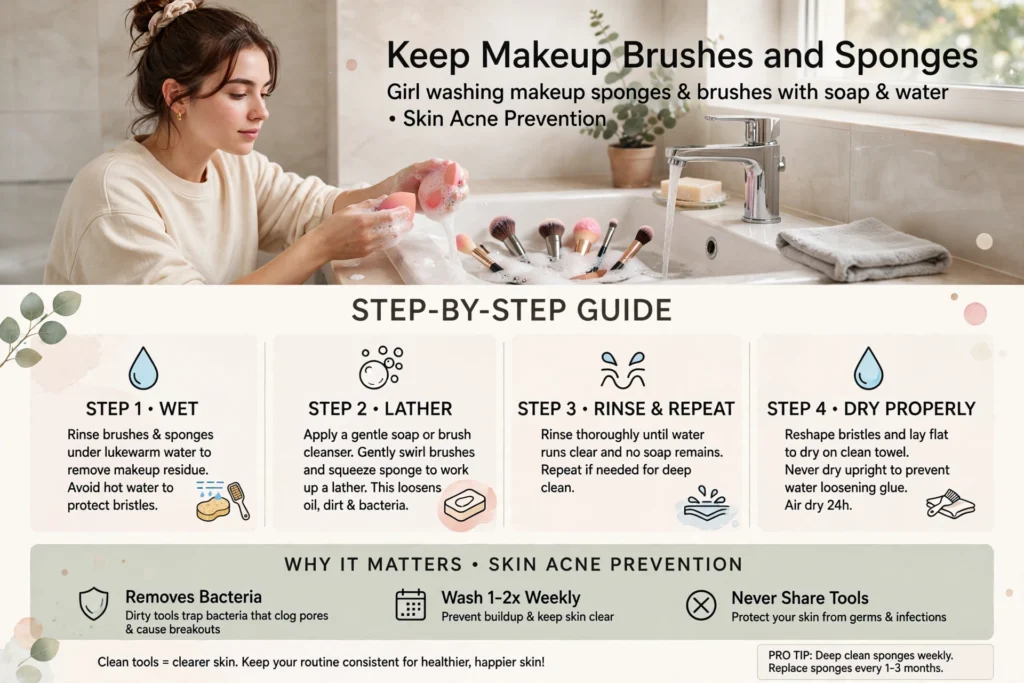 Clean makeup tools help you apply products more evenly and support good skin hygiene.
Brushes and sponges can collect makeup residue, oil, and dirt during repeated use. Using dirty tools may also contribute to irritation or breakouts.
Clean your tools regularly
Follow the cleaning instructions appropriate for your brushes and sponges. Allow reusable tools to dry completely before using them again.
The American Academy of Dermatology recommends cleaning makeup brushes regularly and avoiding shared makeup applicators.
Avoid sharing makeup tools
Do not share brushes, sponges, mascara, or other products that come into direct contact with the eyes or skin.
Keep product containers closed when they are not in use and follow the manufacturer’s guidance for storage and replacement.
Clean tools do not guarantee longer-lasting makeup, but they can help you apply products more consistently and hygienically.
Image placement: Show clean makeup brushes and a reusable makeup sponge drying on a clean surface.
Suggested alt text: Clean makeup brushes and sponge ready for use.
14. Common Makeup Mistakes That Can Shorten Wear
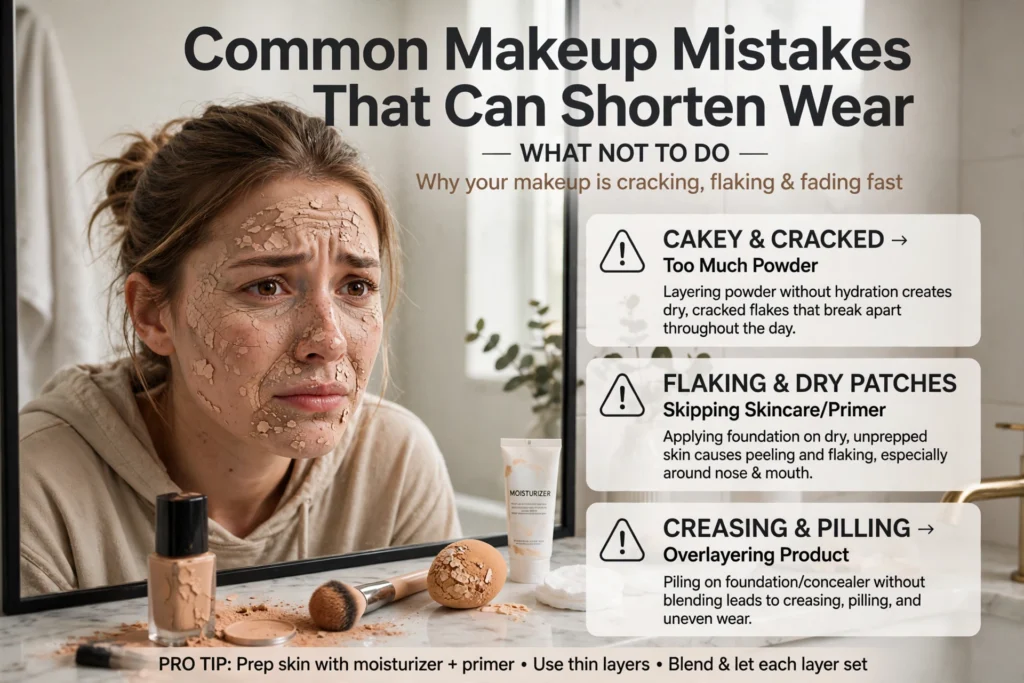 Sometimes, makeup fades because of a few small habits rather than a lack of products.
Applying too much foundation
Heavy foundation can look uneven as the day progresses. Begin with a thin layer and add coverage only where needed.
Skipping moisturizer when your skin needs it
If your skin is dry, foundation may cling to flaky areas. Use a suitable moisturizer instead of trying to cover dryness with more foundation.
Using too much powder
Excessive powder can emphasize texture and create a dry or cakey finish. Start with a small amount and build only where necessary.
Adding powder over oily skin without blotting
Powder applied over a layer of surface oil may create a heavy appearance. Blot first, then apply a light touch-up if needed.
Changing too many products at once
If you change your cleanser, moisturizer, primer, and foundation simultaneously, it becomes difficult to identify which product helps or causes a problem.
Test changes gradually so you can understand what works best for your skin.
Using products that irritate your skin
If a cosmetic or skincare product repeatedly causes burning, itching, or redness, stop using it and consider professional advice if the irritation persists.
The goal is to make makeup more comfortable and manageable, not to achieve a perfect finish at the expense of skin health.
Image placement: Include a realistic flat lay of foundation, powder, a clean sponge, and makeup brushes.
Suggested alt text: Essential makeup products for applying foundation and setting powder.
15. Troubleshooting Common Makeup Problems
Even when you follow a consistent routine, you may need to adjust individual steps to address specific problems.
Why does foundation separate around the nose?
The nose can become oily, and frequent facial movement or wiping may disturb foundation.
Try using less foundation in that area, blending it carefully, and applying a small amount of suitable setting powder. If the problem continues, test whether your skincare, primer, and foundation work well together.
Why does makeup look patchy on dry areas?
Foundation may emphasize existing flakes or uneven texture when skin is dry.
Use a suitable moisturizer and avoid harsh scrubbing. If a product consistently irritates your skin, discontinue it. Do not automatically add exfoliating acids to fix patchiness, as they can irritate some skin types.
Why does concealer crease under the eyes?
The under-eye area naturally moves when you blink and smile. Thick layers of concealer may make creasing more noticeable.
Use less product, blend gently, and apply a small amount of powder only if needed.
Why does blush fade quickly?
Blush may fade because of friction, facial oils, or the characteristics of its formula.
Try a suitable long-wearing blush or, if you like layered makeup, apply a small amount of powder blush over a compatible cream blush. Use light layers rather than adding large amounts of product.
Why does powder make my makeup look cakey?
You may be using too much powder or applying it over excess surface oil.
Blot shiny areas first and reduce the amount of powder you use. If your skin is dry, apply powder only to the areas that need it.
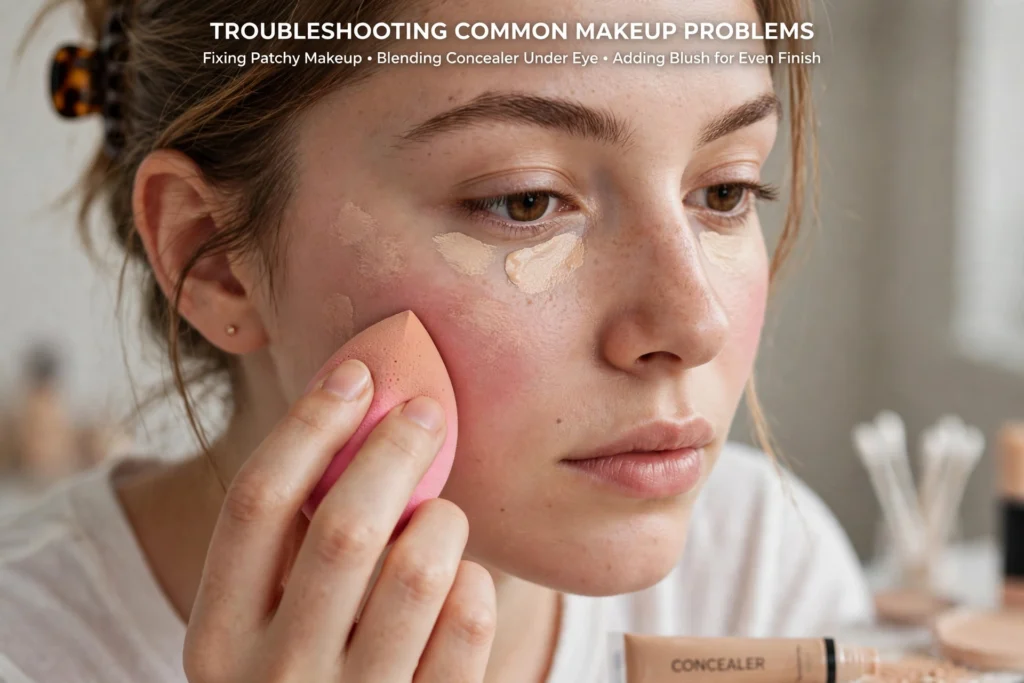
Image placement: Show a close-up of makeup being gently blended to correct an uneven area.
Suggested alt text: Gently blending foundation to improve an uneven makeup finish.
16. A Simple Makeup Routine Without Setting Spray
 If you prefer a straightforward routine, you can combine the most useful techniques without adding unnecessary steps.
Step 1: Cleanse gently. Start with clean skin without scrubbing or over-cleansing.
Step 2: Moisturize. Choose a moisturizer that suits your skin type and allow it to settle.
Step 3: Apply sunscreen during the day. Follow the product instructions and allow it to settle before applying makeup.
Step 4: Use primer if needed. Apply it to the areas where it provides a noticeable benefit.
Step 5: Apply foundation in a thin layer. Build coverage gradually rather than applying too much at once.
Step 6: Add concealer selectively. Cover only the areas that need additional coverage.
Step 7: Set selected areas with powder. Use a light application according to your skin type and preferred finish.
Step 8: Check the result in natural light. Blend any visible edges and remove excess product.
Step 9: Touch up strategically. During the day, blot excess oil before using additional powder.
You can adapt this routine according to your preferences. If primer does not improve your makeup, you may not need it. If your skin is dry, you may need very little powder. The best routine is one that gives you a comfortable finish and works with your lifestyle.
Image placement: Add a photograph of a simple makeup routine arranged neatly on a dressing table.
Suggested alt text: Simple makeup routine using foundation, concealer, and setting powder.
Conclusion
Learning how to make your makeup last longer without setting spray is mostly about choosing suitable products, applying them carefully, and making small adjustments according to your skin type.
Start with gentle cleansing and appropriate moisturizing. Apply foundation and concealer in thin layers, use primer if it helps, and set only the areas that need powder. During the day, blot excess oil before touching up your makeup instead of repeatedly adding more product.
Remember that makeup will naturally change as you move, sweat, eat, and go about your day. No technique guarantees a completely unchanged finish for every person or every environment.
With a simple, consistent routine, you can improve the appearance and wear of your makeup without depending on setting spray.
Frequently Asked Questions
1. Can you make makeup last all day without setting spray?
Yes, you can improve makeup longevity without setting spray. Suitable skincare, thin makeup layers, compatible products, and careful powder application can help. However, results vary by skin type, formula, and environment.
2. What can I use instead of setting spray?
Setting powder is a common alternative for helping reduce shine and setting certain makeup products. Long-wearing formulas and careful application can also help. Powder does not provide exactly the same effect as every setting spray.
3. Does setting powder help makeup last longer?
Setting powder can help reduce surface shine and improve the wear of some liquid and cream products. Use a small amount and adjust application to your skin type to avoid a dry or cakey finish.
4. How can I make foundation last longer on oily skin?
Use a gentle cleanser, a suitable lightweight moisturizer, and foundation that works well with your skin. A mattifying primer or a small amount of setting powder may help manage shine. Blot excess oil before touching up.
5. How can I stop concealer from creasing?
Apply a small amount of concealer, blend gently, and avoid using excessive skincare immediately underneath the product. If needed, apply a light layer of setting powder. Some creasing is normal because the under-eye area moves throughout the day.
6. Why does my makeup look patchy after a few hours?
Possible causes include dry skin, excess oil, incompatible products, thick application, or friction. Observe where the problem occurs and change one part of your routine at a time to identify what helps.
7. How do I keep makeup looking fresh in hot weather?
Use comfortable, lightweight layers and consider products designed for longer wear. Blot sweat or excess oil gently instead of rubbing your face. Reapply sunscreen according to its instructions.
8. Can I use baby powder instead of setting powder?
It is better to choose a cosmetic powder intended for facial makeup. Baby powder is not necessarily formulated or tested for the same purpose, and loose powders should be kept away from inhalation. A suitable face powder gives you more control over the finish.
9. Does primer replace setting spray?
Not exactly. Primer is applied before foundation and can help prepare the surface for makeup. Setting spray is applied after makeup and may help improve its finish or wear, depending on the formula. Either product can be optional depending on your routine.
10. How often should I touch up my makeup?
There is no fixed schedule. Touch up when your makeup actually needs it. If your face becomes shiny, blot first. Add a small amount of powder only if necessary, and reapply lip products as needed after eating or drinking.
Sources for Further Reading
– American Academy of Dermatology — Face Washing 101: https://www.aad.org/public/everyday-care/skin-care-basics/care/face-washing-101
– American Academy of Dermatology — Skin Care on a Budget: https://www.aad.org/public/everyday-care/skin-care-basics/care/skin-care-budget
– American Academy of Dermatology — How to Control Oily Skin: https://www.aad.org/public/everyday-care/skin-care-basics/dry/oily-skin
– American Academy of Dermatology — Makeup and Acne: https://www.aad.org/public/diseases/acne/causes/makeup






















Leave a Comment
Your email address will not be published. Required fields are marked with *