
Discover 15 practical Facebook Page Growth Tips for 2026 to attract real followers organically, increase engagement, improve reach, and build a loyal audience. Learn how to use Facebook Reels, SEO, valuable content, and analytics to grow your Page without buying followers or relying on paid ads.
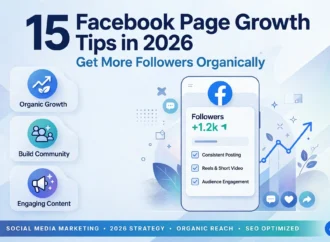
15 Facebook Page Growth Tips in 2026: Get More Followers Organically
Meta Description: Discover 15 Facebook Page Growth Tips to attract real followers, improve organic reach, boost engagement, and grow your audience in 2026.
URL Slug: facebook-page-growth-tips
Creating Facebook posts but getting hardly any likes, comments, shares, or new followers? You are not alone. Many beginners and small business owners spend hours creating content, only to see their Facebook Pages struggle to reach the right audience.
The solution is not necessarily to publish more posts. It is to publish the right content, understand your audience, make your Page easy to discover, and build genuine relationships with the people who follow you.
In 2026, successful Facebook Page growth requires a thoughtful combination of useful content, short-form videos, audience engagement, search optimization, and performance analysis. You can begin implementing these strategies without purchasing advertisements or expensive marketing tools.
This guide explains 15 practical Facebook Page Growth Tips to help beginners, bloggers, creators, and small businesses attract relevant followers and develop a sustainable organic growth strategy.
What Is Organic Facebook Page Growth?
Organic Facebook Page growth means attracting followers and reaching people without paying for advertising. It can happen when people discover your public posts, watch your Reels, share your content, search for your Page, or find your business through other channels.
Organic growth is valuable because it gives you an opportunity to build a community around your brand, expertise, products, or interests.
However, organic reach is not guaranteed. Facebook’s distribution systems consider multiple signals, and different types of content can perform differently depending on the audience, topic, competition, and viewer behavior.
The goal is not to make every post viral. It is to consistently reach people who genuinely care about what you offer.
1. Optimize Your Facebook Page for Growth
Before trying to attract more followers, make sure your Page gives visitors a clear reason to follow you.
Choose a clear Page name
Select a memorable name that reflects your brand, business, or content topic. Avoid confusing spelling, unnecessary symbols, and excessive keywords.
For example, a technology blog could use a recognizable brand name such as “Tech Simplified” rather than a long name stuffed with phrases such as technology tips, mobile reviews, computers, and gadgets.
Use professional profile and cover images
Your profile picture should remain recognizable at small sizes. A business can use its logo, while a personal brand can use a clear photograph.
Your cover image should communicate what visitors can expect from your Page. A food blog might display attractive dishes, while a digital marketing Page could highlight its main services.
Use appropriately sized images and preview them on mobile devices to ensure important text is not cropped.
Complete your About section
Explain what your Page offers, whom it serves, and why someone should follow it.
For example:
“Simple technology tutorials, honest gadget comparisons, and practical AI tips to help beginners make smarter digital decisions.”
Include relevant keywords naturally. Add accurate contact information, your website, business category, location where appropriate, and other relevant details.
Practical tip: Review your Page as if you were a first-time visitor. Within a few seconds, people should understand what you publish and why it matters to them.
2. Understand Your Target Audience
One of the most effective Facebook Page Growth Tips is to stop creating content for everyone.
A Page that tries to serve every possible interest can struggle to establish a clear identity. Instead, identify the people most likely to value your content.
Ask yourself:
- Who is my ideal follower?
- What questions do they ask?
- Which problems can I help solve?
- What type of content do they enjoy sharing?
- What language and level of technical knowledge do they prefer?
For example, a food blog targeting busy parents might publish quick family meals, affordable recipes, and lunchbox ideas. A technology blog for beginners might explain how to use AI tools, protect online accounts, or choose an affordable smartphone.
Learn from audience conversations
Read genuine comments on your posts, questions in relevant Groups, and feedback from your existing followers. These conversations can reveal useful content ideas.
You can also ask followers what they want to learn next. Their responses help you create content based on actual interests instead of assumptions.
3. Publish High-Quality, Valuable Content
People are more likely to follow a Page when its content consistently gives them something useful, interesting, entertaining, or inspiring.
Develop a Facebook content strategy around four main categories:
- Educational: Tutorials, explanations, tips, and step-by-step guides.
- Entertaining: Relatable situations, appropriate humor, and creative videos.
- Inspirational: Personal lessons, achievements, and meaningful stories.
- Problem-solving: Practical solutions to common challenges.
You do not need to publish every category every day. Choose the mix that suits your audience and goals.
Create original posts with a clear purpose
Instead of sharing a generic image that says “Work hard and never give up,” a freelancing Page could publish:
“Starting freelancing with no experience? Choose one skill, create three sample projects, and build a simple portfolio before contacting clients. Here is how to begin.”
This example gives readers a practical starting point and a reason to save or share the post.
Use clear images, informative carousels, short videos, and text posts where appropriate. Ensure that your visuals are relevant and that you have permission to use any third-party material.
Sample post ideas for different Pages
| Page type | Example post |
|---|---|
| Food blog | “Three affordable dinners you can prepare in 20 minutes.” |
| Technology blog | “Five free AI tools beginners can try this week.” |
| Art Page | “Watch this simple sketch develop from the first line to the final drawing.” |
| Online business | “How to choose the right product size before placing an order.” |
The strongest content answers a specific question or provides a clear benefit.
 4. Use Facebook Reels and Short Videos
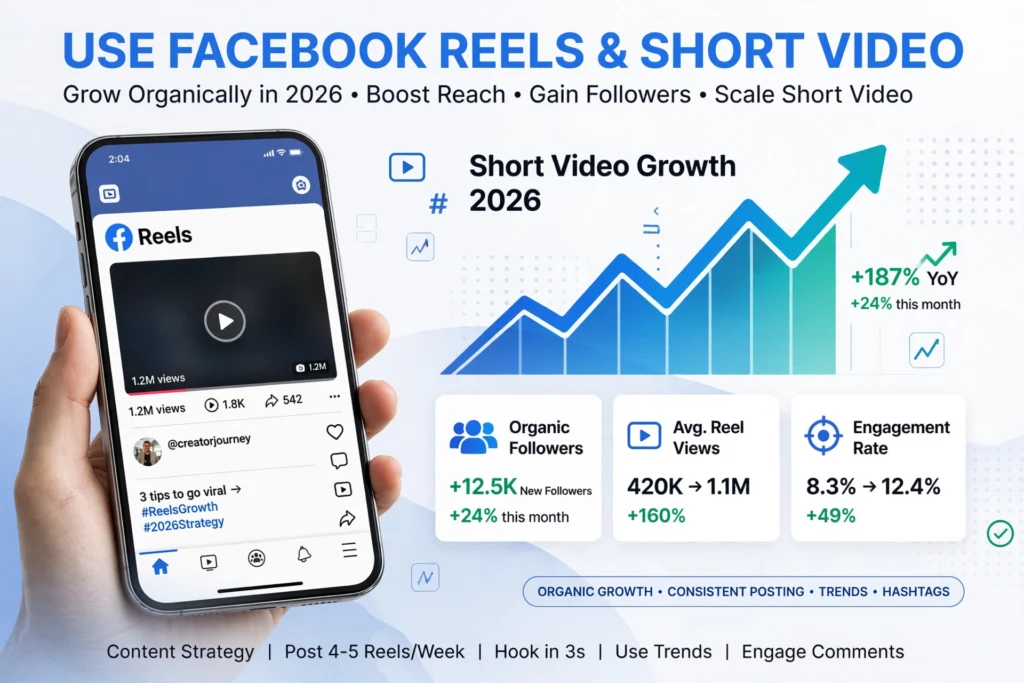 4.
Reels can help people discover your content even when they do not already follow your Page. They are particularly useful for demonstrating products, sharing quick tutorials, telling short stories, and presenting ideas visually.
However, posting Reels does not guarantee increased reach or viral results. Performance depends on factors such as audience interest, content quality, originality, and viewer response.
How beginners can create better Reels
Start with a strong opening. Give viewers a reason to continue watching.
Instead of beginning with “Hello everyone, welcome to my Page,” try:
“Making your first Facebook business Page? Avoid these three common mistakes.”
Deliver the promised value. Explain one main idea rather than trying to cover an entire subject in a short video.
Use readable captions. Captions help people understand your message when audio is unavailable or inconvenient.
Keep the message focused. Remove unnecessary introductions, repeated points, and unrelated details.
Finish naturally. Invite viewers to follow for related tutorials or ask a relevant question when appropriate.
Beginner-friendly Reel ideas
- A before-and-after demonstration.
- A quick tutorial explaining one useful skill.
- Three common mistakes in your niche.
- A behind-the-scenes look at your work.
- A frequently asked question answered in under a minute.
- A short product demonstration or comparison.
Prioritize original material and meaningful information. Avoid simply reposting other creators’ videos without permission or adding little value to copied content.
5. Post Consistently and Test Different Times
Consistency helps you develop a recognizable presence and learn which content works. It does not mean you must publish several times every day.
Choose a schedule you can maintain without sacrificing quality. For a beginner, three to five useful posts per week can be a reasonable starting experiment, not a universal rule.
Find the best time to post on Facebook
There is no single posting time that works for every Page. A business targeting office workers may see different audience activity from a Page serving students, international readers, or night-shift workers.
Use Facebook’s available Page Insights and Meta Business Suite analytics to examine audience activity and post performance where those features are available.
Test different time slots over several weeks. Compare similar posts rather than judging a posting time from one unusually successful or unsuccessful result.
Consider your audience’s time zone, daily routine, and location. If your followers are spread across several countries, you may need different posting windows for different content types.
The best time to post is the time that repeatedly produces useful results for your particular audience.
6. Improve Engagement Naturally
Facebook engagement includes reactions, comments, shares, and other meaningful interactions with your content. The objective is to encourage genuine interest, not to collect empty numbers.
Try these Facebook engagement tips:
- Ask relevant questions: A food blog could ask, “Which would you choose for dinner: homemade pizza or vegetable pasta?”
- Reply to comments: Answer questions thoughtfully and thank people for sharing useful feedback.
- Share behind-the-scenes content: Show how you create artwork, prepare products, or write tutorials.
- Use polls when appropriate: Ask followers to choose a topic for your next tutorial or video.
- Encourage useful discussions: Invite people to share experiences related to your subject.
Avoid engagement bait, such as repeatedly demanding likes, tagging, or comments without offering a meaningful reason to participate. Keep interactions natural and relevant.
Why you should avoid buying followers
Buying followers or fake engagement may make your Page appear popular temporarily, but it does not create a genuinely interested audience.
Fake accounts and uninterested followers are unlikely to become customers, read your blog, or contribute useful conversations. They can also make your performance metrics harder to interpret.
Build your audience through relevant content, authentic relationships, and consistent participation instead.
7. Use Facebook SEO and Relevant Keywords
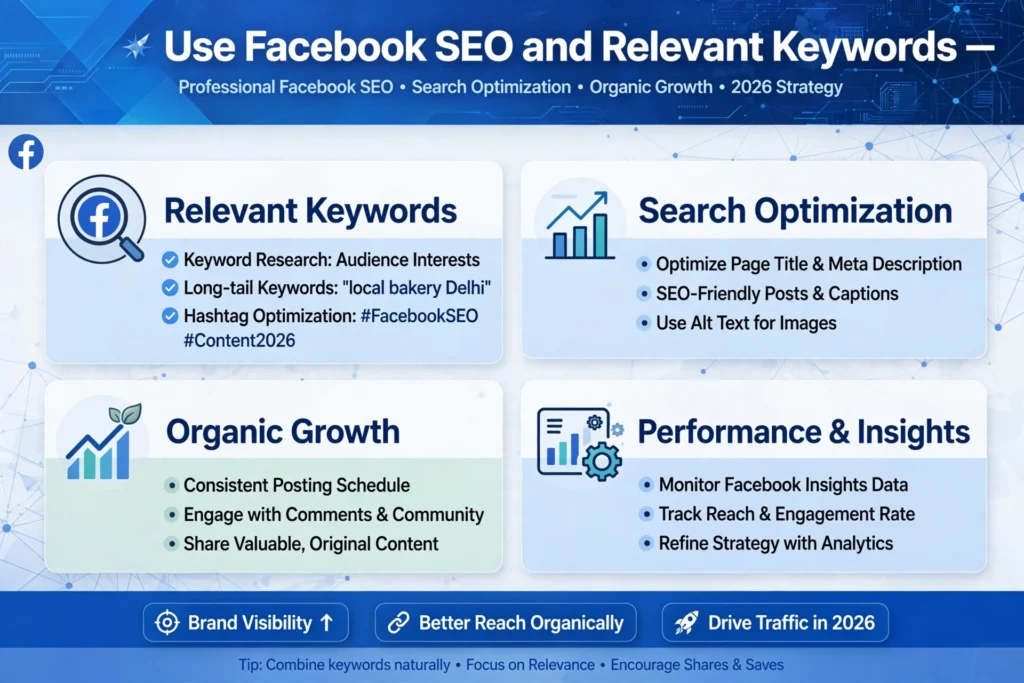 7. Use Facebook SEO and Relevant Keywords
Facebook SEO helps people understand what your Page is about and can improve its discoverability within Facebook and, where applicable, external search engines.
Start with your primary keyword, then use closely related phrases naturally.
For example, a social media education Page could target phrases such as:
- Facebook Page Growth Tips
- Facebook marketing strategies
- Facebook engagement tips
- How to grow a Facebook Page organically
Where should you use keywords?
Page name: Use your established brand name. Add a descriptive term only if it sounds natural and accurately represents your Page.
About section: Explain your subject clearly using relevant phrases.
Public post descriptions: Write captions that accurately describe the content. For example, “Learn five practical Facebook marketing strategies for small businesses.”
Image descriptions and accessible text: Add descriptive alt text where supported, and use clear captions to provide context.
Hashtags: Use a small number of relevant hashtags when they genuinely help categorize a post. They are optional, not a substitute for useful content.
Avoid keyword stuffing. Repeating the same phrase unnaturally can make content difficult to read.
Remember that Facebook search visibility and Google rankings are not guaranteed. Both depend on factors beyond your control.
8. Share Your Page Through Relevant Channels
You do not have to depend entirely on Facebook to attract followers. Your existing website, email subscribers, and other social media audiences can help introduce new people to your Page.
Consider these methods:
- Website: Add a Facebook Page link to your website’s contact page, footer, or relevant articles.
- Blog: Share a useful Facebook post alongside a related blog article.
- Email newsletter: Invite interested subscribers to follow your Page for additional tips and updates.
- Other social platforms: Adapt your strongest ideas for platforms where your audience already spends time.
- Business communications: Include your Page link in relevant customer communications when appropriate.
Participate in Facebook Groups responsibly
Relevant Facebook Groups can help you understand your audience and establish credibility.
For example, a technology blogger could answer questions in a group about beginner computer skills. A food blogger could contribute helpful recipe suggestions in a cooking community.
Read each group’s rules before sharing links. Some communities prohibit promotion entirely.
Give useful answers first, and share your Page only when it is permitted and genuinely relevant. Avoid spam, repetitive self-promotion, and unsolicited mass messaging.
9. Use Facebook Stories, Polls, and Interactive Formats
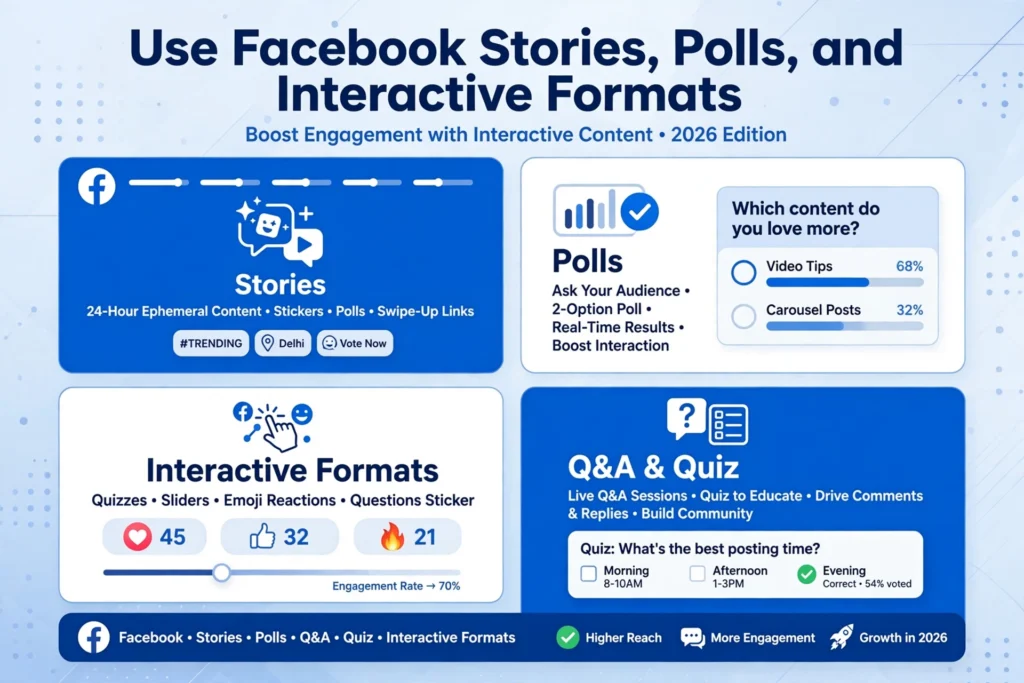 9. Use Facebook Stories, Polls, and Interactive Formats
Different formats give you different ways to communicate with your audience.
Stories can share timely updates, behind-the-scenes moments, or reminders. Polls can help you discover what followers want to see next. Carousels can explain a process through several images or slides.
Choose formats according to your goals rather than using every available feature.
For example, an art Page might share a finished painting in a regular post, a time-lapse of the painting process as a Reel, and a Story asking followers which subject they would like to see next.
This creates variety without requiring entirely separate ideas for every publication.
10. Create a Simple Weekly Content Calendar
A content calendar helps you plan posts in advance and maintain consistency without spending every day deciding what to publish.
Here is a sample schedule for a beginner-friendly technology blog.
| Day | Content type | Example |
|---|---|---|
| Monday | Educational post | Three useful AI tools for beginners |
| Tuesday | Short video or Reel | A quick smartphone tip |
| Wednesday | Question or poll | Which technology topic confuses you most? |
| Thursday | Carousel | Five steps to protect an online account |
| Friday | Reel or tutorial | Demonstrate a free productivity tool |
| Saturday | Community post | Share a lesson learned this week |
| Sunday | Review and planning | Check analytics and prepare next week’s content |
You do not need to publish every day. If you have limited time, begin with three quality posts per week and increase your frequency only when it is manageable.
Repurpose your own ideas thoughtfully. A detailed tutorial can become a carousel, a short video, and a question that encourages further discussion.
11. Analyze Results and Improve Your Strategy
Publishing content without reviewing its performance makes it harder to learn what your audience values.
Use Facebook Page Insights or the available Meta Business Suite analytics to monitor relevant metrics. The exact reports and interface may vary depending on your Page and account.
Focus on the following:
- Follower growth: Are you attracting new followers over time?
- Reach: How many people are seeing your content?
- Engagement: Which posts generate meaningful interactions?
- Video performance: Are people watching your videos, and where do they stop watching if that information is available?
- Link clicks: Are people visiting your website or product pages?
- Conversions: Where measurable, are visitors taking useful actions, such as making an enquiry?
A simple weekly review method
Once a week, spend 15–20 minutes reviewing your recent posts.
- Identify the two or three posts that performed best against your goals.
- Look for common characteristics, such as topic, format, opening sentence, or posting time.
- Identify posts that received little attention.
- Consider whether those posts had unclear messaging, weak visuals, or limited relevance.
- Plan a few experiments for the next week.
Do not automatically abandon a topic after one unsuccessful post. Test different formats and presentations before drawing conclusions.
The purpose of analytics is to guide better decisions, not to chase every short-term fluctuation.
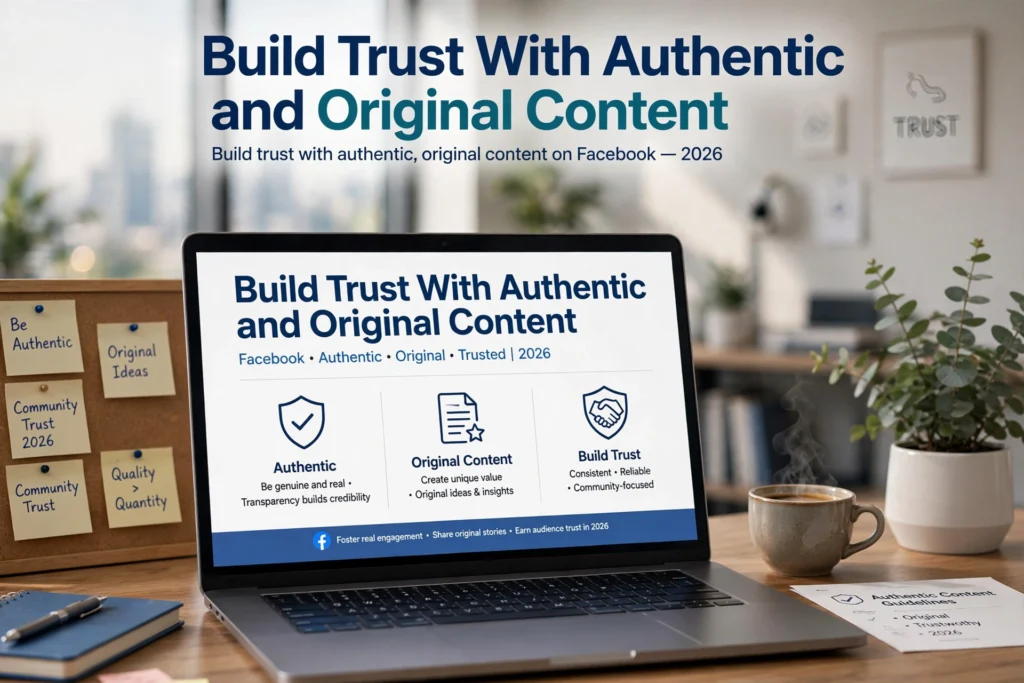
12. Build Trust With Authentic and Original Content
 12. Build Trust With Authentic and Original Content
Trust matters whether you are growing a blog, building a personal brand, or promoting a small business.
Share information you can support. If you recommend a product, explain why. If you discuss a changing feature or policy, check the current official documentation.
Use original photographs, demonstrations, examples, and explanations whenever possible. If you use AI tools to help with brainstorming or editing, review the output carefully and add your own expertise.
Avoid misleading headlines, copied content, false claims, and artificially manufactured testimonials.
Authenticity gives people a reason to return because they know what to expect from your Page.
13. Collaborate With Relevant Creators and Businesses
Collaboration can introduce your Page to people who already have an interest in your topic.
For example:
- A food blogger could collaborate with a local cooking instructor.
- An art Page could participate in a joint drawing challenge.
- A technology blogger could create a tutorial with another educator.
- A small business could work with a complementary business on a useful educational post.
Choose collaborators whose audiences genuinely overlap with yours.
Agree on the content, responsibilities, permissions, and any disclosure requirements before publishing. Collaboration can create discovery opportunities, but it does not guarantee that everyone who sees the content will follow your Page.
14. Make Your Content Easy to Share and Understand
People are more likely to share content when it is useful to someone they know.
Create posts that solve a clear problem, explain something complicated, or offer a practical resource.
Examples include:
- A checklist for choosing a budget smartphone.
- A simple recipe with clearly listed ingredients.
- A beginner’s guide to creating a professional résumé.
- A visual tutorial showing how to draw a particular shape.
- A small-business checklist for preparing an online order.
Use readable text, strong contrast, clear visuals, and mobile-friendly layouts.
Give each post one main message. If you want readers to visit a blog, ask a relevant question, or follow your Page, make the next step clear without overwhelming them with multiple demands.
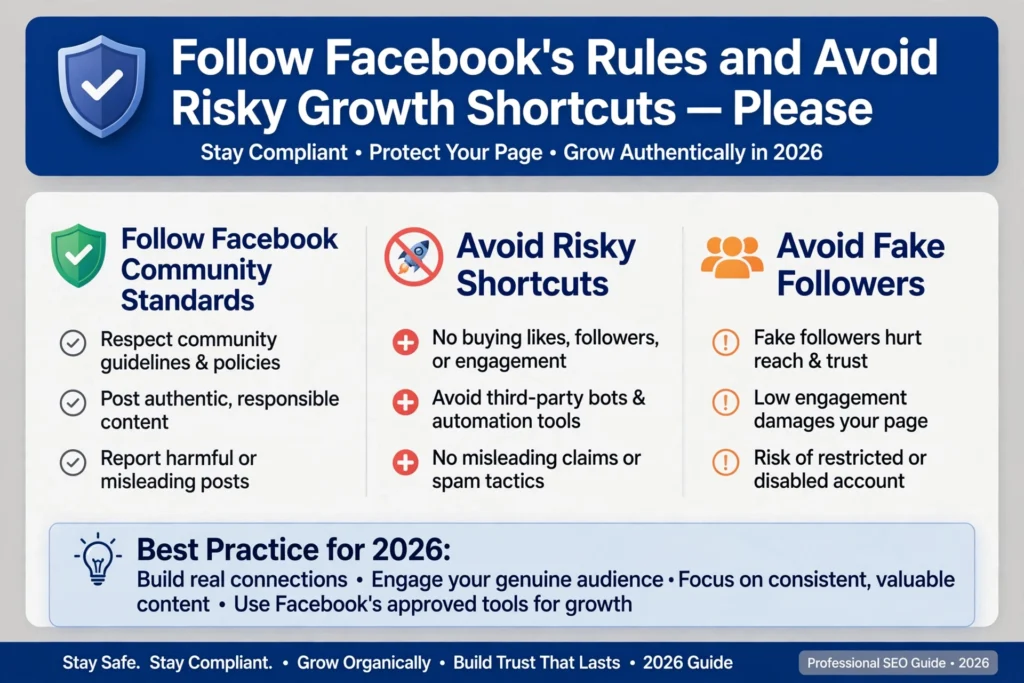
15. Follow Facebook’s Rules and Avoid Risky Growth Shortcuts
 15. Follow Facebook’s Rules and Avoid Risky Growth Shortcuts
Long-term growth depends on keeping your Page trustworthy and compliant with the platform’s policies.
Avoid tactics such as:
- Purchasing fake followers or automated engagement.
- Repeatedly posting the same promotional message in unrelated Groups.
- Using misleading giveaways or deceptive headlines.
- Copying videos or images without appropriate rights.
- Using bots to generate artificial interactions.
- Sharing misinformation or making unsupported product claims.
Review Facebook’s current rules and recommendation guidance, particularly if you publish content regularly or manage a business Page.
Official resources:
- Facebook Help Center: Page management and access
- Facebook Help Center: Creating a Reel
- Facebook Help Center: Page recommendations and reviews
Features, interfaces, and eligibility requirements can change, so verify current information before making important decisions.
Your 30-Day Facebook Page Growth Plan
You do not need a large team, an expensive camera, or an advertising budget to start improving your Facebook Page. You need a manageable plan and a willingness to learn from results.
<box gap={3}> <row align=start gap={3}> <AsyncImage query=”minimal desk workspace laptop notebook social media planning checklist” aspectRatio=”3:4″ maxWidth=”104px”/> <box flex=”1″ gap={1}> **Week 1: Optimize and research**
  <text color="secondary" size="sm">Days 1–7</text>

  - Update your Page name, images, About section, and contact details.
  - Define your target audience.
  - Review questions and discussions in your niche.
  - Prepare ten useful content ideas.
  - Publish two or three introductory or educational posts.
</box>
</row> <divider color=”subtle”/> <row align=start gap={3}> <AsyncImage query=”creator filming a short vertical video with smartphone on a simple desk” aspectRatio=”3:4″ maxWidth=”104px”/> <box flex=”1″ gap={1}> **Week 2: Publish and experiment**
  <text color="secondary" size="sm">Days 8–14</text>

  - Publish three or four useful posts.
  - Experiment with a Reel, a carousel, and a text or image post.
  - Test different opening lines and posting times.
  - Invite relevant existing contacts to follow your Page without pressuring them.
</box>
</row> <divider color=”subtle”/> <row align=start gap={3}> <AsyncImage query=”person replying to social media comments on laptop beside notebook” aspectRatio=”3:4″ maxWidth=”104px”/> <box flex=”1″ gap={1}> **Week 3: Build engagement**
  <text color="secondary" size="sm">Days 15–21</text>

  - Respond to genuine comments and questions.
  - Publish a post that solves a common audience problem.
  - Participate helpfully in relevant Groups where permitted.
  - Try a poll, a behind-the-scenes post, or a short tutorial.
  - Review early performance and identify promising topics.
</box>
</row> <divider color=”subtle”/> <row align=start gap={3}> <AsyncImage query=”small business owner reviewing social media analytics charts on laptop and notebook” aspectRatio=”3:4″ maxWidth=”104px”/> <box flex=”1″ gap={1}> **Week 4: Analyze and refine**
  <text color="secondary" size="sm">Days 22–30</text>

  - Compare reach, engagement, follower changes, and video performance.
  - Repeat successful content themes in fresh ways.
  - Improve posts that were unclear or poorly presented.
  - Set a sustainable schedule for the following month.
  - Record your starting metrics and your results at day 30.
</box>
</row> </box>
At the end of the month, assess what you learned rather than judging success only by follower count. You may discover which topics attract the right audience, which formats people enjoy, and which posts encourage useful conversations.
There is no guaranteed follower target for 30 days. Your starting audience, niche, content quality, and publishing consistency will all influence the results.
Frequently Asked Questions
1. How can I grow my Facebook Page organically?
Optimize your Page, publish useful original content, experiment with Reels, engage genuinely with followers, and share relevant posts through appropriate channels. Review analytics regularly and improve your strategy based on evidence.
2. How can I get more followers on my Facebook Page without paying?
Make your Page worth following by offering consistent value. Share helpful tutorials, answer questions, invite relevant existing audiences to discover your Page, and participate constructively in communities that allow promotion. Avoid fake followers and spam.
3. How often should I post on my Facebook Page?
Start with three to five useful posts per week if that schedule is realistic for you. Test your frequency and review results. Posting quality, relevance, and audience response matter more than following a rigid daily quota.
4. Do Facebook Reels help increase Page reach?
Reels can introduce your content to people who do not follow your Page, making them a useful discovery format. However, reach varies, and not every Reel will perform well. Focus on strong openings, original content, clear messaging, and viewer interest.
5. How long does it take to grow a Facebook Page?
There is no fixed timeline. Some Pages attract attention quickly, while others need months of consistent publishing and experimentation. Your niche, content quality, audience demand, and existing network all influence growth. Measure progress over time instead of expecting guaranteed results.
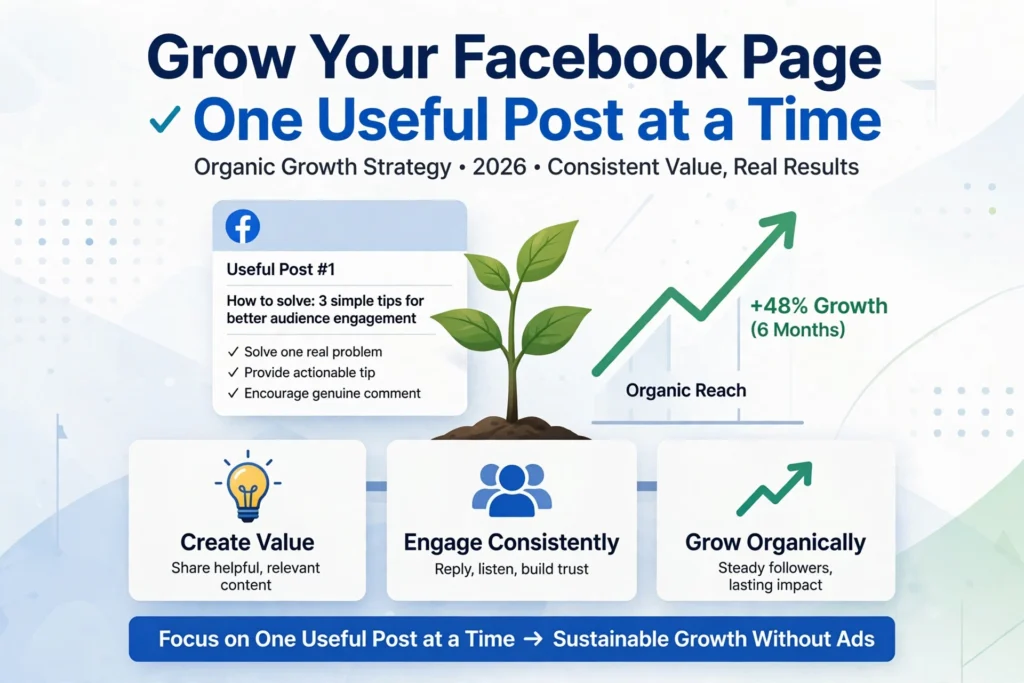
Conclusion: Grow Your Facebook Page One Useful Post at a Time
 Conclusion: Grow Your Facebook Page One Useful Post at a Time
Growing a Facebook Page organically in 2026 is not about finding a secret algorithm trick. It is about understanding your audience, creating content worth discovering, maintaining a consistent presence, and learning from real performance data.
Start by improving your Page, selecting a few relevant content themes, experimenting with Reels, and responding to your audience. Use analytics to identify what works, and give your strategy enough time to develop.
You do not need to implement all 15 Facebook Page Growth Tips at once. Choose three practical improvements today and follow the 30-day plan to build momentum.
For your next step, explore our suggested guide, Social Media Marketing for Small Businesses, to learn how to connect your Facebook strategy with your wider online presence.



















Leave a Comment
Your email address will not be published. Required fields are marked with *